We need your help now

Support from readers like you keeps The Journal open.

You are visiting us because we have something you value. Independent, unbiased news that tells the truth. Advertising revenue goes some way to support our mission, but this year it has not been enough.

If you've seen value in our reporting, please contribute what you can, so we can continue to produce accurate and meaningful journalism. For everyone who needs it.

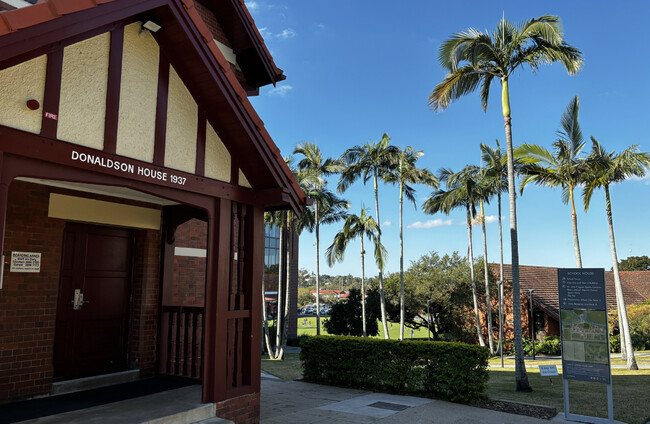
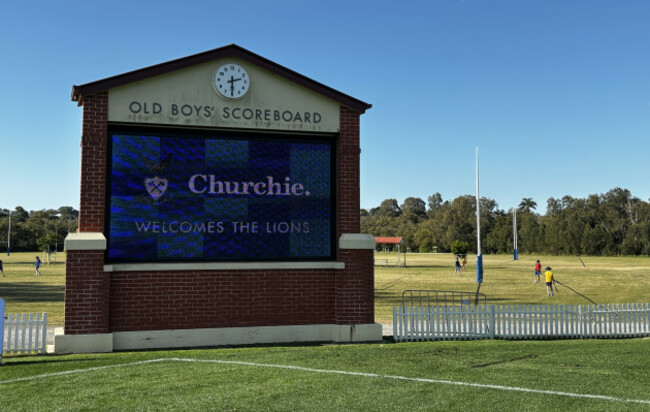
Churchie school in Brisbane.

Churchie: behind the doors of one of Australia's leading rugby schools

Anglican Church Grammar School is one of Australia’s leading rugby schools.

THE LIONS ARE training at a big Aussie Rules school this week in Melbourne, but last week’s preparation for their first Test win over the Wallabies was done at a Brisbane school that has become a rugby production line.

Anglican Church Grammar School, better known as ‘Churchie,’ is one of the leading rugby schools in Australia.

The Lions trained there on their 2013 tour and after Andy Farrell and co. visited on a recce mission earlier this year, they booked in again. Wales and the All Blacks have also based themselves in Churchie before big Tests in recent years.

It’s not hard to see why.

The school grounds are pristine, and the rugby facilities are top-class. The main rugby pitch where the Lions trained is excellent, while the gym is as good as what many professional rugby clubs have.

And professional rugby clubs – both in union and league – are watching Churchie closely.

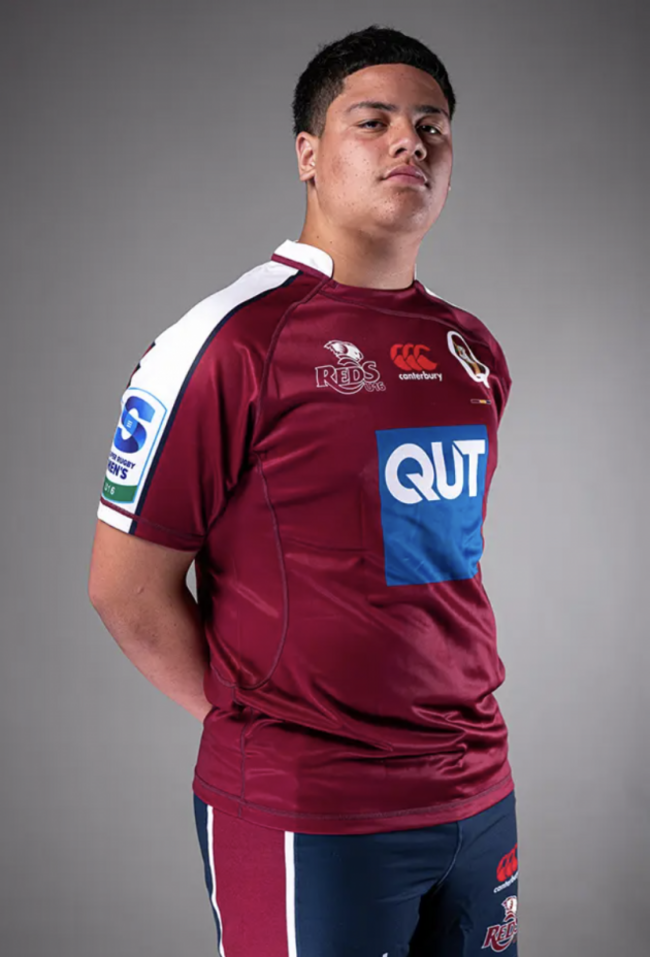
Back in March, there were headlines in Aussie rugby when 16-year-old Churchie player Visesio Kite joined Ronan O’Gara’s La Rochelle. He’s one of four or five young players that French clubs have signed from Brisbane’s elite GPS schools competition this year.

S Kite Sio Kite played for the Reds U16s. Reds Reds

Brisbane’s GPS also includes big schools like Nudgee and Brisbane Boys’ College, where Brad Thorn coaches. Churchie are among its top dogs.

At nearly 6ft 8ins and 150kg, Kite was hard to miss when he was still in Churchie playing tighthead prop. He will be converted into a second row in La Rochelle, who did a good job of convincing the teenager to move across the world.

“Obviously, we’d love to have kept him at school for another two years,” says the Churchie First XV head coach, England native Andrew Brownhill.

“But it’s probably a real positive of the school in that he wouldn’t have got that opportunity if he hadn’t come to a school like Churchie. 

“He’s a good human with a great family. The school helped him with good academics and then on top of that, his rugby ability, his S&C. He can really move. He was averaging nearly six kilometers per game as a tighthead prop. And he was more than just your classic ball-running type, he can pass the ball. He’s more of a playmaker as well.”

Brownhill says O’Gara’s personal touch was important.

“The family went over to La Rochelle for a week and Ronan O’Gara met them, they introduced him to Will Skelton, and straight away they had a connection with the family.

“Ronan O’Gara was amazing, met him when he was just a 15-year-old boy. What other head coaches of professional teams are meeting academy boys to give them a handshake and meet the family.”

Waterboy Rugby / YouTube

This kind of development is another challenge for Rugby Australia, who have complained to World Rugby about their players being poached by French clubs, but it’s increasingly a reality because rugby league also continues to lure union talent into the NRL.

Churchie is an obvious place to look because they have such a strong programme. NRL superstar Kalyn Ponga came through the school, signing a contract at the age of 15 to move into rugby league when he graduated. Ponga’s highlights from his Churchie days are worth a watch. 

Jaydn Su’A is another current NRL star who played union in the school. It’s increasingly common practice for the NRL to send young players into these top fee-paying union schools on scholarships so they can develop, then come back into league.

Wallabies duo Quade Cooper and David Pocock were on the same GPS-winning Churchie side in 2005, while Liam Wright, who was Joe Schmidt’s first Wallabies captain, is another old boy.

So the current crop of ambitious young players have plenty of big-name role models.

Brownhill and his assistant coaches – former Scotland centre Phil Burleigh and ex-Queensland Reds out-half Ben Lucas – do their best to help those talented enough to be pushing towards professional rugby with calm advice.

“But a lot of boys who are still in Year 10 and Year 11 [15 and 16-year-olds] have got agents who deal with that stuff on their behalf,” says Brownhill, who has been coaching in Australia for four years now.

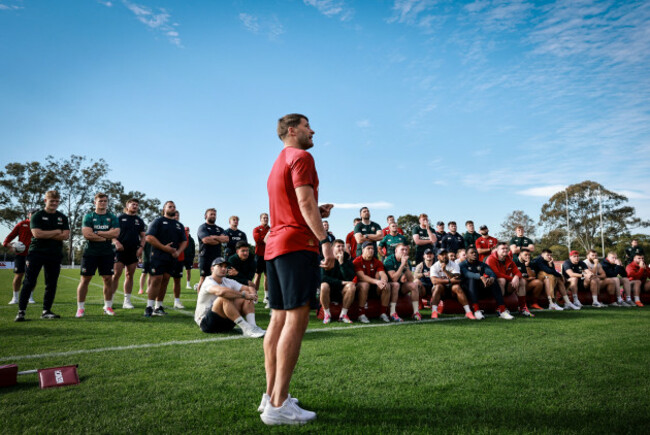
richard-wigglesworth-152025 The Lions doing analysis at Churchie. Dan Sheridan / INPHO Dan Sheridan / INPHO / INPHO

“We’ve got ex-pros coaching in our set-up with Phil and Benny, so boys can go and ask them for advice. They’ve been through that process themselves, but a lot of the boys have agents now.”

Academics are obviously the priority in Churchie, but rugby is busy too. As Brownhill leads a tour of the facilities, there’s a group of 13-year-olds working on their mobility out on one of the ovals, while an older group of boys are in the gym lifting weights.

“It’s run like a professional programme,” says Brownhill of Churchie’s rugby set-up.

The First XV have review meetings each Monday to analyse their last game, as well as doing a gym session and position-specific skills work that day. Tuesday and Thursday afternoons are the big pitch training sessions, with another gym hit at 6am on Thursdays. On Friday, it’s the captain’s run. Games are on Saturdays.

As well as the coaching ticket including two recently retired former pro players in Burleigh and Lucas, Churchie has two full-time S&C staff as well as two further part-time employees in that area. The players wear GPS devices for training and games so their workloads can be closely monitored.

At U18 level, Churchie can have up to seven teams playing on the same day, with similar depth down through the age grades. Their biggest matches attract crowds of more than 5,000. The sheer level of competition and quality in the GPS is brilliant for player development.

“The kids are playing at such a high level in front of thousands of people every week,” says Brownhill.

1 The 42 The 42

“And that’s pretty cool to be part of as a young man. It’s all live-streamed for people to watch as well. 

“The academy system here is run differently to back home. The academies in the UK see the boys once or twice a week from the age of 13 and they still play their school rugby. But here, the majority of the development is done at school. 

“The Super Rugby franchises get them at the end when they finish at 18, but a lot of the groundwork is done here. And that’s the quality of the coaching and the environment they in these schools.”

The biggest downside Brownhill sees in the GPS is that it’s so short. There are nine fee-paying schools who all play each other once, with no play-offs at the end. The team that finished top of the ladder gets the Premiership trophy. It’s shared if schools are level.

The Sydney GPS competition involves home and away games, so double the season, and Brownhill thinks that should be mimicked. A six-month pre-season for such a short run of games in Brisbane schools isn’t ideal.

Brownhill also reckons that there is some over-coaching in Australian schoolboy rugby, having seen “play books the size of Bibles” in some places, but on the whole he reckons the Brisbane GPS is an excellent pipeline for future pros. And Churchie is one of the best.

“They call it a nursery of talent in terms of the rugby players it produces,” says Brownhill. 

“But it’s also a good place for the lads to get a good grounding as humans as well, which is important. The school, and rightly so, is very academically focused, so kids have got a good grounding where they’ve got the grades they need.”

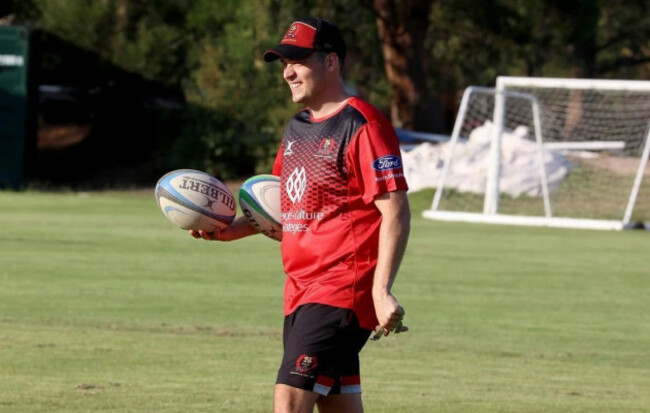
Churchie head coach Andrew Brownhill.

As well as being a fantastic place for young athletes to develop, the GPS competition is an ideal environment for a young coach like Brownhill.

His predecessors have gone on to full-time professional roles in Australia and England, so the 33-year-old has ambitions of doing something similar.

Brownhill played underage rugby for Scotland but started coaching at the age of 20, soon joining the Worcester Warriors academy and then moving to Gloucester, as well as working closely with former England flanker Lewis Moody to establish rugby programs in state schools in the UK. Former England scrum-half Shaun Perry was another big mentor, as was the influential Russell Earnshaw.

From there, Brownhill became head of rugby at Park House School and started working with the Scotland-Qualified programme, identifying and coaching young Scottish-eligible players in England.

He always wanted to coach abroad and it was former Scotland defence coach Matt Taylor, an Aussie, who helped connect him with a new job as Waratahs U18s coach. This was during the Covid-19 lockdown, but he got an exemption and had three happy years in Sydney, where he also worked with Shute Shield side Norths.

The Churchie role came up last year and Brownhill jumped at the chance. He’s open-minded about the future and would happily take on an adventure in professional Japanese or French rugby if the right job was available.

For now, he’s loving being in the thick of Aussie schoolboy rugby.

Churchie are hoping that the Lions’ visit will be the good luck charm this season.

Close
Comments
This is YOUR comments community. Stay civil, stay constructive, stay on topic. Please familiarise yourself with our comments policy here before taking part.
Leave a Comment
    Submit a report
    Please help us understand how this comment violates our community guidelines.
    Thank you for the feedback
    Your feedback has been sent to our team for review.

    Leave a commentcancel