We need your help now

Support from readers like you keeps The Journal open.

You are visiting us because we have something you value. Independent, unbiased news that tells the truth. Advertising revenue goes some way to support our mission, but this year it has not been enough.

If you've seen value in our reporting, please contribute what you can, so we can continue to produce accurate and meaningful journalism. For everyone who needs it.


Darragh O'Brien said the weather warning system will be assessed. RollingNews.ie

Climate Minister hints at changes to how Met Éireann issues wind warnings

Taoiseach Micheál Martin also referred to “issues” with the red, orange and yellow system during Leaders’ Questions today.

ENVIRONMENT AND CLIMATE Minister Darragh O’Brien has suggested that changes could be made to the way Met Éireann issue red, orange and yellow weather warnings in the future. 

It comes after Taoiseach Micheál Martin raised the matter during Leaders’ Questions when discussing the impact of Storm Éowyn. 

“The [Status] red alert warning was effective and impactful, and we should never lose sight of that. There are issues that we have to reevaluate in respect of how we do the red, orange, yellow system, and that’s underway,” Martin told the Dáil this afternoon.

Speaking on RTÉ’s Drivetime this afternoon, O’Brien said he thought the warnings for Storm Éowyn worked well and were well communicated. 

Referring to the UK Met Office, the Minister said they assess storm warnings “based on impact, particularly on wind and wind warnings” and that that “will form part of the assessment of this storm”. 

“I think our red, orange and yellow warnings have worked pretty well for us over the last number of years, but I do think it’s appropriate now that if we look at things like county boundaries,” he said.

“It’s appropriate and right that we would assess, are there additions or changes that need to be made to that, looking maybe at how the UK Met Office also assess and give their warnings as well.”

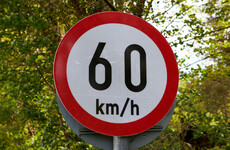
Met Éireann’s current weather warning system sees a yellow wind warning triggered for 10 minutes of gusts between 50 and 65km/h.

For orange wind warnings, this is 10 minutes of gusts between 65 and 80km/h, and speeds in excess of 80km/h for red wind warnings. 

Weather advisories are issued up to about a week beforehand to provide early information on potential hazardous weather, while warnings are issued when weather conditions meeting Met Éireann’s criteria are anticipated within a 60-hour period.

According to the UK Met Office, it issues warnings when severe weather has the potential to bring impacts to the United Kingdom. These warnings are given a colour – yellow, amber or red – depending on a combination of both the impact the weather may have and the likelihood of those impacts occurring.

O’Brien said when it comes to wind warnings, the UK Met Office “assess it on the basis of what they believe the impact of the storm will be, as opposed to the storm surges or the levels of wind”.

“I know that we tracked a gust of 185 kilometers per hour in Galway, which was exceptional. So Met Éireann do a really good job on the forecasting side, and they did a very good job in this regard.

“But it is right, and I’d agree with the Taoiseach, that we will have to look at this as well to see are there any changes to that that can be made, particularly around wind warnings.”

O’Brien today also announced measures intended to enhance the electricity grid and increase its resilience in the wake of Storm Éowyn, following a meeting with representatives from the Commission for Regulation of Utilities (CRU) and ESB Networks.

These measures include an enhanced ‘Winter 2025 Grid Resilience Plan’, which will be developed within the next month and will be implemented by ESB Networks between March and October “to enhance the resilience of the grid in the most vulnerable locations for the upcoming winter”.

The Department said the ESB have identified a number of initial actions, including increasing the stock holding of spare parts for the electricity network and creating forestry corridors to protect overhead line corridors.

O’Brien has also requested a full review by ESBN and CRU of the planned grid enhancement in light of the damage caused by Storm Éowyn, “with specific additional projects and investments identified to future proof Ireland’s energy grid and to adapt to the challenges of climate change”. 

As of this afternoon, 18,000 premises remain without power.

The impact of the storm was one of the major focuses of the Dáil’s first meeting today since nominating a Taoiseach.

Several members of the opposition had said not enough time had been set aside during Wednesday’s order of business to discuss the impact of Éowyn, adding that the Dail should not have been in recess the week after the storm.

Unsure of what exactly is happening with the earth’s climate? Check out our FactCheck Knowledge Bank for essential reads and guides to finding good information online.

Readers like you are keeping these stories free for everyone...
A mix of advertising and supporting contributions helps keep paywalls away from valuable information like this article. Over 5,000 readers like you have already stepped up and support us with a monthly payment or a once-off donation.

Close
JournalTv
News in 60 seconds