We need your help now

Support from readers like you keeps The Journal open.

You are visiting us because we have something you value. Independent, unbiased news that tells the truth. Advertising revenue goes some way to support our mission, but this year it has not been enough.

If you've seen value in our reporting, please contribute what you can, so we can continue to produce accurate and meaningful journalism. For everyone who needs it.

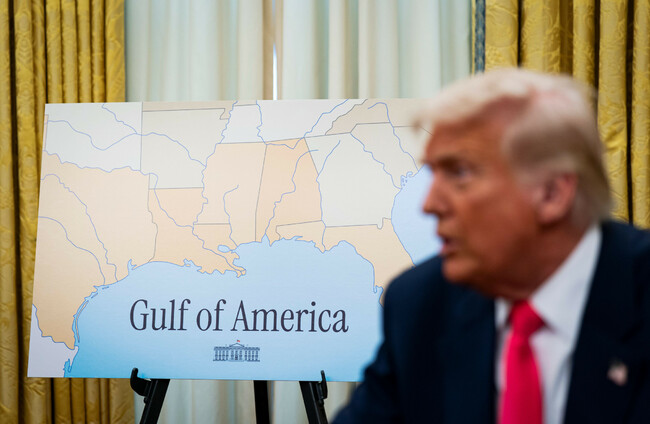
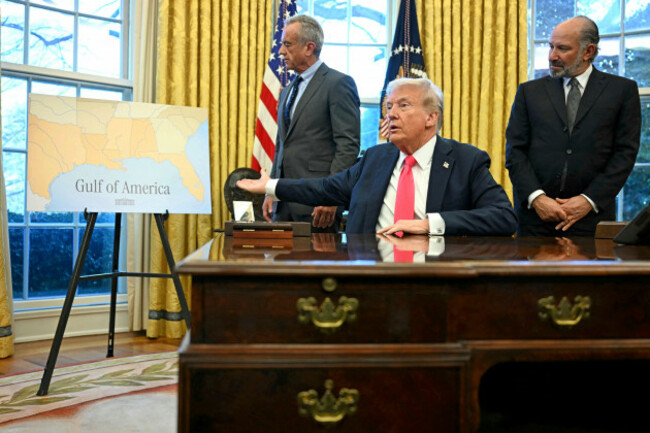
Trump speaks next to a poster of the Gulf of America, in the Oval Office of the White House Alamy Stock Photo

Court orders Trump White House to restore Associated Press’s access over ‘Gulf of America’ dispute

The judge ruled the government cannot retaliate against the AP’s decision not to follow the president’s executive order to rename the Gulf of Mexico.

A FEDERAL JUDGE ordered the White House on Tuesday to restore The Associated Press’s full access to cover presidential events, affirming on First Amendment grounds that the US government cannot punish the news organisation for the content of its speech.

US District Judge Trevor N McFadden, an appointee of President Donald Trump, ruled that the government cannot retaliate against the AP’s decision not to follow the president’s executive order to rename the Gulf of Mexico.

president-donald-trump-gestures-to-a-poster-that-says-gulf-of-america-as-health-and-human-services-secretary-robert-f-kennedy-jr-left-and-commerce-secretary-howard-lutnick-watch-in-the-oval-offi Trump gestures to poster that says Gulf of America as Health Secretary Robert F. Kennedy Jr., left, and Commerce Secretary Howard Lutnick watch in the Oval Office Alamy Stock Photo Alamy Stock Photo

The decision handed the AP a major victory at a time the White House has been challenging the press on several levels.

“Under the First Amendment, if the Government opens its doors to some journalists — be it to the Oval Office, the East Room, or elsewhere — it cannot then shut those doors to other journalists because of their viewpoints,” Judge McFadden wrote. “The Constitution requires no less.”

It was unclear whether the White House would move immediately to put Judge McFadden’s ruling into effect. The judge held off on implementing his order for a week, giving the government time to respond or appeal.

The AP has been blocked since 11 February from being among the small group of journalists to cover Trump in the Oval Office or aboard Air Force One, with sporadic ability to cover him at events in East Room.

“We are gratified by the court’s decision,” said AP spokeswoman Lauren Easton.

“Today’s ruling affirms the fundamental right of the press and public to speak freely without government retaliation. This is a freedom guaranteed for all Americans in the US Constitution.”

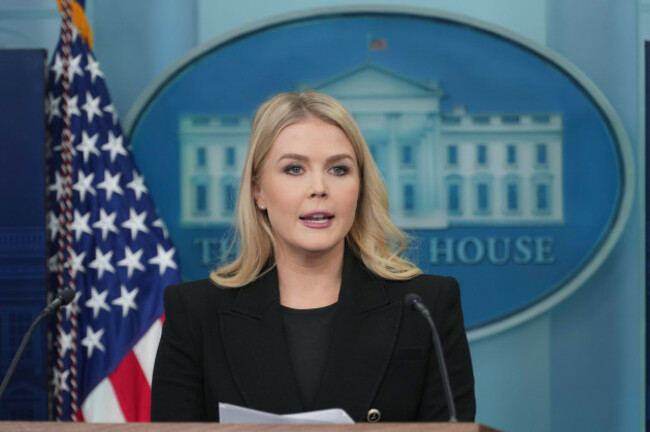
White House press secretary Karoline Leavitt, named in the lawsuit, did not immediately return a message seeking comment.

washington-vereinigte-staaten-05th-feb-2025-white-house-press-secretary-karoline-leavitt-holds-a-briefing-at-the-white-house-in-washington-dc-february-5-2025-credit-chris-kleponiscnpdpaala White House press secretary Karoline Leavitt Alamy Stock Photo Alamy Stock Photo

The news organisation had asked Judge McFadden to rule that Trump had violated AP’s constitutional right to free speech by taking the action because he disagreed with the words that its journalists use.

He had earlier declined AP’s request to reverse the changes through an injunction.

Because of its wide reach, the AP has traditionally always been included in “pools” for coverage of presidential events in places such as the Oval Office or Air Force One.

Judge McFadden cautioned that his ruling does not necessarily herald a return to those days.

“The court does not order the government to grant the AP permanent access to the Oval Office, the East Room or any other media event,” he wrote.

“It does not bestow special treatment upon the AP. Indeed, the AP is not necessarily entitled to the ‘first in line every time’ permanent press pool access it enjoyed under the (White House Correspondents’ Association). But it cannot be treated worse than its peer wire service either.”

The judge said that his decision does not prohibit a government official from choosing which outlets to give interviews to, or choosing which journalists’ questions they choose to answer at a news conference.

While there was little dispute in a 27 March court hearing about why Trump struck back at the AP – the president said as much – the administration said it was up to its own discretion, and not White House correspondents or longstanding tradition, to determine who gets to question the president and when.

Since the dispute with AP began, the White House has taken steps to control who gets to cover the president at smaller events and even where journalists sit during Leavitt’s briefings, saying both need to better reflect changes in how people get information.

“In short, new media has benefited at AP’s expense under the new management,” Judge McFadden wrote in his decision. “Little else has changed.”

The AP’s decisions on what terminology to use are followed by journalists and other writers around the world through its influential stylebook.

The outlet said it would continue to use Gulf of Mexico, as the body of water has been known for hundreds of years, while also noting Trump’s decision to rename it the Gulf of America. Different outlets have used different approaches, some skirting it by calling it the “Gulf”.

“For anyone who thinks The Associated Press’s lawsuit against President Trump’s White House is about the name of a body of water, think bigger,” Julie Pace, the AP’s executive editor, wrote in a Wall Street Journal opinion piece.

“It’s really about whether the government can control what you say.”

Trump has dismissed the AP, which was established in 1846, as a group of “radical left lunatics” and said that “we’re going to keep them out until such time as they agree it’s the Gulf of America”.

For a news organisation that relies on speed as a major selling point, the AP brought its chief White House correspondent and photographer to testify before Judge McFadden about how its absence from covering certain events has delayed its transmission of words and images.

Its lawyer, Charles Tobin, said AP has already lost a $150,000 (€136,000) advertising contract from a client concerned about the ban.

The government’s lawyer, Brian Hudak, showed how AP has been able to use livestreams or photos from other agencies to get news out, and pointed out that AP regularly attends Leavitt’s daily briefings.

Judge McFadden said that the government has been “brazen” about why it has excluded the AP.

“The government offers no other plausible explanation for its treatment of the AP,” he wrote. “The Constitution forbids viewpoint discrimination, even in a non-public forum like the Oval Office.”

The AP has been part of small text and photo “pools” that have covered presidents of both parties for decades. The administration has sought to give more prominence to new – and in many cases, Trump-friendly – outlets.

In its action filed on 21 February, the AP sued Leavitt, White House chief of staff Susie Wiles and deputy chief of staff Taylor Budowich.

Trump has moved aggressively against the media on several fronts since taking office again. The Federal Communications Commission has open lawsuits against ABC, CBS and NBC News.

The administration has sought to cut off funding for government-run news services such as Voice of America and is threatening public funding for public broadcasters PBS and NPR for allegedly being too liberal in news coverage.

The case was Associated Press v Budowich, et al.

Close
19 Comments
This is YOUR comments community. Stay civil, stay constructive, stay on topic. Please familiarise yourself with our comments policy here before taking part.
Leave a Comment
    Submit a report
    Please help us understand how this comment violates our community guidelines.
    Thank you for the feedback
    Your feedback has been sent to our team for review.

    Leave a commentcancel

     
    JournalTv
    News in 60 seconds