We need your help now

Support from readers like you keeps The Journal open.

You are visiting us because we have something you value. Independent, unbiased news that tells the truth. Advertising revenue goes some way to support our mission, but this year it has not been enough.

If you've seen value in our reporting, please contribute what you can, so we can continue to produce accurate and meaningful journalism. For everyone who needs it.

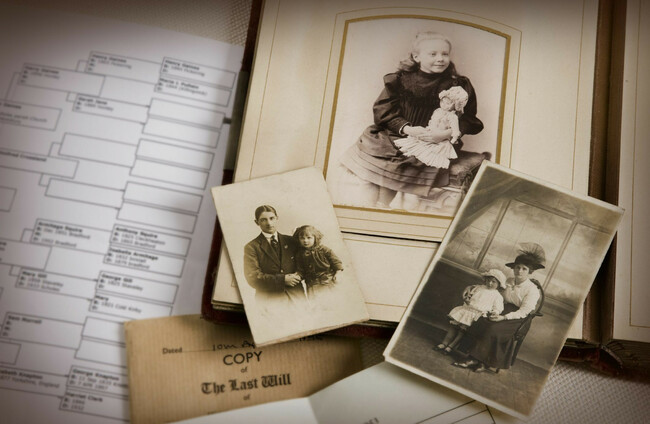
From next year, you'll be able to find out all about what Ireland was like in 1926.

Want to know who lived in your house or find relatives from 1926? You'll be able to from next April

People will be able to digitally search the first Census from the Free State.

MINISTER FOR CULTURE Patrick O’Donovan has unveiled the programme to mark the release of the 1926 Census next April.

It will enable people to search and view the individual returns of the 1926 Census free of charge, making available for the first time the personal information related to the almost 3m people living in Ireland on the night of 18 April 1926.

From next year, you’ll be able to find out all about what Ireland was like in 1926. You can search for your relatives, their jobs, whether they could speak Irish and even who lived in your house a century ago.

€5m in funding for the project was originally made available by then-Minister for Arts and Culture Catherine Martin in November 2022.

To mark this, O’Donovan has announced a programme of events including an RTÉ documentary, a theatrical and major exhibitions in Dublin, London, Boston and across Ireland.

He also announced the search for official “centenarian ambassadors”, people born before 18 April 1926 who are still alive today. 

It is estimated there are about 1,000 people recorded in the Census still alive today, and this project hopes to “capture the first-hand personal testimony of those who will see their own original family records made public next April”.

They are advising anyone interested in becoming a centenarian ambassador to contact the National Archives.

The government are targeting international interest from the Irish diaspora in the programme by holding major exhibitions in the British Academy in London, and in Boston College in April and May 2026.

They also plan to publish a book called The Story of Us, Independent Ireland and the 1926 Census, featuring 18 essays from some of the country’s leading historians.

Learning resources for teachers will be made available and a series of talks, workshops and presentations will take place including a major conference in June 2026.

In the statement today, O’Donovan said: “The release of the 1926 Census records is a historic moment, offering an invaluable account of life as the Irish Free State took its first steps as an independent nation.”

“It’s a fascinating snapshot of the foundation of our state, and, more powerfully, a story of families and communities”, he added.

The project is a significant undertaking for the National Archives after it was confirmed by O’Dovovan in May this year.

When it was first announced, the Census was stored in 1,344 boxes, containing over 700,000 return sheets.

This initiative involves careful preservation, high-resolution scanning, and transcription of every sheet in these boxes. 

The 1926 census collected 21 data sets such as name, age, sex, marital status, religion, housing conditions and ability to speak Irish.

On the night of 18 April 1926, the population of Ireland was 2,971,992 with 49% female and 51% male.

At the previous census in 1911, the population was 3,139,688, demonstrating a reduction of 5.3% in the population in 15 years to 1926.

Of those employed, 51% were in agricultural occupations, 4% were fisherman, 14% were in manufacturing and 7% were domestic servants. Details are published on the CSO website.

Readers like you are keeping these stories free for everyone...
A mix of advertising and supporting contributions helps keep paywalls away from valuable information like this article. Over 5,000 readers like you have already stepped up and support us with a monthly payment or a once-off donation.

Close
JournalTv
News in 60 seconds