Sign in. It’s quick, free and it’s up to you.
An account is an optional way to support the work we do. Find out more.
Sign in. It’s quick, free and it’s up to you.
An account is an optional way to support the work we do. Find out more.

AS SCREEN FATIGUE and digital overwhelm become more embedded in our everyday lives the desire to create digital detox areas in which to engage in more analogue activities such as reading, journalling or playing games is on the rise. Ruth O’Connor asks the experts for their opinions.
Niamh Delmar is a chartered Counselling Psychologist who runs The Greystones Health & Wellbeing Centre. She is a regular contributor to the media and provides evidence based interventions in a Cognitive Behavioural Therapy (CBT) framework with positive psychology and mindfulness.
“Screen-free zones in the home provide opportunities to break the habit of excessive use and explore other ways to unwind such as reading, listening to music or meditation. Such spaces show a positive example to children about moderation and balance,” says Delmar.

“The over reliance on smartphones and devices can particularly jeopardise familial interactions as hours get lost in the digital world, opportunities to connect with each other get lost and people become more isolated from each other,” she continues. “It’s not just about the tech itself, it’s about what is being compromised in those digitally used-up hours – things such as physical activity, in-person interactions and the pursuit of interests.”
Delmar says that young people are particularly sensitive to the effects of technology and recommends the implementation of rules such as digital-free dining and bedroom bans on mobile devices in order to prevent screens from controlling the home.
“Parents are powerful digital role models and digital education needs to be ongoing in the home. Agreements can be made about screen usage but setting digital boundaries benefits the entire family,” she says.
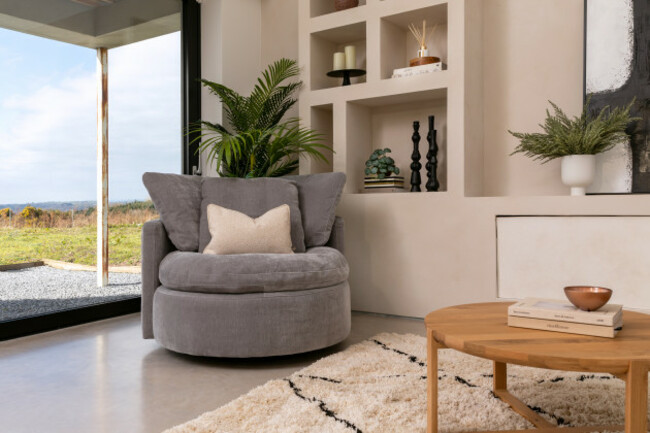
Karen Douglas is a partner in Dwellbeing, an RIAI Accredited practice that puts the person and family core and central to designing spaces and experiences.
She says that creating a gathering space in which to come together for tech-free meals is a great starting point. “The kitchen table has long been associated with being the ‘family boardroom’ and having a ‘no device’ rule for meals means that everyone gets to switch off and engage in conversation,” she says. “Have comfortable chairs and make the meal time experience enjoyable – for example, we always light candles for evening meals to mark the end of day catch-up.”
Many of us are renting with flatmates, living in multi-generational homes, sharing student accommodation or living in small apartments and don’t always have ample space to carve out tech-free zones in which to detox digitally. Douglas says, however, that it is even more important to do so when space is limited.
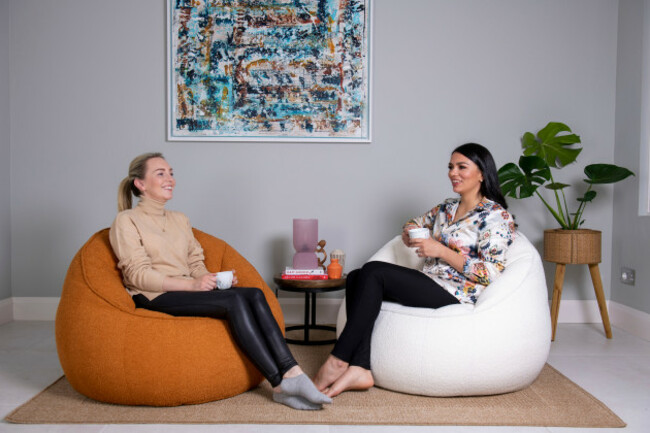
“It may seem ostentatious to dedicate a space for non-internet activities, however it can be as simple as creating a reading nook with a lamp if you like to read,” says Douglas who believes that how we unwind was once seen as a luxury but is now a necessity. “Beanbags are a great way to create an instant relaxation space and can be moved around depending on space requirments. In the same way that we identify our bed with sleep, a dedicated comfy chair or beanbag can signal a tech-free area.”
“Marking out a space that is a Wifi-free zone doesn’t always need lots of metres squared. We often think that we need to add more space or another room in order to achieve a digital detox area but you can create what are known as ‘pause spaces’ on a landing, in a hallway or in a tiny spot with a nice view,” says Douglas.
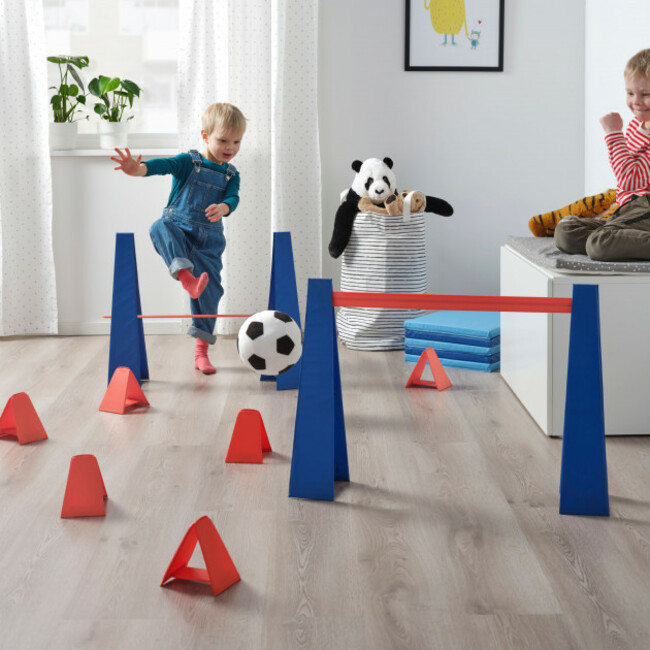
Douglas says that interpersonal relationships and the length of time children spend engaged in activities with parents has been shown to be a more positive indicator of reduced screen time than limiting Wifi or banning devices in the home. With this in mind she suggests the creation of spaces that foster connection and creativity – particularly if you’re planning a new home or a renovation from scratch. “When building a new home it’s important to think about the rituals you enjoy that are not internet related. I had a client recently who holds regular board game evenings with friends, so the focus was on a dining space that could be used for everyday but could transform into a social space for this in the evening,” she says.

“In my own new home, which is nearing completion, we have put an art, writing and music space in the centre of the home. While it is compact, it is one of the most important spaces for us to include in order to encourage digital detox, creativity and personal space. It means that we don’t have a cinema room or large TV room but it’s where most of our time will be spent. Don’t be afraid to eschew the traditional house format.” Douglas also advises us to look beyond the four walls of the home in the pursuit of a digital detox. “Don’t just design your garden, if you have one, for summer living and if you have a balcony it can be a great place to create a dedicated Wifi-free zone. Balconies are regulation in Ireland for apartments and making a container garden to relax in or grow veg in can create a great space that is healthy and boosts dopamine.”
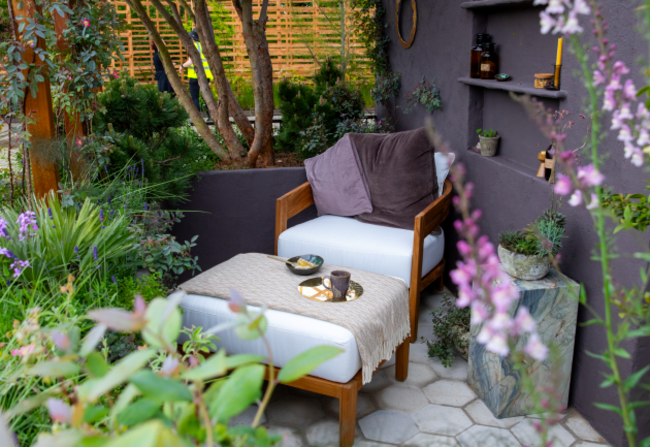
If anyone knows about the impact of a tech-free outdoor space on our wellbeing it is the garden designer, interior architect and author Leonie Cornelius whose gold medal winning balcony garden sponsored by Zarbees, ‘Óir’ at Bloom 2024, explored ideas about wellbeing and how planting can attract “glimmers of light and life” into the smallest spaces.
“The garden, in its pure essence, is a place which makes you unwind. It is a powerful space to digitally detox from modern stresses because, at its heart, it is the exact opposite of the technology-driven world we are surrounded with,” says Cornelius.
“The garden engages all our senses. The visual aspect such as the colour is calming and soothing and the scents of nature – not just flowers and foliage but also the smell of soil – is a powerful antidepressant which goes straight into our brains. What I love about gardens is that they are spaces where no action is needed to reap the rewards of the wild. A perfect digital detox.”

To embed this post, copy the code below on your site





have your say