We need your help now

Support from readers like you keeps The Journal open.

You are visiting us because we have something you value. Independent, unbiased news that tells the truth. Advertising revenue goes some way to support our mission, but this year it has not been enough.

If you've seen value in our reporting, please contribute what you can, so we can continue to produce accurate and meaningful journalism. For everyone who needs it.

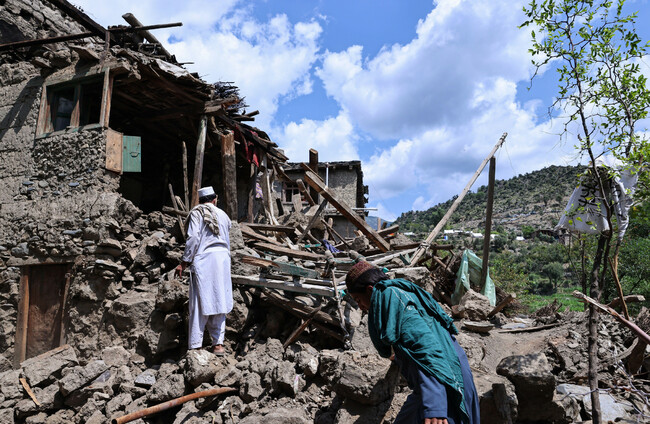
Residents of Kunar Province and Jalalabad city in eastern Afghanistan are seen in the aftermath of a powerful 6.0-magnitude earthquake that struck on the evening of August 31, 2025. Alamy Stock Photo

Afghanistan earthquake kills 20, injures over 300

The 6.3-magnitude quake struck overnight – less than three months after another deadly quake hit the country in August.

A STRONG EARTHQUAKE killed at least 20 people in northern Afghanistan, authorities have said, just months after another deadly tremor that left the country reeling.

The 6.3-magnitude quake struck overnight at a depth of 28 kilometres with the epicentre near the city of Mazar-i-Sharif, according to the US Geological Survey.

More than 20 people were killed and around 320 were injured in the provinces of Balkh and Samangan, health ministry spokesman Sharafat Zaman told journalists on Monday morning, stressing that this was a preliminary toll.

He did not provide a province-wide breakdown of the casualties.

Residents of Mazar-i-Sharif, one of Afghanistan’s largest northern cities, scrambled into the streets due to fears their homes would collapse.

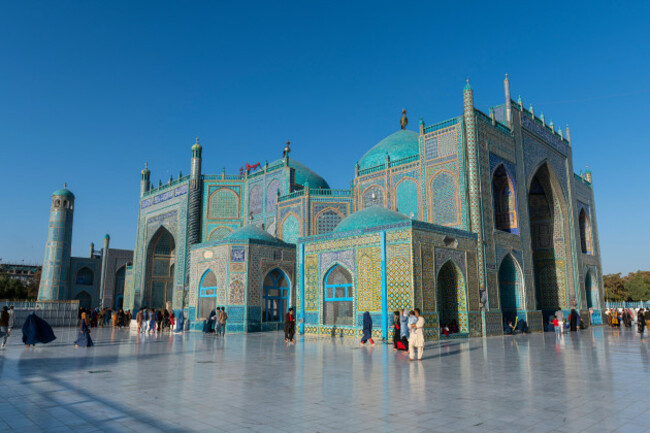
blue-mosque-mazar-e-sharif-afghanistan-asia The city's Blue Mosque. Alamy Stock Photo Alamy Stock Photo

The city’s famed Blue Mosque, a 15th-century landmark known for its vibrant tiles, was also damaged.

Pieces of the structure, particularly from one of its minarets, broke off and lay scattered across the mosque’s grounds, one of the country’s few remaining tourist spots.

Correspondents in the capital Kabul, around 420 kilometres to the south, also said they felt shaking.

Poor communication networks and infrastructure in mountainous Afghanistan have hampered disaster responses in the past, preventing authorities for hours or even days from reaching far-flung villages to assess the extent of the damage.

Three deadly earthquakes

It is the latest natural disaster for the Taliban government, which has faced three major deadly earthquakes since taking over Afghanistan in 2021, even as the foreign aid that formed the backbone of the country’s economy has dramatically dropped.

In August, a shallow 6.0-magnitude quake in the country’s east wiped out mountainside villages and killed more than 2,200 people.

Large tremors in western Herat, near the Iranian border, in 2023, and in eastern Nangarhar province in 2022 killed hundreds and destroyed thousands of homes.

The United Nations and aid agencies have warned hunger is rising among the Afghan population.

The isolated country is suffering from a humanitarian crisis compounded by drought, economic restrictions on the banking sector, and the pushback of millions of Afghan citizens from neighbouring Iran and Pakistan.

Earthquakes are common in Afghanistan, particularly along the Hindu Kush mountain range, near where the Eurasian and Indian tectonic plates meet.

Many homes in the predominantly rural country – devastated by decades of war – are shoddily built.

It often takes hours or days to travel by steep roads and paths to remote villages, which are often cut off from help during disasters or poor weather.

Close
JournalTv
News in 60 seconds