We need your help now

Support from readers like you keeps The Journal open.

You are visiting us because we have something you value. Independent, unbiased news that tells the truth. Advertising revenue goes some way to support our mission, but this year it has not been enough.

If you've seen value in our reporting, please contribute what you can, so we can continue to produce accurate and meaningful journalism. For everyone who needs it.

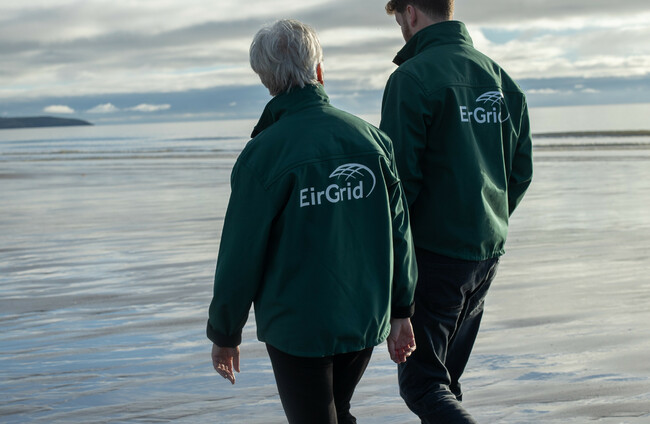
How Ireland’s electricity grid is facing its most important decade yet

‘We must invest in the infrastructure that will support not just today’s needs, but tomorrow’s aspirations.’

Journal Media Studio / YouTube

AS THE OWNER and operator of Ireland’s electricity grid, EirGrid is at the heart of Ireland’s energy future. 

In order to reach the Government’s Climate Action Plan targets, EirGrid is at the forefront of decarbonisation efforts, all while taking steps to make sure that Ireland’s grid can meet future demand. 

With energy demands always changing and evolving, it’s essential that Ireland’s grid evolves too. This means expanding the grid by connecting it to further sources of energy, such as wind farms off Ireland’s coastline, or by connecting directly to Europe. 

Here are some of the ways that EirGrid is leading the charge towards a sustainable energy future for Ireland. 

Onshore projects 

A cornerstone of securing Ireland’s energy future is the Celtic Interconnector project, which is currently under construction. Undertaken in partnership with Réseau de Transport d’Électricité — which manages the French grid — it will connect Ireland directly to continental Europe and will exchange enough electricity to power 450,000 homes.

Between 2023 and 2024, 26 new projects were energised on the transmission grid. Other major grid projects — such as the Kildare Meath Grid Upgrade and the East Meath-North Dublin Grid Upgrade — have also been approved, bolstering Ireland’s energy capabilities. 

Offshore projects

EirGrid’s role in facilitating wind energy is to connect electricity generation infrastructure, such as wind farms, into the national electricity grid. 

As part of the government-led approach to the delivery of offshore wind, approximately 900 MW of electricity is to be supplied from wind farms in the sea off Ireland’s south coast – enough to power almost one million homes with clean energy.

The most important decade

Siobhán O’Shea, EirGrid’s Interim Chief Infrastructure Officer (Onshore), said: “Since coming in to being as grid operator and developer in 2006, EirGrid and its people have seen many changes and developments, such as successfully developing the East West Interconnector, linking Ireland’s grid to Great Britain.”

“Now we face the most important decade of development for the country, to ensure critical electricity infrastructure development meets demand,” she said.

Ensuring that Ireland has access to the energy it needs has the advantage of powering other major social projects, such as housing, and the electrification of critical infrastructure — such as transport and household utilities. 

“Progress is happening, alongside recognition that we must invest in the infrastructure that will support not just today’s needs, but tomorrow’s aspirations,” O’Shea added.

“We know a resilient grid supports society and a growing economy where job creation can continue. Behind the scenes, EirGrid is continuously working with stakeholders and Government to push on and deliver.”

Close