We need your help now

Support from readers like you keeps The Journal open.

You are visiting us because we have something you value. Independent, unbiased news that tells the truth. Advertising revenue goes some way to support our mission, but this year it has not been enough.

If you've seen value in our reporting, please contribute what you can, so we can continue to produce accurate and meaningful journalism. For everyone who needs it.


Ships arrive to accommodate participants at the COP conference in Belém. Alamy Stock Photo

EU strikes deal on climate targets after marathon talks - but it's 'not necessarily pretty'

Defending the deal, one EU diplomat said it had to acknowledge that we live in “muddy, messy, nasty real world”.

LAST UPDATE | 5 Nov 2025

THE 27 MEMBER states of the EU have struck a deal on the next big emissions-cutting target after making overnight concessions to win over reluctant governments in time for COP30, which kicks off this week in Brazil.

The countries have been haggling for months over two separate targets for slashing greenhouse-gas emissions – a 2040 goal intended as a milestone towards carbon-neutrality, and a related target that they must bring to the UN-run climate talks. 

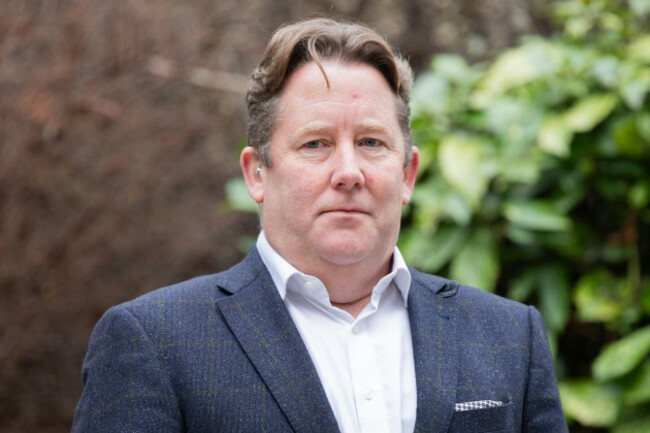
Minister for Climate Darragh O’Brien has welcomed the agreement, saying Ireland pushed for changes in areas like recognising the “particular characteristics of our agriculture sector”.

But the deal has left a sour taste for climate activists, who say Europe has made too many concessions to countries that are unwilling to take necessary action.

Prolonged talks

After marathon talks in Brussels, it was agreed the EU would cut its greenhouse-gas emissions by 90% by 2040, compared to 1990 levels. 

However, countries will be allowed to count international carbon credits towards 5% of that goals, with the potential for a future revision that would raise the limit to 10%.

The EU needed to win the support of a weighted majority of capitals for the 2040 climate target set out by the European Commission -  which implies major changes to industry and daily life at a time of growing concern over the impact on economies across Europe. 

Ministers also needed a unanimous deal on the EU emissions target for 2035, known as a Nationally Determined Contribution (NDC), which Paris Agreement signatories are supposed to bring to the COP30.

That objective, set at between 66.25% and 72.5%, was also agreed overnight. 

To win over the staunchest sceptics, this week’s talks covered a range of “flexibilities” for member states, including letting countries count carbon credits purchased to finance projects outside Europe.

A Commission offer for credits to account for up to 3% of a nation’s 2040 emission cuts failed to win over hardliners, with countries eventually securing a higher threshold.

Countries including Poland and Hungary also secured backing for a one-year delay, from 2027 to 2028, to the launch of a new EU carbon market for the road transport and industrial heating sectors – which critics fear will drive up fuel prices.

In a further big concession, EU countries agreed for the overall 2040 objective to be reassessed every two years.

In a statement this morning, O’Brien said the deal “represents an important milestone in shaping Europe’s long-term response to the climate crisis and in setting a clear direction for our collective efforts beyond 2030″.

He said Ireland “played a constructive role throughout these discussions, engaging actively and positively over recent months”.

dublin-ireland-19th-jan-2025-fianna-fails-darragh-obrien-at-the-partys-special-ard-fheis-at-the-radisson-hotel-where-tanaiste-and-party-leader-micheal-martin-is-presenting-the-draft-programme Minister for Climate Darragh O'Brien Alamy Stock Photo Alamy Stock Photo

“I particularly welcome the text changes Ireland secured to the European Climate Law. These address a number of our key concerns – including recognition of the particular characteristics of our agriculture sector, the importance of maintaining energy affordability and security, and the need to ensure social cohesion as we continue the transition to a climate-neutral economy,” he said.

The agreement reached reflects a pragmatic and balanced approach that has achieved the broadest possible consensus among member states while maintaining Europe’s global climate leadership.

“Ireland now looks forward to working closely with the European Commission on developing credible and fair pathways towards 2030 compliance, and with all Member States next year on the broader implementing package that will give detailed effect to the headline agreement reached overnight,” he said.

During Leaders’ Questions today, Social Democrats leader Holly Cairns accused the government of failing to grasp the scale of the climate crisis, citing a UN report warning that global warming is set to exceed 1.5 degrees within the next decade.

She said Ireland is “nowhere near” meeting its 2030 emissions targets and criticised the lack of progress on offshore wind and water quality.

“We’re nowhere near reaching our targets, and I don’t seem to it doesn’t feel like the government really understands the consequences of that,” Cairns said.

Expenditure Minister Jack Chambers defended the government’s record, pointing to falling emissions, major investment in renewable energy and grid upgrades, and Ireland’s “just transition” approach.

He accused Cairns of “weaponising” climate policy and said progress depends on bringing farmers and communities with them.

Taking the easy road

Environmental groups have accused countries of undermining the EU’s climate ambitions by pushing for a series of loopholes.

An EU diplomat, granted anonymity to discuss the sensitive deliberations, defended the compromise taking form in Brussels, although it was “not necessarily pretty”.

“In the muddy, messy, nasty real world out there, we are trying to achieve something good,” they said. 

Sven Harmeling of the Climate Action Network said that the deal is “far weaker” than the headline 90% reduction figure suggests.

“By bowing to pressure of obstructing member states, ministers have dangerously opened the door to up to 5% of foreign carbon credits,” Harmeling said.

He added:

This level of ambition fails to live up to the EU’s responsibility and ability to seriously confront the climate crisis.

COP meeting 

The COP gathering will be on a smaller scale compared to previous years.

The UN conference, being held in the city of Belem this month, will be preceded by a summit of heads of state and government tomorrow and on Friday. The two events are being held separately to ease accommodation pressures.

Some 50,000 people are expected in Belem, which is home to 1.4 million residents, more than half of whom live in poor quality shelter housing.

Taoiseach Micheál Martin is among the world leaders attending the summit.

The leaders of Germany, the UK, the Netherlands and Norway, among other countries, have confirmed their attendance. 

The Trump administration does not intend to send a high-level delegation.

- With additional reporting from AFP

Readers like you are keeping these stories free for everyone...
A mix of advertising and supporting contributions helps keep paywalls away from valuable information like this article. Over 5,000 readers like you have already stepped up and support us with a monthly payment or a once-off donation.

Close
JournalTv
News in 60 seconds