Sign in. It’s quick, free and it’s up to you.
An account is an optional way to support the work we do. Find out more.
Sign in. It’s quick, free and it’s up to you.
An account is an optional way to support the work we do. Find out more.
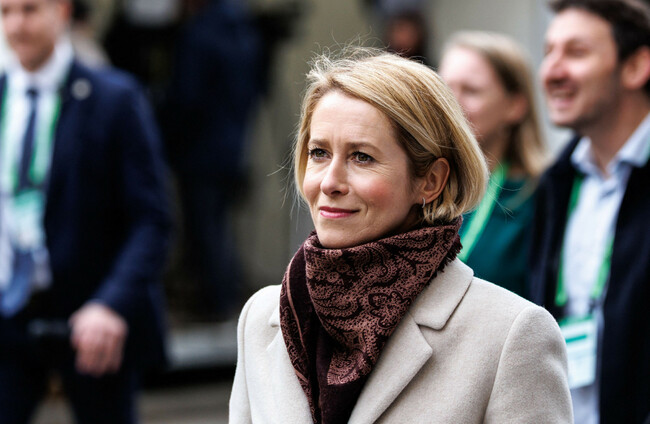

THE EUROPEAN UNION’S lead diplomat has told the Munich Security Conference that the trading bloc needs to consider its defence on a whole of Europe basis.
Kaja Kallas, the EU’s High Representative for Foreign Affairs and Security Policy, was speaking on the last day of the Munich Security Conference.
Kallas is the former prime minister of Estonia and has been one of the most robust critics of Russia. She has also advocated for a greater military capability for the EU.
Kallas, during a panel discussion following her speech, spoke of the different between the EU as a military power and NATO. She also spoke of the European Treaty mutual defence pact under Article 42(7) which Ireland does not participate in after receiving an opt out due to its neutral stance.
“We have 23 members who are also members of NATO, but not all members of the European Union are members of NATO. So that’s why we have also the 42 seven.
“Of course, we need to have the discussions how these things really work together. But it shows that Europeans need to do more. We need to strengthen the European part of NATO. Do it together with NATO. We have excellent cooperation,” she added.
Kallas said that there is a need to ensure that there is no duplication between the activities of NATO and the EU in defence, particularly around the area of defence industry procurement.
She added that in building the EU’s autonomy and agency that European Union countries would have to start viewing their strategic military capability differently.
“What we are also trying to do, which is a bit hard, because defence has always been national competence, and we really need to push, you know, Europeans, to think European,” she added.
She said that defence ministers from across Europe understand this but she said that there will be a need for the “layers underneath” in individual state’s civil service will also have to change their thinking.
While there is significant policymaker enthusiasm for strengthening defence across the EU, Kallas raised an issue familiar to Irish readers when she spoke about the failure of procurement to keep pace with expectations.
“In order to bring down the costs, also bring down the procurement times, we need to really work together and not to have this ‘defend our own industry’ or ‘it’s my national [interest]‘, but think regional, because the threat is actually European, so the answer should also be European,” she added.
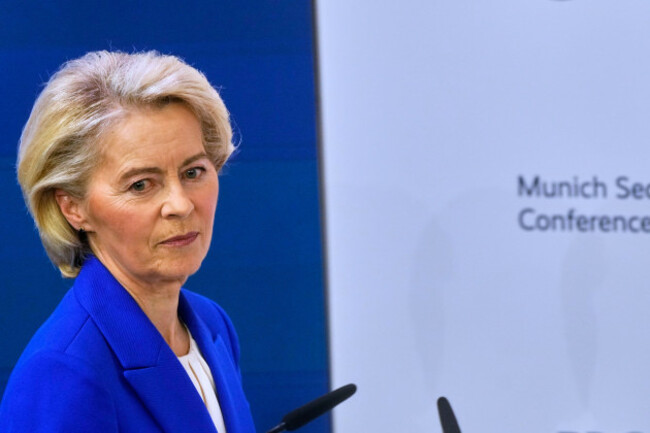
In a speech delivered to delegates she spoke of the EU’s three step approach to getting back its own agency to achieve independence from the US.
She launched an attack of the US administration’s criticism of Europe as suffering a cultural destruction. She also said that on a recent visit to Canada she discovered that 40% of Canadians wish to join the union.
“Europeans also know what this fight is for, not only our excellent living standards, health and happiness, but lessons we have learned from our own history, contrary to what some may say, woke decadent, Europe is not facing civilizational erasure,” she said.
Kallas said that the waiting list to join the EU is long and she said that polls gathered across Europe show that Europeans want a more robust Union.
She said that the data breakdown shows that citizen’s of member states want the union “to take a stronger role in the world, to defend our values, to take care of our people and to push humanity forward”.
“As president Macron said in Davos Europe, is sometimes too slow for sure, and needs to be reformed for sure, but we absolutely know what we are and what we stand for,” she added.
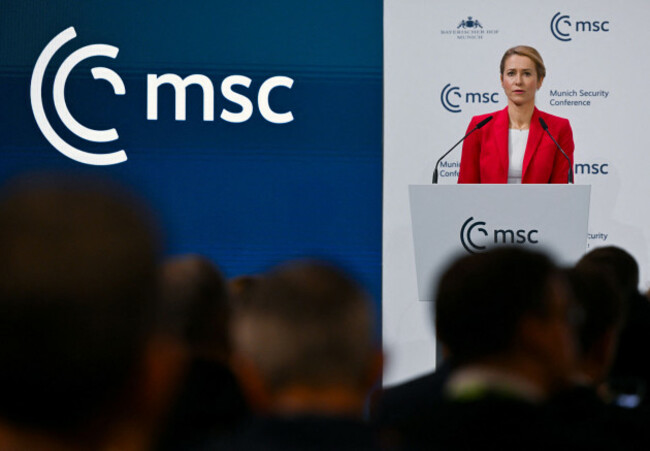
Kallas explained that she was working closely with Commission President Ursula von der Leyen on a new European Security Strategy.
She said that this will look at “hard security and defence to economic security and preparedness, because in today’s world, security is indivisible”.
She said there was a three step approach to achieving this by focusing on defence capability and resilience, building stability across the EU by enlarging the EU and the third pillar is to grow international partnerships and diversify those connections.
Kallas explained that it was her belief that bringing new members into the Union would be the “antidote to Russian imperialism”.
Ireland is a supporter of this with European Affairs Minister Thomas Byrne telling The Journal in Munich that enlargement would be a key focus of the upcoming EU Presidency.
He said that Montenegro will likely get to the “critical point” of becoming members of the EU during Ireland’s presidency.
“Europe’s path is clear. Defend Europe, secure our neighborhood and build partnerships across the globe,” she added.
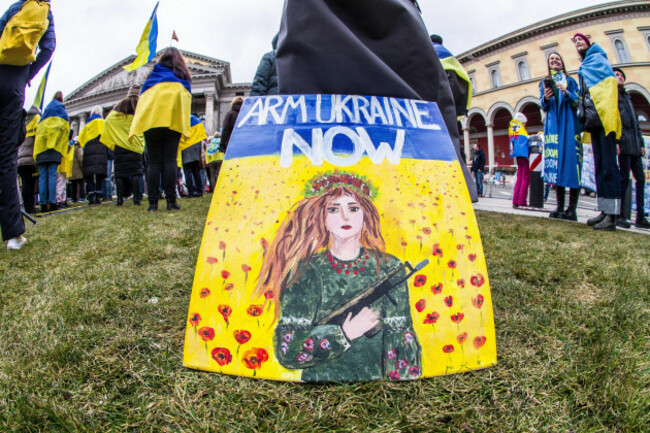
On Russia Kallas said that Putin’s military is failing in Ukraine, losing 1.2 million soldiers in fighting since it’s Crimea excursion in 2014 and the fullscale invasion four years ago.
“Russia is broken. Its economy is in shreds. It is disconnecting from the European energy markets, and its own citizens are fleeing,” she said.
In a thinly veiled criticism of the US strategy she added: “In fact, the greatest threat Russia presents right now is that it gains more at the negotiation table than it has achieved on the battlefield and on the topic of negotiations.
“What matters more than having a seat at the table is knowing what to ask when you are sitting there, how we see it is very simple. Russia’s maximalist demands cannot be met with minimalist response,” she added.

To embed this post, copy the code below on your site






have your say