We need your help now

Support from readers like you keeps The Journal open.

You are visiting us because we have something you value. Independent, unbiased news that tells the truth. Advertising revenue goes some way to support our mission, but this year it has not been enough.

If you've seen value in our reporting, please contribute what you can, so we can continue to produce accurate and meaningful journalism. For everyone who needs it.

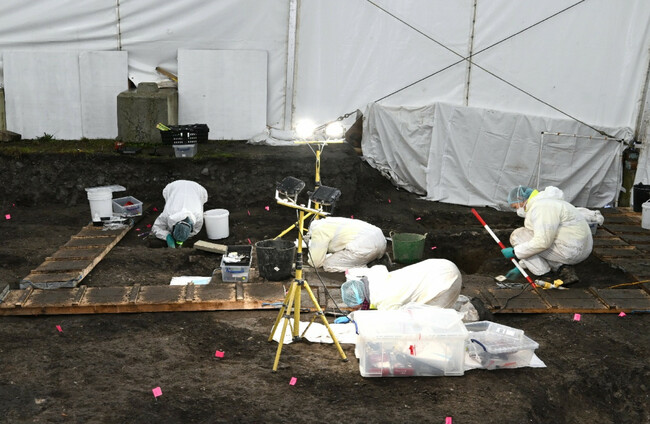
ODAIT forensic staff working under the temporary tent. Office of the Director of Authorised Intervention, Tuam

Further 22 sets of infant remains recovered from site of former Tuam mother and baby home

It brings the total number of remains recovered during the excavation to 33.

A FURTHER 22 sets of infant remains have been uncovered by forensic specialists excavating the site of the former mother and baby home in Tuam. 

It brings the total number of remains recovered during the excavation to 33. 

According to the latest report from the Office of the Director of Authorised Intervention at Tuam (ODAIT), all remains recovered so far are infants that were buried in coffins.

The remains, which were recovered between 29 November 2025 to 28 January, are now undergoing forensic analysis. 

The excavation of the St Mary’s site in the Co Galway town is attempting to identify the remains of infants who died at the home between 1925 and 1961.

In 2014, research led by local historian Catherine Corless indicated that 796 babies and young children were buried in a sewage system at the Co Galway institution across that time period.

Archaeologists and other specialists started working at the site on 14 July last year. 

Radiocarbon dating tests have confirmed that the human remains submitted for testing to date are from the premodern era (before 1955) and were buried while the mother and baby home was operating.

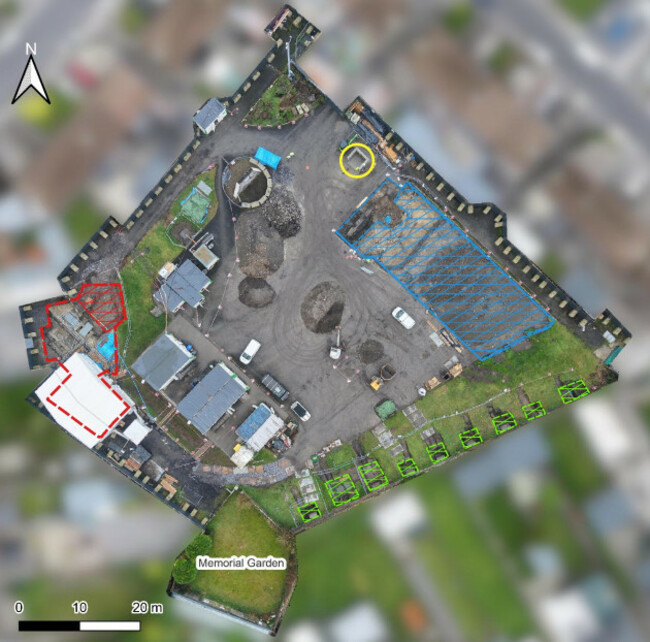
image002 The area outlined in blue shows where machine excavation is continuing; the area in red shows where hand excavation is continuing under a temporary tent; the areas marked in green are adjacent to the boundary wall at the south of the site. Office of the Director of Authorised Intervention, Tuam Office of the Director of Authorised Intervention, Tuam

A total of 28 DNA samples from relatives of people who died in the home have been taken and given to Forensic Science Ireland (FSI). The ODAIT is engaging with a further 175 people who have inquired about providing samples. 

To date, over 65 cases are being processed for determination of eligibility, with arrangements being made to take their samples in the coming weeks. Information for those interested in providing a DNA sample is available on the ODAIT’s website

The latest report states that seven sets of human remains that were recovered from an area adjacent to the boundary wall at the site last year were buried during the Workhouse era (1841 to 1918). 

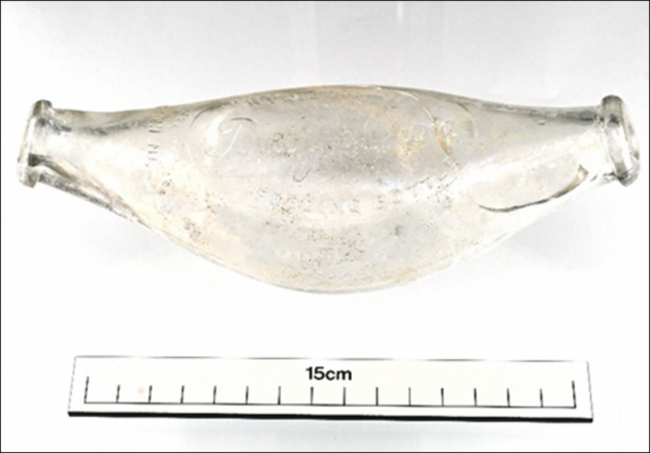
Both machine and hand excavations are continuing at the site. The excavations continue to uncover material and objects from the four phases of the site’s history, including a glass baby feeder.

“All evidence recovered is being photographed, catalogued and retained by ODAIT in a dignified and respectful manner consistent with international standards and best practice,” the report states. 

image007 (1) A glass hygienic baby feeder uncovered during the excavation. Office of the Director of Authorised Intervention, Tuam Office of the Director of Authorised Intervention, Tuam

Machine excavation has been completed in the former yard area of the site. This area is now forensically resolved apart from the well shaft and connected drains, where work is continuing. 

Hand excavations are also continuing under the cover of a tent in an area that was identified in historical documents as a “burial ground”.

The recovered evidence from the area is consistent with it being a burial ground from the time of the operation of the mother and baby home, the report states. 

A pit which disturbed the burial ground has also been uncovered.

The pit, which is over three metres wide, contains modern building debris consistent with the post-institutional era (1961 onwards). Excavation in the next reporting period will provide more information about this, including its depth. 

The ODAIT said the excavation of comingled infant remains identified during the 2016/2017 excavations in the multi-chambered tank in the memorial garden presents it with “a unique combination of forensic and engineering challenges”. 

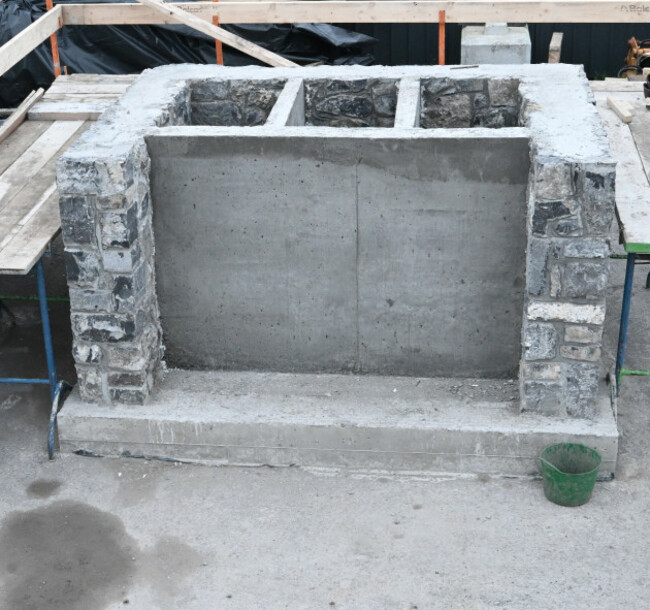
Excavators are constructing an above ground replica of a section of the tank “to test varying methodologies and ensure adherence to international standards and best practice”.

image003 Partial replica of the subsurface multi-chambered tank. Office of the Director of Authorised Intervention, Tuam Office of the Director of Authorised Intervention, Tuam

The next technical update will be issued in April.

St Mary’s home for unmarried mothers and their children was run by the Bon Secours Sisters, a religious order of Catholic nuns.

In 2021, Taoiseach Micheál Martin apologised on behalf of the state for the treatment of women and children who were housed in mother and baby homes across Ireland.

The Bon Secours Sisters also offered a “profound apology” after acknowledging the order had “failed to protect the inherent dignity” of women and children in the Tuam home.

Readers like you are keeping these stories free for everyone...
A mix of advertising and supporting contributions helps keep paywalls away from valuable information like this article. Over 5,000 readers like you have already stepped up and support us with a monthly payment or a once-off donation.

Close
28 Comments
This is YOUR comments community. Stay civil, stay constructive, stay on topic. Please familiarise yourself with our comments policy here before taking part.
Leave a Comment
    Submit a report
    Please help us understand how this comment violates our community guidelines.
    Thank you for the feedback
    Your feedback has been sent to our team for review.

    Leave a commentcancel

     
    JournalTv
    News in 60 seconds