We need your help now

Support from readers like you keeps The Journal open.

You are visiting us because we have something you value. Independent, unbiased news that tells the truth. Advertising revenue goes some way to support our mission, but this year it has not been enough.

If you've seen value in our reporting, please contribute what you can, so we can continue to produce accurate and meaningful journalism. For everyone who needs it.

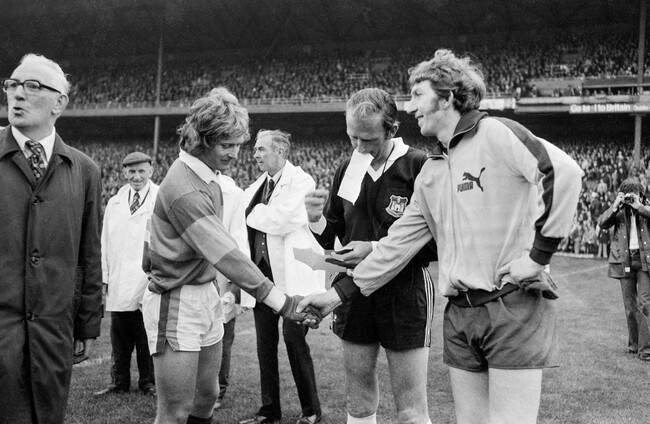
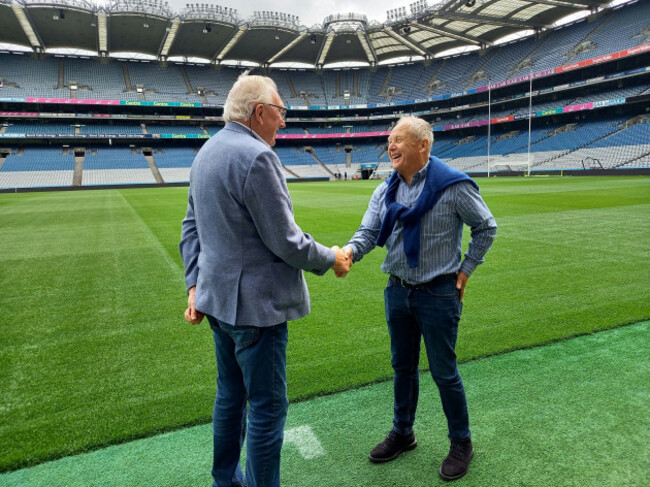
Sean Doherty of Dublin and Mickey Ned O'Sullilvan at the All Ireland final in 1975

'A golden decade': The 1970s' social revolution that reshaped the GAA

New documentary GAA 70’s – Réabhlóid Shóisialta looks at this important era.

THE 1970s WAS a pivotal decade for Irish society – and for the GAA.

Now a brand new bilingual, feature-length documentary, GAA 70’s – Réabhlóid Shóisialta (GAA 70’s – A Social Revolution) will contextualise the evolution of Gaelic Football within the broader social changes of 1970s Ireland. It will air this month on TG4.

The documentary has unprecedented access to the legendary figures who shaped a golden decade of Gaelic Football, including some of the greatest players from Dublin, Galway and Kerry. They reunite in their county colours on screen to reflect on their friendships, rivalries, and the journey to Croke Park.

As Alan Milton of the GAA puts it in the documentary: “I think that era gave the association the confidence and self-assurance to try new things and to progress in ways that might never have happened without that era.”

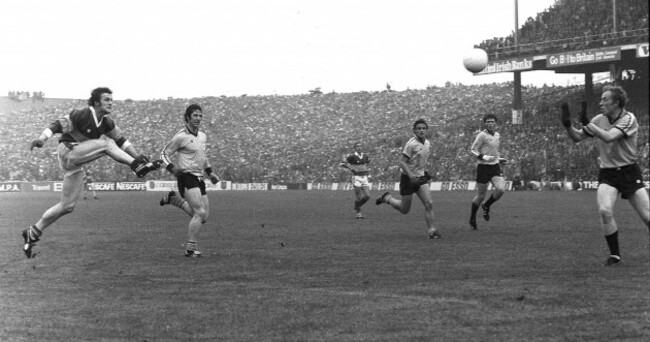
kerry-v-dublin-all-ireland-senior-football-championship-final 1978: The All-Ireland Senior Football Championship Final match between Kerry and Dublin at Croke Park SPORTSFILE SPORTSFILE

Everything changed/D’athraigh gach rud

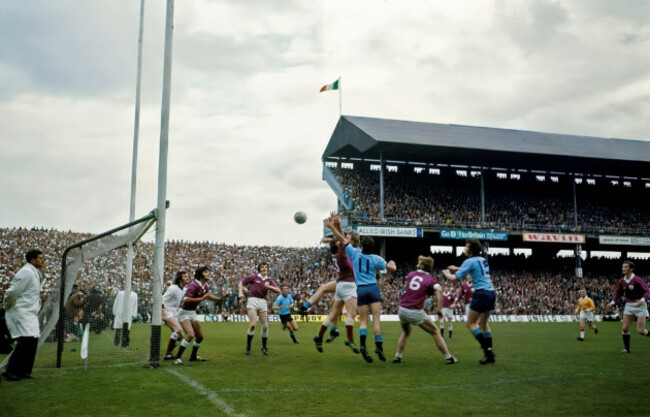
Producer AnnaMay Mullins of Bankos Tales, which is behind the documentary, explains that “everything changed in 1974″ for the GAA, the year Dublin won the All-Ireland Senior Football Championship Final against Galway. 

This followed a difficult period for the sport. In the 1960s, Dublin football had declined, as had interest in it. “The last time they had won an All-Ireland was in 1963 and they won a Leinster in ’65, and it declined rapidly after that,” says Mullins.

One of the major contributory factors was the introduction of television (Telefís Éireann started transmission in 1961). By the early 1970s, many households around the East of the country were able to access English TV stations and could pick up the shows Match of the Day on the BBC and the Big Match on ITV.

“All the young Dubliners were supporting soccer teams in England. The GAA team was ‘useless’. They were a nobody,” says Mullins.

Player Robbie Kelleher, who went on to win four All Stars for Dublin, “was ashamed of his life” about being a GAA player. “He says it in the programme, to say to his college friends that he played for Dublin, it was so bad – he’d just hide the fact that he played for Dublin the previous day, going in [to college] on a Monday morning,” says Mullins.

The country was also facing economic issues, and the Troubles were raging. “Things were very bad in Dublin. At the start of the Leinster Championship, the Dublin-Monaghan bombings happened [on 17 May 1974],” says Mullins. 

Gender discrimination/Idirdhealú inscne

There were also issues when it came to how women were treated, which was reflected in sports.

“Women weren’t allowed into certain pubs, and some of the pubs, they weren’t allowed into the public bar, only into the lounge. And they would have to sit down rather than being seated at the bar,” says Mullins.

“Young people today wouldn’t believe it. It’s hard to believe that we lived in the same Ireland.”

In 1974, the inaugural ladies’ football All Ireland was won by Tipperary (against Offaly). The Ladies Gaelic Football Association (LGFA) had only been founded in July of that year.

“The ladies had a very difficult time trying to get their All-Ireland played in Croke Park,” says Mullins. It wasn’t until 1986 that they were allowed to play their All-Ireland there.

As historian Paul Rouse puts it in the documentary: “Man walked on the moon before women could play football in Croke Park.”

Tony Hanahoe and Tommy Joe Gilmore TG4 TG4

Untold stories/Scéalta gan insint

In the documentary, players – and rivals – are reunited in their county colours. Their meetings led to “untold stories” emerging, says Mullins. 

“We wanted to bring controversial opponents together. For example, we brought [Dublin's] Tony Hanahoe and and [Galway's] Tommy Joe Gilmore together,” says Mullins, noting it was the first time the pair had met on screen since the 1970s.

The documentary also tells the story of Kevin Heffernan, who became a game-changing manager for Dublin’s senior inter-county team in late 1973.

“Prior to that, it was a team of people that managed the different counties, but [former Dublin chairman] Jimmy Gray changed the structure and appointed Kevin Heffernan as manager towards the end of ’73 and so he gave him the authority to do what he wanted to do, to manage the team,” says Mullins.

She describes Heffernan – who led the Dublin team to its 1974 All-Ireland victory – as “the first of the new legendary managers”. “As [famed Kerry manager] Mick O’Dwyer said later, Heffo picked these big men, and for them to come from nowhere and win the All-Ireland in 1974 was just incredible,” says Mullins.

Dublin player Robbie Kelleher jokes in the documentary that Heffernan “knew when to put his arm around you or give you a kick in the arse”.

The Dublin team became known as “Heffo’s Army”. “These lads came from nowhere. They were nothing in May ’74, the first round of the championship. In September, they were celebrities. They were heroes. Everything changed,” says Mullins.

2025 Sean Doherty Dublin captain 1975 & Mikey Ned O'Sullivan Kerry captain 1975 Sean Doherty, Dublin captain 1975 and Mikey Ned O'Sullivan, Kerry captain 1975 reunite

This had a knock-on effect on the sport. “New clubs were formed in Dublin. Existing clubs started to open clubhouses, and at the weekend, you’d have the craic and music,” says Mullins. “And then the Dublin supporters, instead of supporting all these big clubs in England, they were supporting Dublin.”

The documentary also focuses on Mick O’Dwyer, who trained his Kerry team to win eight All-Irelands between the 1970s and 1980s. Indeed, the documentary culminates with the electrifying Dublin–Kerry rivalry that became “box office”, celebrating its golden jubilee.

“[Cork's] Jimmy Barry Murphy said when Kerry got involved, it became one of the greatest sporting rivalries of all time. All Kerry wanted to do was beat Dublin – they had one aim, and that was to beat Dublin.”

Its makers say that Réabhlóid Shóisialta (GAA 70’s – A Social Revolution) is aimed at both GAA stalwarts and those who know little about how the 1970s were so pivotal for the GAA’s future.

The programme also includes rare archive footage, re-enactments, and major match moments, and the last recorded interview with Seán Doherty, Dublin captain in 1974, the year of its All-Ireland victory. 

Locations featured include Croke Park, Parnell Park, Scoil Mhuire Marino, and Ballinteer St John’s GFC, one of many clubs born from the sporting renaissance of the 70s.

There are two versions of the programme, which is produced by Bankos Tales for TG4 with the support of Coimisiún na Meán:

  • Monday 22 December at 7.45pm, with Irish Sign Language (ISL) and audio description on TG4 and worldwide on TG4.ie
  • Tuesday 30 December at 9pm, with English subtitles and audio description on TG4 and worldwide on TG4.ie
Close