We need your help now

Support from readers like you keeps The Journal open.

You are visiting us because we have something you value. Independent, unbiased news that tells the truth. Advertising revenue goes some way to support our mission, but this year it has not been enough.

If you've seen value in our reporting, please contribute what you can, so we can continue to produce accurate and meaningful journalism. For everyone who needs it.

Alamy Stock Photo

Major traffic policing report: Inquiry team 'shocked' by lack of interest in job of some gardaí

The Garda Commissioner has said more needs to be done to tackle underperformance, as a significant cohort are “deliberately” ignoring offences.

A REPORT RELEASED today has revealed that a “significant cohort” of roads policing gardaí show low productivity, general disinterest and make an effort to avoid work.

Some garda members tasked with policing roads have deliberately ignored driving offences, the external report discovered.

Garda Commissioner Drew Harris has described the report findings as “shocking and disturbing” and said more needs to be done to tackle underperformance.

Many gardaí were highly motivated but a “significant” minority had little interest in their jobs, according to the Crowe report, which contains the findings of an independent inquiry.

Poor work ethic

The inquiry team was “quite shocked” at how open some gardaí were about their “lack of interest” in their job.

To conduct the inquiry, information was gathered about productivity levels in six sample garda divisions, including through data analysis, one-to-one meetings with gardaí, group discussions, and “direct observations” by members of the inquiry team while accompanying gardaí on duty.

The visits to the six garda divisions revealed that there is a culture of acceptance that some roads-policing gardaí are highly productive while others are much less productive and may regularly have shifts where they issue no fixed-charge notices, make no arrests, seize no vehicles or record no incidents.

The inquiry found that some officers are known to deliberately ignore offences and spend their shifts operating at a low level of productivity.

“There was a sense of resignation across the six divisions that whilst many RPU Gardai are dedicated, professional and productive, there is a significant cohort of officers who are disinterested and whose productivity is comparatively low,” the report details. 

Some gardaí had their Automatic Number Plate Recognition (ANPR) systems switched off or not working properly, including one patrol car in which the system’s field of vision was obscured by the rear-view mirror.

ANPR can tell gardaí about whether a vehicle is taxed, insured and has an up-to-date NCT and whether there are any internal garda alerts associated with the registration.

The report also found that there were a “significant number of vacancies” in roads policing. There are 40% fewer members in the units now than there were in 2009.

It said that vacancies at supervisor level in particular are a problem.

Garda management ‘disappointed’

Harris said there needs to be a collective effort to deal with underperformance.

“While [the inquiry team] found the majority of Roads Policing Gardaí were professional, dedicated and productive, they also met a significant cohort of officers who are disinterested, have a poor work ethic and deliberately ignored offences,” he said in a letter to garda members.

“This is very disappointing, as the fact that some Roads Policing Gardaí had no issue with openly outlining to the researcher how they go about avoiding work.”

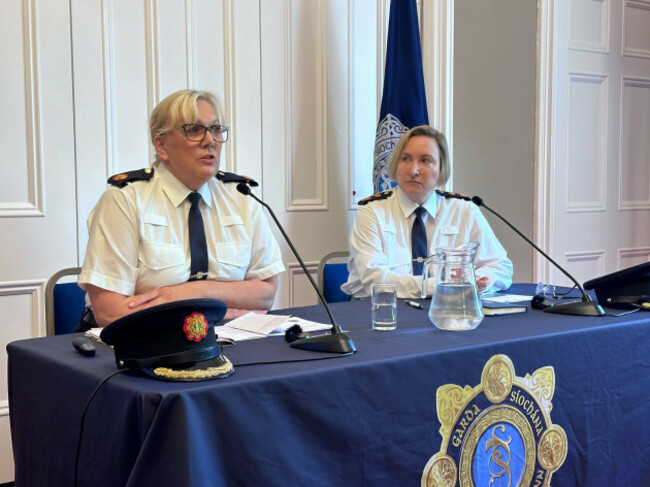
IMG_8829 Assistant Commissioner Paula Hilman and Deputy Commissioner Shawna Coxon at the report's launch today Lauren Boland Lauren Boland

Assistant Commissioner Paula Hilman said the report’s findings on productivity made for “difficult reading”.

“It’s not systemic, but it is significant numbers [of gardaí] that we need to deal with.”

She said that the “majority” of road policing gardaí are “dedicated, professional and productive”.

Deputy Commissioner Shawna Coxon said that some supervisors want to improve performance but “don’t know how” and “may have felt discipline was too harsh”.

Coxon said there’s no way to know if anyone has been sanctioned over the report’s revelations, as the findings don’t identify specific members.

Readers like you are keeping these stories free for everyone...
A mix of advertising and supporting contributions helps keep paywalls away from valuable information like this article. Over 5,000 readers like you have already stepped up and support us with a monthly payment or a once-off donation.

Close
117 Comments
This is YOUR comments community. Stay civil, stay constructive, stay on topic. Please familiarise yourself with our comments policy here before taking part.
Leave a Comment
    Submit a report
    Please help us understand how this comment violates our community guidelines.
    Thank you for the feedback
    Your feedback has been sent to our team for review.

    Leave a commentcancel

     
    JournalTv
    News in 60 seconds