We need your help now

Support from readers like you keeps The Journal open.

You are visiting us because we have something you value. Independent, unbiased news that tells the truth. Advertising revenue goes some way to support our mission, but this year it has not been enough.

If you've seen value in our reporting, please contribute what you can, so we can continue to produce accurate and meaningful journalism. For everyone who needs it.

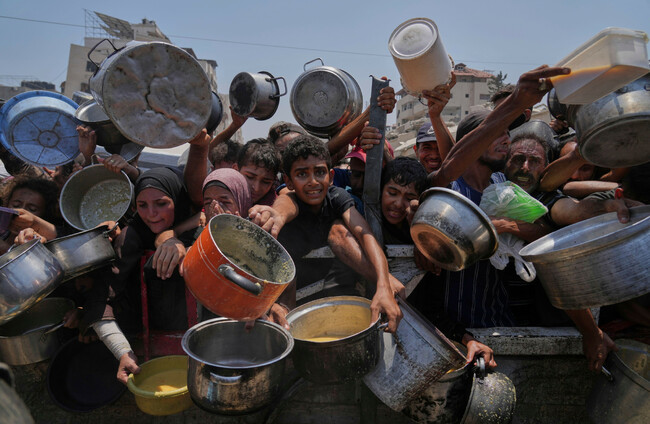
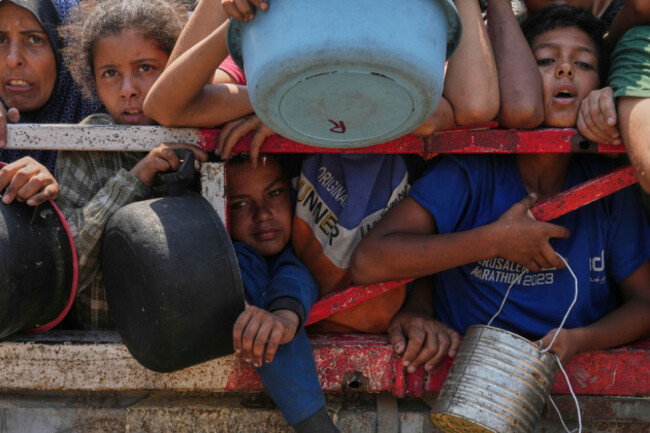
Palestinians struggle to get donated food at a community kitchen, in Gaza City, northern Gaza Strip. Alamy Stock Photo

UNRWA chief says Gaza aid airdrops will not stop 'starvation'

At least 25 were killed by Israeli air strikes and gunshots overnight, according to health officials and the ambulance service today.

LAST UPDATE | 26 Jul 2025

THE HEAD OF the UN agency for Palestinian refugees said today that planned airdrops of aid into the Gaza Strip would not solve severe food shortages caused by months of restrictions on the entry of supplies.

“Airdrops will not reverse the deepening starvation. They are expensive, inefficient & can even kill starving civilians,” UNRWA chief Philippe Lazzarini wrote on X, calling the wave of hunger affecting Gaza “manmade”.

An Israeli official told news agency AFP yesterday that aid drops in Gaza would resume soon, adding they would be conducted by the United Arab Emirates and Jordan.

The humanitarian situation in the Palestinian territory has gravely deteriorated in recent days, with international NGOs warning of soaring malnutrition among children.

“Lift the siege, open the gates & guarantee safe movements + dignified access to people in need,” Lazzarini said, referring to the various entry points under Israeli control that regulate access into Gaza.

palestinians-struggle-to-get-donated-food-at-a-community-kitchen-in-gaza-city-northern-gaza-strip-saturday-july-26-2025-ap-photoabdel-kareem-hana Palestinians struggle to get donated food at a community kitchen, in Gaza City, northern Gaza Strip, today. Alamy Stock Photo Alamy Stock Photo

Israel imposed a total blockade on the entry of aid into Gaza on 2 March after talks to extend a ceasefire broke down. It began to allow a trickle of aid to enter again in late May.

The UN and NGOs on the ground have decried the severe scarcity facing Gaza’s 2.4 million people, with shortages of food, clean water, medicine and fuel.

Israel’s military said yesterday that the country did “not limit the number of trucks going into the Gaza Strip”, and that humanitarian organisations and the UN were not collecting the aid once it was inside the territory.

Humanitarian organisations accuse the Israeli army of imposing excessive restrictions on the goods allowed into Gaza and on the routes made available to transport the aid to distribution points.

The United Arab Emirates, Jordan, France and other countries carried out airdrops in Gaza in 2024, at a time when the transport of aid on land routes also faced restrictions.

Many in the humanitarian community consider such drops to be ineffective and dangerous due to the relatively small volumes of deliveries and the risk of aid seekers being killed by landing crates, as has previously happened in Gaza.

More then two dozen Western-aligned countries and more than 100 charity and human rights groups have called for an end to the war, harshly criticising Israel’s blockade and a new aid delivery model it has rolled out.

The charities and rights groups said even their own staff were struggling to get enough food.

A Jordanian official said the airdrops will mainly be food and milk formula.

UK Prime Minister Sir Keir Starmer wrote in a newspaper article on Saturday that the UK was “working urgently” with Jordan to get British aid into Gaza.

Aid group the World Central Kitchen said yesterday it was resuming limited cooking operations in Deir al-Balah after being forced to halt due to a lack of food supplies.

It said it is trying to serve 60,000 meals daily through its field kitchen and partner community kitchens, less than half of what it has cooked over the previous month.

Twenty-five killed by air strikes and gunshots

At least 25 were killed by Israeli air strikes and gunshots overnight, according to health officials and the ambulance service today.

The majority of victims were killed by gunfire as they waited for aid trucks close to the Zikim crossing with Israel, said staff at Shifa hospital, where the bodies were brought.

The Israeli army did not respond to requests for comments about the latest shootings.

Those killed in the strikes include four people in an apartment building in Gaza City among others, hospital staff and the ambulance service said.

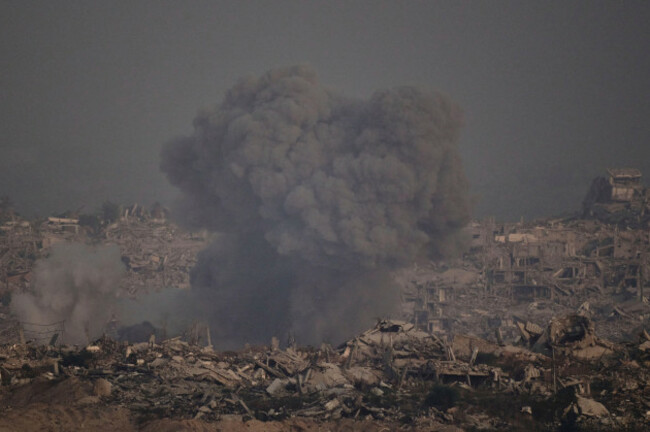
smoke-rises-to-the-sky-following-an-israeli-airstrike-in-the-northern-gaza-strip-as-seen-from-southern-israel-saturday-july-26-2025-ap-photoleo-correa Smoke rises to the sky following an Israeli airstrike in the northern Gaza Strip as seen from southern Israel. Alamy Stock Photo Alamy Stock Photo

The strikes come as ceasefire talks between Israel and Hamas have hit a standstill after the US and Israel recalled their negotiating teams on Thursday, throwing the future of the talks into further uncertainty.

Israeli Prime Minister Benjamin Netanyahu said yesterday his government was considering “alternative options” to ceasefire talks with Hamas.

His comments came as a Hamas official said negotiations were expected to resume next week and portrayed the recall of the Israeli and American delegations as a pressure tactic.

Egypt and Qatar, which are mediating the talks alongside the US, said the pause was only temporary and that talks would resume, though they did not say when.

The Zikim crossing shootings come days after at least 80 Palestinians were killed trying to reach aid entering through the same crossing.

During the shootings last night, Sherif Abu Aisha said people started running when they saw a light that they thought was from the aid trucks, but as they got close, they realised it was from Israel’s tanks.

That is when the army started firing on people, he told The Associated Press.

He said his uncle, a father of eight, was among those killed.

“We went because there is no food… and nothing was distributed,” he said.

The Israeli military said at the time its soldiers shot at a gathering of thousands of Palestinians who posed a threat and that it was aware of some casualties.

Israel is facing increased international pressure to alleviate the catastrophic humanitarian crisis in Gaza.

Includes reporting by AFP

Close
JournalTv
News in 60 seconds