We need your help now

Support from readers like you keeps The Journal open.

You are visiting us because we have something you value. Independent, unbiased news that tells the truth. Advertising revenue goes some way to support our mission, but this year it has not been enough.

If you've seen value in our reporting, please contribute what you can, so we can continue to produce accurate and meaningful journalism. For everyone who needs it.

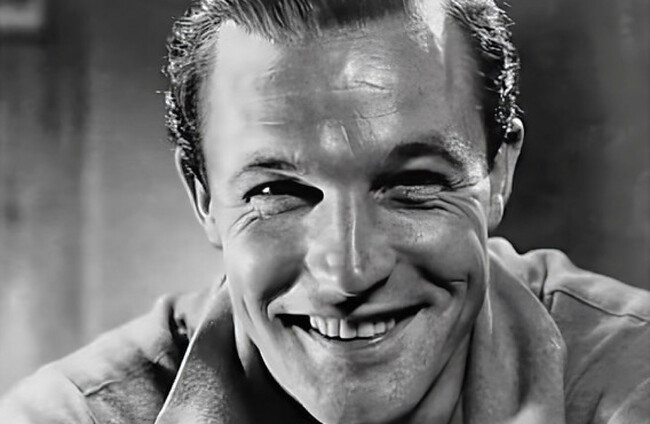
Now Streaming: How Hollywood star Gene Kelly reconnected with his Irish roots

A new documentary, due to air on TG4 on Christmas Day, explores the famous actor and dancer’s story.

THE HISTORY OF Hollywood is littered with people who have Irish roots – Mary Pickford, Maureen O’Hara, Grace Kelly, and the king of dance himself, Gene Kelly.

Now a new documentary called Gene Kelly: Réalt an Rince, will air on TG4 this Christmas Day. Directed by Brian Reddin, it looks at Kelly’s career and how he reconnected with his Irish ancestry.

Reddin is behind previous documentaries for TG4 like Grace Kelly: Banphrionsa Mhaigh Eo. Growing up, his family watched the musical Singin’ in the Rain (1952) – perhaps Gene Kelly’s opus – countless times.

“I remember him in a film called It’s Always Fair Weather (1955). Gene Kelly has roller skates on, and he tap dances while wearing the roller skates. I remember thinking: how is he doing that?” recalls Reddin. “All these things were done in one long take. There’s no clever edits, no gimmicks, no special effects… I was always amazed at his dexterity and his skill, and how he was really like an athlete on screen.”

But Reddin wasn’t sure about Kelly’s Irish heritage, until he was gifted a biography of the star. Certain there was a documentary in the topic, he reached out to Kelly’s daughter Kerry Kelly Novick, who was soon on board. 

“She was his first child [of three children], and she’s an amazing woman. She has an encyclopedic knowledge of her dad’s career because she was there from the get-go,” he says.

Kelly’s full name was Eugene Curran Kelly. The Curran is from his mother’s side – his maternal grandfather was born in Derry and emigrated to Canada. His great-grandfather on his father’s side was Irish, but it’s not clear exactly where he hailed from – possibly Clare.

Both families ended up in Pittsburgh, where Kelly’s parents (James and Harriet) met and married. But they didn’t stay very connected to their Irish roots for most of his childhood, says Reddin, in large part due to the fact that the city wasn’t always hugely receptive to Irish emigrants. 

“When he grew up, they didn’t shout about being Irish. He called himself Gene, not Eugene,” says Reddin. “But [as he grew up] it changed, and Pittsburgh has become quite pro-Irish at that point, because the Irish, as we always do, infiltrate local politics and the local mayor was Irish.”

“He grew up in an America that was changing towards the Irish, and started to embrace his Irish-American background.”

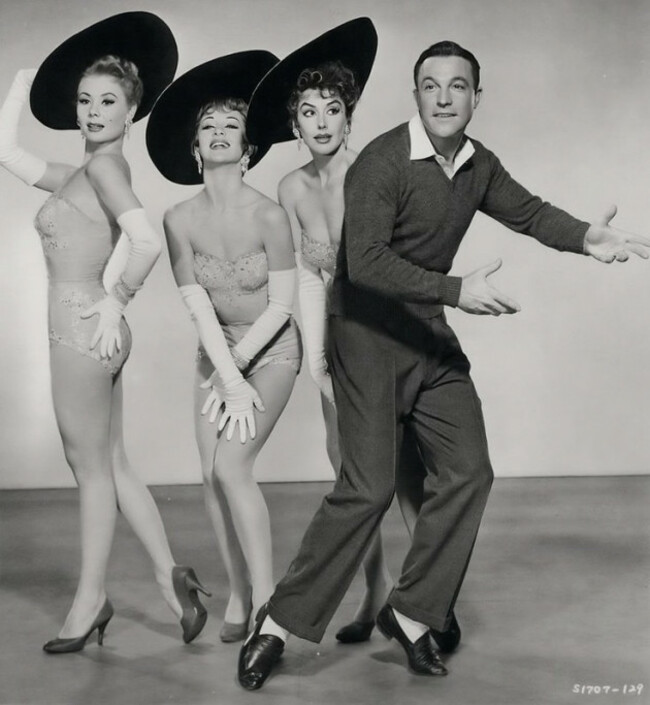
54923491574_ea78046582_c (1) Gene Kelly in Les Girls (1957)

As a child, Kelly and his brothers and sisters, (he was the middle child) were part of an act called the Five Kellys.

“He started to study dance, and then the family ended up opening a dance studio, where he taught dance from an early age,” continues Reddin. “He would have taught Irish dancing, ballet, jazz dance.”

Finding fame/Clú a aimsiú

Kelly’s fame came in his late twenties. He started in musical reviews in Pittsburgh, before getting a pivotal role in the Broadway stage play Pal Joey (later made into a movie with Frank Sinatra and Kim Novak).

“He becomes a major Broadway star. And then Hollywood comes calling, and that’s it. He packs his bags, he moves to Hollywood, and then becomes this big star,” says Reddin.

As an adult, Kelly fully embraced his Irishness. “He always considered himself very Irish. Every time he’s interviewed, he talks about his Irish background,” says Reddin.

“When he does performances on TV shows, he always includes Irish dance in them. He did a documentary in the 1950s for an American TV station, called Dancing, a Man’s Game. In it he does a whole spiel about Irish dancing and how Irish dancing influenced American tap dancing.”

TG4 / YouTube

“He’s talking about this at a time when Irish dancing in Ireland wasn’t as popular as it is now,” adds Reddin. It was a huge deal to have a Hollywood star show such passion for it.

Right and wrong/Ceart agus mícheart

Another side of Kelly that the documentary explores is his ethics. “Because he was raised a Catholic, it really informed his sense of right and wrong,” says Reddin.

During the 1950s and the Hollywood blacklist era (when stars were banned from working due to being suspected Communists), Kelly was a union rep for the Screen Actors Guild (SAG). “He was very involved in politics and unions,” says Reddin. “He just came across as a thoroughly decent guy, always on the right side of doing the right thing.”

Perhaps his main failing was his perfectionism.

“If you didn’t live up to his standards, you were in trouble. Debbie Reynolds of Singin’ in the Rain has written about how she hated him. He made her life hell… he was so demanding of her to do it again, do it again. Do it again. Get it right.” Reynolds is quoted as calling Kelly a “cruel taskmaster”.

“And Barbra Streisand, for example, didn’t enjoy working with him on Hello Dolly. But I asked his daughter about [his perfectionism] and she said, ‘what can I tell you – he was a perfectionist, if you didn’t live up his standards, he was disappointed in you. And it made you be perfect.’”

Relationships/Caidrimh

Kelly was married three times. In the 1950s, his wife Betsy Blair was blacklisted as a communist “and kicked out of Hollywood”. Kelly and his wife moved to the UK for a period, and both made films in Europe. 

“He did that to try to keep the heat off her, and make sure that she had a career. So he kind of gave up his Hollywood career for her, because she’d been blacklisted. He was disgusted at the way Hollywood was going,” says Reddin.

Kelly was a big Francophile and made several films in France. He also befriended the Irish writer Samuel Beckett, who lived in the country.

After he and Blair divorced in 1957, Kelly married his choreographic assistant Jeanne Coyne in 1960 (she had been married until 1951 to director Stanley Donan, who co-directed films like Singin’ in the Rain with Kelly). Coyne died in 1973 of leukemia.

“This is when his association with Ireland really kicks off, because he comes over here in 1973 after his wife dies to get away from it all and get his head together,” says Reddin. He stayed in Puckane, Co Tipperary, and expressed an interest in buying a house in Ireland.

Kelly decided to dedicate himself to being a stay at home dad, and his filmmaking slowed down – he also wanted to direct more.

In the 1990s, he met his third wife, Patricia Ward Kelly.

As for his career, he mostly focused on documentaries in his later decades, and his final movie was in 1980 – Xanadu, co-starring Olivia Newton John.

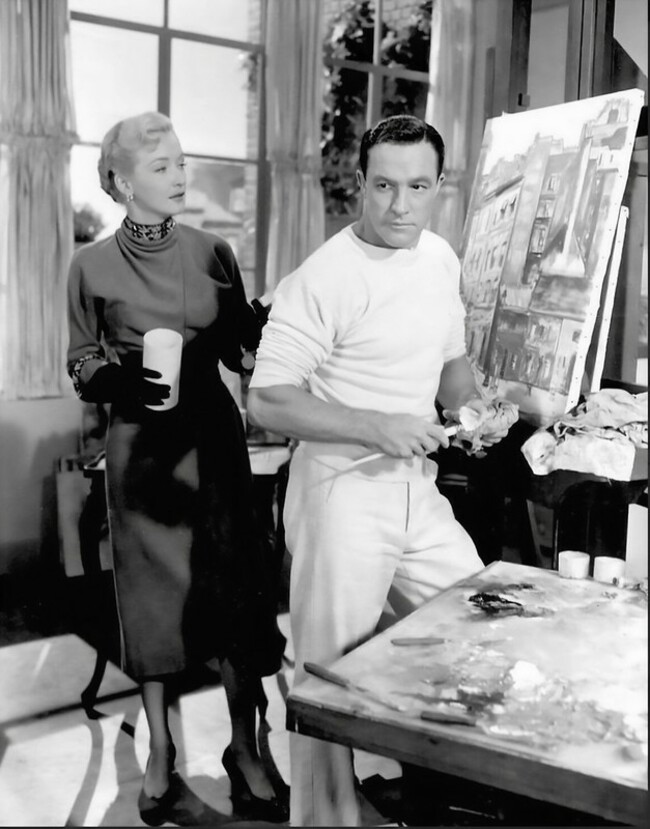
54923242821_7eea54cf1c_c (1) An American in Paris (1951)

Legacy/Oidhreacht

Kelly was a mentor to young dancers, including Paula Abdul and Michael Jackson – it’s said Kelly advised Jackson to wear white socks and black shoes, to draw attention to his feet. To this day, young dancers write to his daughter Kerry about her father.

“His main legacy was in terms of filmmaking. He was one of the first to shoot musicals on location. So when you look at La La Land (2016), it wouldn’t have happened without Gene Kelly,” says Reddin. “When they did On The Town (1949) with Frank Sinatra and Gene Kelly, they shot on location in New York.”

Kelly also helped to change how dancers were seen on screen. “He never wore top hat and tails. He always wore shirts and tank tops,” Reddin says. 

He was short and stocky. So he looked more like a boxer than a dancer. This is one point we make in the documentary – it’s interesting, he kind of made it okay for men to dance.

Kelly’s work also impacted how dancers were filmed. “[Up until then] they tended to do a master shot, wide shot and then cut to close-ups of the feet, and he never did that. He hated that. He always wanted dancers to be shot in long shots so you could see the entire body dancing,” explains Reddin.

It sounds like a simple thing, but that revolutionised how people shot dance on screen.

As a director he was similarly boundary-pushing: “He was very innovative in terms of split screens, camera techniques, using dollies and tracks, keeping everything wide, shooting on locations, working with animation.”

Reddin says a large reason why he makes these documentaries is the fear that Old Hollywood stars like Kelly will be forgotten. “He was born 113 years ago. It’s a long time. It’s a different generation. And yes, I think they are all in danger of being forgotten,” he says. 

That said, a biopic about the star, with Chris Evans playing Kelly, is in the works – so maybe Kelly’s reputation will persist for another generation. 

As for Kelly’s Irishness, he remained so connected to it that he was granted Irish citizenship late in life.

Gene Kelly: Réalt an Rince will air on TG4 at 10.05pm on Christmas Day. 

Close