Sign in. It’s quick, free and it’s up to you.
An account is an optional way to support the work we do. Find out more.
Sign in. It’s quick, free and it’s up to you.
An account is an optional way to support the work we do. Find out more.
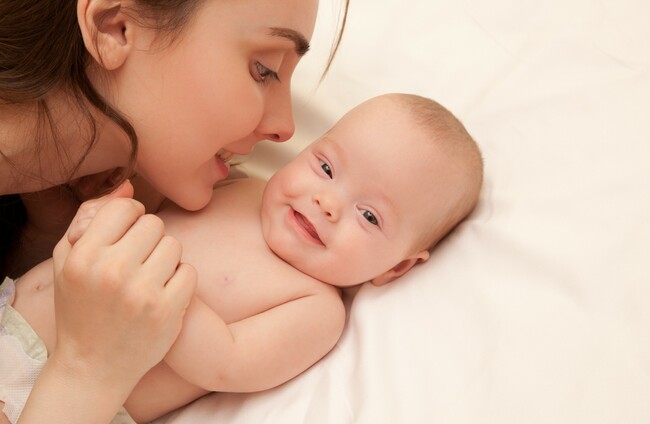
A NEW STUDY carried out in Trinity College Dublin has found that there is a strong positive relationship between a planned birth at home and breastfeeding.
It found that giving birth at home is significantly associated with breastfeeding immediately after birth, and with continued breastfeeding during the first 6 months.
Homebirth mothers were more likely to exclusively breastfeed for six months – 22% did so, compared to 9% of other mothers.
The study included over 10,500 Irish women and 17,500 women from the UK.
Ireland has significantly lower rates of breastfeeding with only 60% of women starting breastfeeding as against a European norm of around 90%.
This is in spite of World Health Organisation (WHO) guidelines which recommend exclusive breastfeeding for the first six months of life.
Government statistics
Dr Lina Zgaga, the study’s principal researcher said: “The key question that this work raises is – when breastfeeding is so strongly recommended across the board by the medical profession, what causes lower rates of breastfeeding following hospital births?
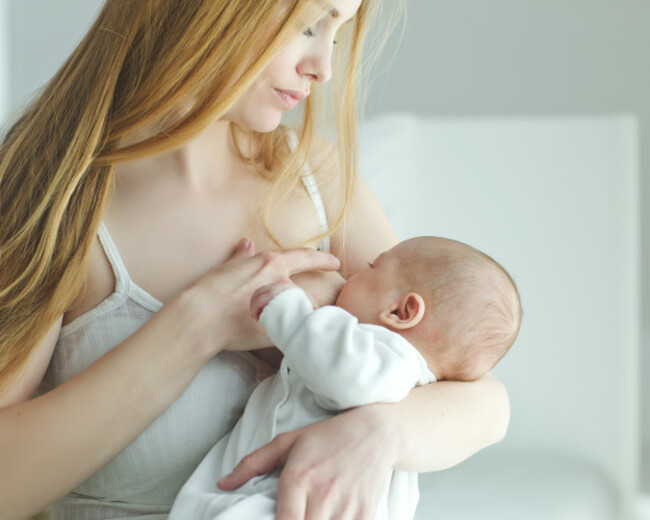
Hopefully this research can help us learn from the home birth model and identify the changes that could be implemented in standard hospital-based perinatal care to encourage and facilitate breastfeeding.
The research, the largest such yet carried out, was undertaken by Trinity’s department of public health and primary care.
Published in the leading international journal BMJ Open, it also brought into question some Irish government statistics.
“The self-reported home birth rate we observed for the Irish cohort (1.48%) was similar to the UK rate (2%), but more than seven times the rate reported in Irish government-published data (0.2%),” said Dr Clare Quigley, the main analyst of the study.
The government data may report a lower rate as it includes only planned home births that were attended to by an independent midwife, but excludes home births that took place as part of hospital-administered home birth schemes.
Better with midwives
The study’s researchers suggest a number of potential reasons for the stronger association between breastfeeding and home birth:
Forceps and painkillers
The study also found that

To embed this post, copy the code below on your site
















have your say