We need your help now

Support from readers like you keeps The Journal open.

You are visiting us because we have something you value. Independent, unbiased news that tells the truth. Advertising revenue goes some way to support our mission, but this year it has not been enough.

If you've seen value in our reporting, please contribute what you can, so we can continue to produce accurate and meaningful journalism. For everyone who needs it.

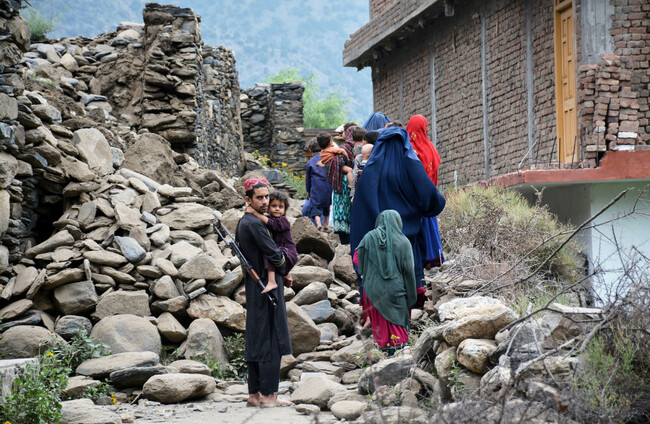
Local residents walk by a house destroyed by the earthquake. Alamy Stock Photo

More than 800 people killed after strong earthquake hits Afghanistan

The earthquake struck just before midnight, shaking buildings from Kabul to Pakistan’s capital Islamabad, around 370 kilometres away.

LAST UPDATE | 1 Sep

MORE THAN 800 people Rescuers searched into the night to pull to safety those trapped under the debris of simple mud and stone homes built into steep valleys.

More than 2,500 people were injured in Kunar province, with numerous houses destroyed. In Nangarhar province, 12 people were killed and another 255 injured.

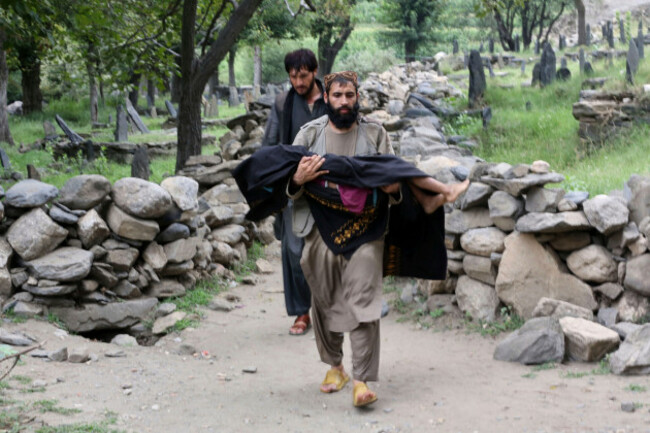
The dead, some of them children, were wrapped in white shrouds by villagers who prayed over their bodies before burying them, while helicopters ferried the wounded to hospitals.

The 6.0-magnitude earthquake struck just before midnight, shaking buildings from Kabul to neighbouring Pakistan’s capital Islamabad, around 370 kilometres away, for several seconds, AFP journalists said.

an-injured-person-is-carried-to-a-military-helicopter-that-landed-to-evacuate-injured-victims-of-an-earthquake-that-killed-many-people-and-destroyed-villages-in-eastern-afghanistan-in-mazar-dara-kun An injured child is carried to a military helicopter. Alamy Stock Photo Alamy Stock Photo

More than 1.2 million people likely felt strong or very strong shaking, according to the US Geological Survey (USGS), which recorded at least five aftershocks throughout the night. Casualties and destruction swept across at least five provinces.

The epicentre of the quake, which struck at a relatively shallow depth of eight kilometres, was 27 kilometres from the city of Jalalabad in Nangarhar province, according to the US Geological Survey. 

Shallow quakes tend to cause more damage than deep tremors.

Two children were killed when the roof of their home caved in during the shaking, according to initial reports from provincial authorities.

AFP photos showed several injured children seen receiving treatment at a nearby hospital.

Rescue efforts

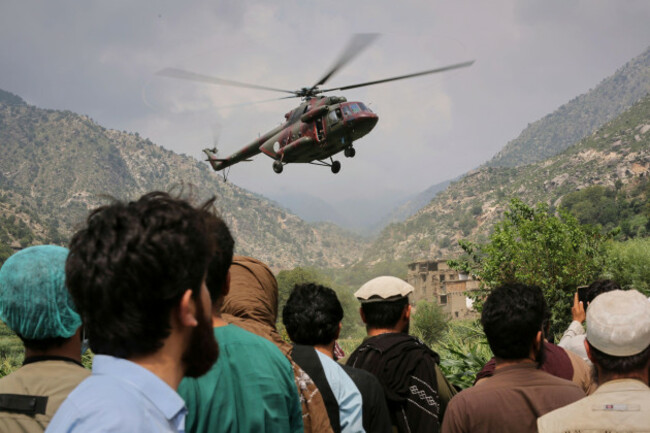
a-military-helicopter-carrying-injured-victims-of-an-earthquake-that-killed-hundreds-and-destroyed-villages-in-eastern-afghanistan-takes-off-in-mazar-dara-kunar-province-afghanistan-monday-sept-1 A military helicopter carrying Injured victims after the earthquake takes off in Mazar Dara, Kunar province, Afghanistan. Alamy Stock Photo Alamy Stock Photo

Some of the most severely impacted villages in remote Kunar provinces “remain inaccessible due to road blockages”, the UN migration agency warned in a statement to AFP.

The Taliban authorities and the United Nations mobilised rescue efforts, with the defence ministry saying at least 40 flight sorties had so far been carried out.

A member of the agricultural department in Nurgal said people had rushed to clear blocked roads in the hours after the earthquake, but that badly affected areas were remote and had limited telecoms networks.

Nangarhar and Kunar provinces border Pakistan, with the Torkham crossing the site of many waves of Afghan returnees deported or forced to leave, often with no work and nowhere to go.

UN Secretary-General Antonio Guterres added his condolences to those shared by the Taliban government and several nations.

“I stand in full solidarity with the people of Afghanistan after the devastating earthquake that hit the country earlier today,” he said.

In a post shared by the Vatican, Pope Leo XIV said he was “deeply saddened by the significant loss of life caused by the earthquake in the area of eastern Afghanistan”.

Humanitarian response

Concern Worldwide, Ireland’s largest aid and humanitarian agency, said that they are preparing to assist in the response to the earthquake.

Concern has worked in Afghanistan for 27 years, since first responding to a major earthquake there in 1998.

The agency said that it has reallocated stock such as shelter and non-food items on standby to support those affected, in coordination with other organisations responding on the ground.

Shahzad Jamil, Concern Country Director in Afghanistan, said that the numbers of people killed or injured “are changing on an hourly basis.”

“The regions impacted are mountainous areas that are extremely remote and difficult to reach. In normal circumstances the roads are very poor and in general infrastructure doesn’t exist,” Jamil said.

“With the earthquake this has gotten even worse, with access to some villages no longer possible.”

He said that the most immediate needs are cooked food, water, medical supplies, tents, blankets, kitchen sets, hygiene supplies and clothes.

“Concern works in north-eastern Afghanistan, not in the areas impacted, however we are awaiting the assessment findings from those agencies working on the response directly, on how best we can assist and where best the emergency supplies, we have available, can be used,” Jamil said.

Frequent quakes

A series of aftershocks followed throughout the night, including a powerful and shallow 5.2-magnitude quake just after 4am (11.30pm GMT Sunday).

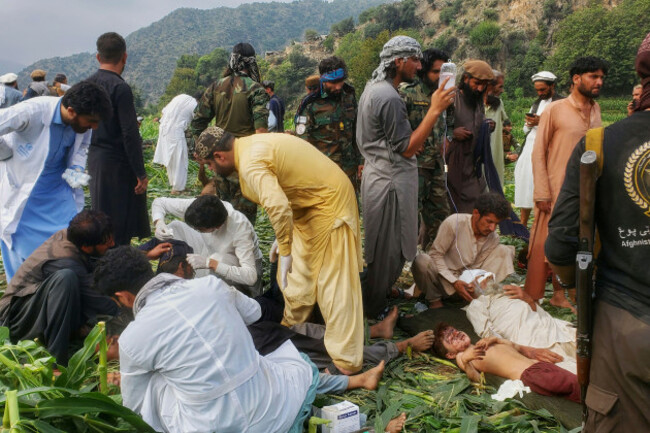
civil-defense-workers-locals-and-army-soldiers-prepare-to-evacuate-injured-victims-of-an-earthquake-that-killed-hundreds-and-destroyed-numerous-villages-in-eastern-afghanistan-in-mazar-dara-kunar Civil defense workers, locals, and soldiers prepare to evacuate injured victims of the earthquake. Alamy Stock Photo Alamy Stock Photo

Afghanistan is frequently hit by earthquakes, especially in the Hindu Kush mountain range, near the junction of the Eurasian and Indian tectonic plates.

Nangarhar province was also hit by flooding overnight Friday to Saturday, which killed five people and destroyed crops and property, provincial authorities said.

Last year a series of strong quakes jolted Afghanistan’s Herat province, killing more than 1,500 people and damaging or destroying more than 63,000 homes, according to an assessment by the United Nations, the European Union and the Asian Development Bank.

Ravaged by four decades of war, Afghanistan is already contending with a humanitarian disaster.

With the return of the Taliban, foreign aid to Afghanistan has shrunk dramatically, undermining the already impoverished nation’s ability to respond to disasters.

In 2015, more than 380 people were killed in Pakistan and Afghanistan when a powerful 7.5-magnitude earthquake ripped across the two countries, with the bulk of the deaths in Pakistan.

In that disaster, 12 young Afghan girls were crushed to death in a stampede as they tried to flee their shaking school building.

Additional reporting by Andrew Walsh

Readers like you are keeping these stories free for everyone...
A mix of advertising and supporting contributions helps keep paywalls away from valuable information like this article. Over 5,000 readers like you have already stepped up and support us with a monthly payment or a once-off donation.

Close
JournalTv
News in 60 seconds