We need your help now

Support from readers like you keeps The Journal open.

You are visiting us because we have something you value. Independent, unbiased news that tells the truth. Advertising revenue goes some way to support our mission, but this year it has not been enough.

If you've seen value in our reporting, please contribute what you can, so we can continue to produce accurate and meaningful journalism. For everyone who needs it.

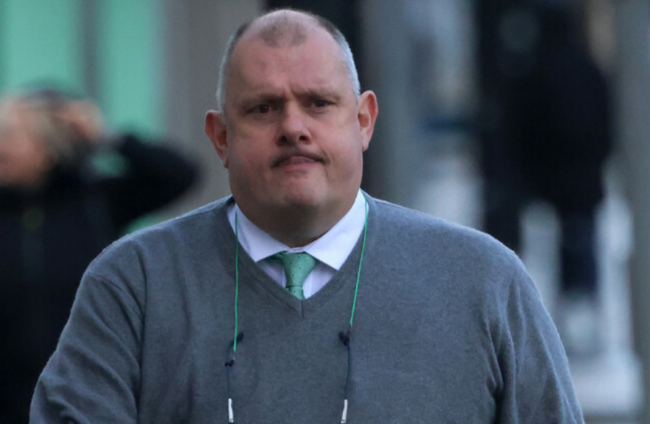
Former Garda Superintendent Eamonn O'Neill. Brendan Gleeson

Investigation into Superintendent and gardaí was 'vicious', Garda penalty points trial told

Eamon O’Neill, is accused of 27 counts of engaging in conduct tending or intended to pervert the course of justice when he was a serving Superintendent in the mid west region between 2017 and 2019.

A PROBE BY the Garda National Bureau of Criminal Investigation (GNBCI) that led to the prosecution of a retired superintendent, who is accused of unlawfully interfering in potential or pending road traffic summonses, was “insane” and “vicious”, a barrister for the accused said today.

Eamon O’Neill, is accused of 27 counts of engaging in conduct tending or intended to pervert the course of justice when he was a serving Superintendent in the midwest region between 2017 and 2019.

O’Neill, along with four co-accused serving gardaí, Sergeant Anne Marie Hassett, Sergeant Michelle Leahy, Garda Colm Geary Garda Tom McGlinchey, have denied a total of 39 counts of unlawfully interfering in potential or pending prosecutions involving 26 motorists.

The trial, which is in its eighth week before Limerick Circuit Criminal Court, has been hearing closing speeches from barristers on behalf of the five accused and the prosecution.

The prosecution’s case, led by Carl Hanahoe, is that O’Neill gave “preferential” treatment to people he knew or had a close connection with in trying to get them off potential or pending road traffic prosecutions.

Hanahoe argued that “preference” was entirely different to “discretion”, which the court heard was a power available to gardaí when using their own judgement on whether or not to pursue a prosecution.

Hanahoe has argued that local Superintendent’s lost the power to cancel traffic tickets in 2014 when this power was reconfigured to the office of a Cancelling Authority in Thurles, Co Tipperary, after the much publicised “penalty points scandal” that was unearthed by garda whistleblower Maurice McCabe.

Hanahoe told the jury that the main reason for attempts to get the motorists off was O’Neill’s friendship or close connection with the individuals — Hanahoe said these people were not on trial.

Hanahoe produced text messages in court which he said clearly showed that O’Neill was using his director indirect connection with the motorists as the reason for quashing their pending or potential prosecutions.

Sometimes the detecting Garda would be asked in a text if they could “square” the court summonses or if it was the prosecution was by way of a go safe speed detection van, the case would be withdrawn in court by a Garda Court Presenter, Hanahoe said.

The court heard motorists contacted O’Neill, asking for advice and discretion. In turn, O’Neill contacted Tom McGlinchey and Colm Geary, who in turn contacted the investigating garda in the cases.

Hassett also texted some of the detecting garda members, and Leahy “ensured the summonses were withdrawn”, said Hanahoe.

Some of the motorists involved members of the Limerick senior hurling panel, which O’Neill was associated with, it was heard.

It was a case of “who you are” said Hanahoe, and that O’Neill allowed this “preference” and his “friendship” with others to dictate “who ought to be prosecuted”.

Hanahoe said the four serving accused Gardaí, who had no connection to the cases, involved themselves by trying to “persuade” other gardaí not to prosecute the motorist, or in the case of Leahy had some of the cases struck out in court.

“The evidence is clear; what was happening was preference – pure and simple, and the appropriate verdict on all counts is guilty,” Hanahoe told the jury.

In his closing speech, Felix McEnroy, senior counsel for O’Neill said experienced senior gardaí, including, retired Assistant Garda Commissioner Fintan Fanning and retired Chief Superintendent, Gerry Mahon, had given evidence at the trial of their concern of relying on text messages in a garda investigation.

McEnroy said when Mahon found out about the GNBCI probe into O’Neill, he was so “concerned” that he wrote a 17-page letter to the then Garda Commissioner and another letter to the then Deputy Commissioner “outlying his serious misgivings”.

McEnroy suggested to the jury they were “not getting the whole story” from the prosecution and that a previous GNBCI investigation into O’Neill, in respect of completely separate allegations not before the court “went nowhere”.

“They don’t want me to talk about that. That was one serious mess,” said McEnroy.

McEnroy said Eamon O’Neill had told GNBCI that he had legitimately used a long established practice of Garda discretion when the allegations of unlawfully squaring summonses were put to him.

McEnroy argued the GNBCI unfairly targeted O’Neill the second time because its first investigation failed, and it had cost a lot of money and resources. McEnroy said this was “outrageous” and “vicious”.

“The crucifixion of Eamon O’Neill has already happened, and this is about the cremation of Eamon O’Neill, and, the other [accused] are the kindling around his feet to ensure the fire captures him and incinerates him as a criminal,” said McEnroy.

McEnroy said O’Neill was regarded as an “outstanding garda” who helped end a decade long gangland warfare in Limerick city, that resulted in 23 murders, but, he said the GNBCI probes had “destroyed” him.

He suggested the GNBCI was “excessive” and it had decided that “if he wasn’t guilty in [the first probe] he must be guilty on this”.

“This is insane, this case has a vicious undertone,” added McEnroy.

McEnroy argued that if Garda management had an issue with O’Neill’s behaviour it should have made enquiries internally and not pursued a criminal trial… “What on earth has it got to do with criminal law?,” he asked.

“The management of An Garda Siochana is in complete disarray if this case is an accurate description of what is going on,” added McEnroy.

He suggested the prosecution case was a “mess”, and that if O’Neill was found guilty it would be “a profound injustice, an assault on the truth and reprehensible”.

Vincent Heneghan, senior counsel for Geary, said his client received text message from O’Neill asking him to do something and he did it.

“He didn’t think behind it, he did what he was tasked to do. He was a garda and O’Neill was a superintendent. He did nothing wrong,” said Heneghan.

The barrister said Geary must be highly thought of in the force because he had successfully applied for promotion to the rank of Detective Garda after he was suspended on foot of the GNBCI investigation

Heneghan said the role requires the successful candidate to show they have “integrity, decency, bravery”.

Closing speeches by barristers for McGlinchey, Hassett, Leahy will be heard from Friday onwards.

Readers like you are keeping these stories free for everyone...
A mix of advertising and supporting contributions helps keep paywalls away from valuable information like this article. Over 5,000 readers like you have already stepped up and support us with a monthly payment or a once-off donation.

Close
JournalTv
News in 60 seconds