We need your help now

Support from readers like you keeps The Journal open.

You are visiting us because we have something you value. Independent, unbiased news that tells the truth. Advertising revenue goes some way to support our mission, but this year it has not been enough.

If you've seen value in our reporting, please contribute what you can, so we can continue to produce accurate and meaningful journalism. For everyone who needs it.

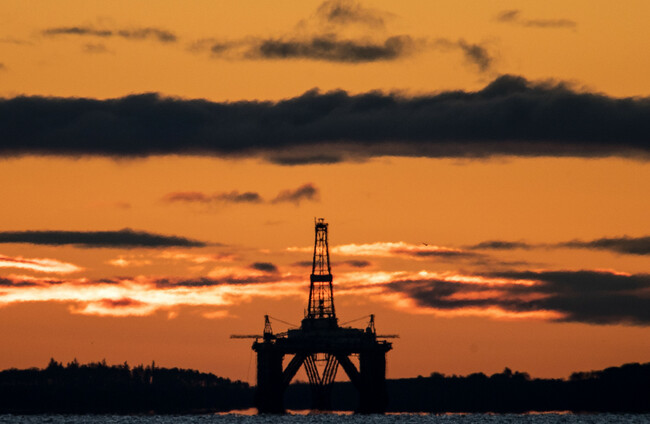
The US announced the easing of sanctions on Russian oil overnight. PA

Zelenskyy says lifting Russia sanctions will 'not help peace' as US sends more forces to Middle East

Oil prices have stayed above $100 a barrel since the US lifted sanctions on Russia.

LAST UPDATE | 13 Mar

THE MOVE BY the US to ease sanctions on Russian oil has been criticised by European states, with Ukraine’s President Volodymyr Zelenskyy saying the move will raise money for Russia’s war effort and will “not help peace”. 

German said the lifting of the sactions amounts to “filling Putin’s war chest” for his full-scale offensive on Ukraine, while French President Emmanuel Macron said the Russian government was mistaken if it believed the Middle East war would bring it some relief. 

Meanwhile, despite President Donald Trump repeatedly claiming the war against Iran is close to an end, the US military is sending more marines and ships to the Middle East, according to media reports. 

The Wall Street Journal quoted US officials as saying the Japan-based USS Tripoli and its attached Marines are en route to the region, while The New York Times reported that some 2,500 Marines aboard as many as three ships were headed for the Middle East.

CNN said it was a Marine Expeditionary Unit, which typically includes some 2,500 Marines and sailors, that was being deployed. 

Oil

US-Israel strikes on Iran and Tehran’s retaliatory attacks across the Middle East have virtually halted transit through the strategically vital Strait of Hormuz, sending global oil prices soaring. Around 20% of the world’s oil normally passes through the strait. 

The US has now temporarily allowed the sale of oil from Russia that is already at sea, as prices have stayed above $100 a barrel.

In a statement today, the EU said it will reassess the security of the bloc’s oil and gas supply in case the Strait of Hormuz remains shut. Iran has said it is allowing ships from some countries to pass through the strait, without specifying which ones. 

“In case of a prolonged closure of the Strait of Hormuz or further disruptions, the EU security of oil and gas supply will be reassessed,” an EU spokesperson said.

Germany has warned that the United States’ easing of some oil sanctions on Russia to tackle surging energy costs caused by the Middle East war was wrong and could help fund President Vladimir Putin’s war against Ukraine.

Chancellor Friedrich Merz, speaking on a visit to Norway, said that “easing sanctions now, for whatever reason, is wrong. We believe that is the wrong course of action”.

“After all, we want to ensure that Russia does not exploit the war in Iran to weaken Ukraine.”

Germany’s Economy Minister Katherina Reiche said earlier in Berlin that she was “concerned that we are further filling Putin’s war chest”.

Also today, Merz that the Middle East war should end “as soon as possible” as it “benefits no-one and harms many economically, including us”.

Asked whether Europeans should make direct contact with Iran to ask for the Strait of Hormuz to be reopened, Merz said: “We are making every effort to end this war… all diplomatic channels are being used.”

US Treasury Secretary Scott Bessent said today that easing sanctions on Russian oil would “promote stability” in global energy markets, adding that the increase in oil prices is a “short-term and temporary” disruption.

“This narrowly tailored, short-term measure applies only to oil already in transit and will not provide significant financial benefit to the Russian government, which derives the majority of its energy revenue from taxes assessed at the point of extraction,” Bessent claimed.

Zelenskyy, however, said: “This one concession alone by the United States could give Russia about $10 billion for the war. This certainly does not help peace.”

Trump this week dismissed the rising fuel prices, saying that the destruction of Iranian nuclear capacity was more important. 

Kremlin spokesman Dmitry Peskov told reporters that US and Russian interests had “aligned” in relation to the global energy market, but said more relief from sanctions was needed to bring down prices. 

“Such actions by the United States will, to some extent, help stabilise the market,” he said at a briefing.

But he added that “without significant volumes of Russian oil, market stabilisation is impossible”.

Merz said that G7 leaders had spoken with Trump “about the issue of oil and gas deliveries from Russia”. G7 leaders held a video summit on Wednesday.

“Six members of the G7 were very clear in their opinion that this would not send the right signal. We then learnt this morning that the American government has apparently decided otherwise. Again, we believe this is wrong.”

Russia’s economic envoy Kirill Dmitriev said Friday that the global energy market “cannot remain stable” without his country’s oil.

“The United States is effectively acknowledging the obvious: without Russian oil, the global energy market cannot remain stable,” Dmitriev posted on Telegram.

Strikes continue across Middle East

A French soldier was killed by an Iranian-made Shahed drone in the autonomous Kurish region of Iraq. 

President Macron confirmed the first French military death in the Middle East war.

Arnaud Frion, 42, was “killed by a Shahed drone strike,” said his commanding officer Colonel Francois-Xavier de la Chesnais.

The member of the armed forces “died for France during an attack in the Erbil region of Iraq,” Macron posted on X, adding that several soldiers were also wounded.

Iranian state television said the Islamic Republic had launched a fresh salvo of missiles at Israel. Explosions were later heard on the outskirts of Tel Aviv, but Israeli paramedics reported no casualties.

Earlier, a strike on the Israeli town of Zarzir wounded around 60 people, according to police, with AFP images showing burnt-out vehicles and craters in the ground.

Iran also kept up launches of drone and missile strikes against neighbouring states hosting US military assets.

Saudi Arabia’s defence ministry said on Friday its forces had intercepted dozens of drones, while an AFP journalist reported an explosion heard over Dubai that rattled buildings.

Turkey said NATO forces shot down a ballistic missile launched from Iran — the third such interception in the war.


With reporting by David Mac Redmond, AFP and PA

Readers like you are keeping these stories free for everyone...
A mix of advertising and supporting contributions helps keep paywalls away from valuable information like this article. Over 5,000 readers like you have already stepped up and support us with a monthly payment or a once-off donation.

Close
117 Comments
This is YOUR comments community. Stay civil, stay constructive, stay on topic. Please familiarise yourself with our comments policy here before taking part.
Leave a Comment
    Submit a report
    Please help us understand how this comment violates our community guidelines.
    Thank you for the feedback
    Your feedback has been sent to our team for review.

    Leave a commentcancel

     
    JournalTv
    News in 60 seconds