We need your help now

Support from readers like you keeps The Journal open.

You are visiting us because we have something you value. Independent, unbiased news that tells the truth. Advertising revenue goes some way to support our mission, but this year it has not been enough.

If you've seen value in our reporting, please contribute what you can, so we can continue to produce accurate and meaningful journalism. For everyone who needs it.

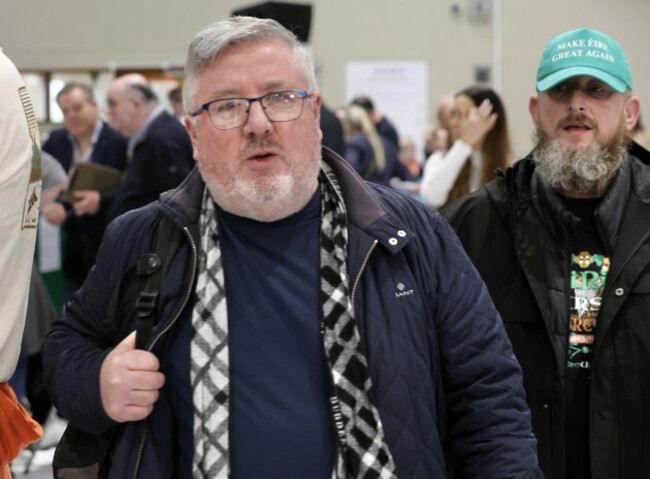
How Ireland's far-right movement got involved in the fuel protests and tried to hijack them

While many are protesting fuel costs, far-right actors and international figures are using the movement to push anti-immigrant narratives.

THIS WEEK’S PROTESTS about fuel costs rapidly took shape online, where much of the organisation was carried out and where those involved are continuing to coordinate.

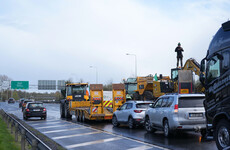
But as tractors and trucks took to motorways and streets from Tuesday this week, a whole other narrative, which had nothing to do with fuel prices, was already forming, driven by actors with broader and more nefarious aims.

Ireland’s far-right movement has enmeshed itself with the protests from the start, a ploy which softened the ground for international figures like Tommy Robinson to spread their own narratives online from afar.

The protests are not far-right at their essence; the groups involved in peaceful protests around the country are splintered, and many of those blocking roads and motorways are simply motivated by their frustrations about the price of fuel.

But the looming presence of extreme personalities and social media accounts is stoking tensions in a way that risks pushing this loose network towards a more volatile situation in the days ahead.

Murky origins

The question of when far-right and anti-immigrant figures became involved remains somewhat murky.

Initial plans for disruption began last weekend but came after weeks of disquiet among agricultural contractors, farmers and hauliers who had grown frustrated with rising fuel costs as a result of the war in Iran.

There’s no single figure or group behind the nationwide protests, which were largely organised on social media and WhatsApp at the end of last week, when there were calls for slow drives on routes near Dublin and coordinated blockades from Tuesday morning.

However, three spokespeople have emerged in the media: James Geoghegan, Christopher Duffy and John Dallon.

Despite this trio being put forward as the spokespeople for the protesters, the movement has a more fragmented character than the trio’s apparent leadership suggests.

The protests were also heavily pushed on social media and via WhatsApp groups, showing they were organised at a more fragmented level, and those involved have pushed back against attempts by others to target immigrants or engage with far-right figures.

Social media and the messages inside WhatsApp groups seen by The Journal show a level of grassroots organising, including in-person meetings and online communication. 

At times, when far-right figures have attempted to amplify the messaging of those organising the protests, they have been met with a mixed reception.

The Journal has seen those attempting to pivot the conversation to immigration being removed from organising WhatsApp groups in multiple cases, and one farmer very firmly telling anti-immigration agitator Philip Dwyer that the protests were “about fuel” when he showed up on O’Connell Street on Tuesday.

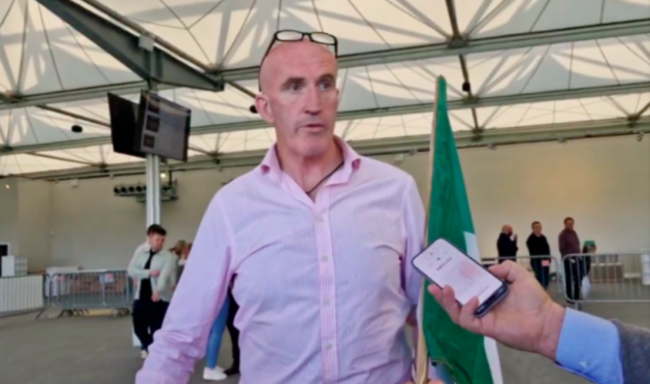
791Wicklow Count Centre_90718052 Phillip Dwyer, who has been present at protests in Dublin this week (file photo) RollingNews.ie RollingNews.ie

One Facebook page in particular led the charge: The People of Ireland Against Fuel Prices.

It was set up in 2021 under a different name, Irish Truckers and Haulage Association Against Fuel Prices, and ran a paid ad from 6 April urging people to attend the protests and to join local WhatsApp groups, where plans could be coordinated.

Facebook details show that the advertisement was paid for by a company called TheTowTruck.ie, which is owned by a man called Sonny Boyd.

Boyd has not acted as a spokesperson for the protesters, but has regularly posted anti-immigrant content to his personal Facebook page.

On 10 March, he incorrectly claimed that Ireland is the only country in Europe to offer immigrants free housing, weekly cash payments, free English lessons and free trips to the zoo and theme parks.

But The People of Ireland Against Fuel Prices was not the only page encouraging people to protest this week.

When details of protests emerged, other Facebook pages that post anti-immigrant and far-right content also began calling for mobilisation, and have maintained a steady stream of content since.

Among them is a large meme page, Ireland: Rising from the Ashes, which has posted dozens of times about the protests since the Easter weekend.

The page was one of the first to share a map – soon copied by similarly leaning Facebook pages – calling for a “national fuel protest” at 7am on Tuesday mornings with a list of locations for convoys to gather at motorway service stations in the Dublin commuter belt.

The Journal also saw similar posts in groups formed to oppose international protection centres, as well as a page linked to Sinne na Daoine, a group founded by former Irish Freedom Party candidate Anthony Casey that conducted anti-immigrant patrols in Ireland last year.

Although these groups did not initiate the events seen this week, they showed how much engagement far-right figures could earn from the protests before they even began.

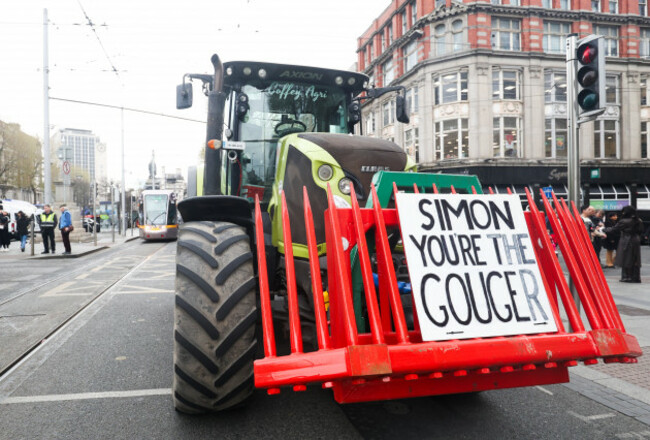
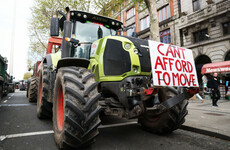
Fuel protest city centre-5_90746198 (1) A tractor during the blockade of O'Connell Street on Tuesday RollingNews.ie RollingNews.ie

Inflammatory rhetoric

By the time the protests began on Tuesday morning, some of the most prominent figures within Ireland’s far-right movement were ready.

Although it was a protest chiefly about fuel prices, they immediately used the event to spread inflammatory rhetoric and anti-immigrant views.

On the first day of the protest in Dublin, Kildare county councillor Tom McDonnell – who has regularly posted videos from O’Connell Street – called for the government to close international protection centres and to give the money it costs to run them to farmers. 

A farmer by background, McDonnell achieved notoriety before the local elections in 2024 for saying Irish women need to “breed” more in reference to a call for increased birth rates.

Speaking to protesters from the back of a truck on Tuesday, he claimed that Ireland was being “destroyed” by Europe and by the government.

“Our country is at stake here, and we need to look after it and forget about the rest of the world. And all of those IPAS centres [should be] emptied, and that’s where we’re going to get our two and a half billion that we’re losing on [fuel] taxes,” he told the crowd.

Screenshot 2026-04-11 174134 Kildare County councillor Tom McDonnell (file photo) X.com X.com

Independent Dublin city councillor Gavin Pepper has also attended, and was seen alongside McDonnell with a coffin that said “RIP Ireland” on Kildare Street on Friday afternoon.

Pepper, a taxi driver by trade, has been among those creating content for social media from the scene where he is surrounded by vehicles and individuals with an agricultural background.

On Wednesday, he took a video from O’Connell Bridge – interviewing protest spokesperson Christopher Duffy – criticising Micheál Martin for “busting the economy” in 2011 and using the opportunity to spread a broad anti-government message. 

“The government don’t want to engage with people, they talk about engaging with people, but when it comes to engagement with the very businesses that are trying to put food on our table [...] they refuse to do it,” Pepper said.

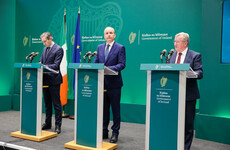
The government has engaged with such groups, holding a planned meeting with a delegation from the Irish Farmers’ Association and the Irish Road Haulage Association in the Department of Agriculture on Friday.

6517993 Dublin City councillor Gavin Pepper

Stream of content

Far-right politicians are not the only ones capitalising on the week’s events.

Like the Facebook pages promoting the protest over Easter weekend, social media channels and personalities have also used the protests for a steady stream of content.

Pages such as The Liberal, which has been repeatedly fact-checked by The Journal, have constantly updated their followers with footage and commentary in recent days.

The Liberal has repeatedly leaned into misinformation and anti-immigrant narratives, posting on X on Saturday afternoon that “scab drivers, believed to be migrants” were protected by gardaí to get fuel out of the Whitegate oil refinery in Cork.

The page’s captions clearly seek international engagement, including descriptors for Irish words like gardaí (“Irish police”) and Taoiseach (“prime minister”) for an international audience.

Another group, Síol na hÉireann – run by far-right personality Niall McConnell – has also re-posted clips of flashpoints, footage and interviews with spokespeople for the protest movement, alongside captions that solicit donations for his work. 

Two of the main protest spokespeople, Christopher Duffy and John Dallan, have appeared with McConnell in livestreams for Síol na hÉireann this week.

The third spokesperson, James Geoghegan, also appeared in a livestream with Philip Dwyer earlier this week, a further show the access that Ireland’s far-right movements has to those centrally involved in the Dublin arm of the protests.

Duffy and Geoghegan’s social media posts also lean into fringe-type thinking, and are examples of how individuals have tended to express more extreme political views online since the Covid pandemic.

Duffy’s social media accounts show how he has built a following by leaning heavily into far-right narratives.

His Facebook page shows he has shared images claiming Ursula von der Leyen believes free speech is a “virus” and that censorship is a “vaccine”; he has also called for the Irish tricolour to be protected by the constitution and said that Muslims “want to take over the world”.

In a comment under one post about climate activist Greta Thunberg, he said: “I couldn’t care less if she got raped or beaten and I make no apologies for saying that.”

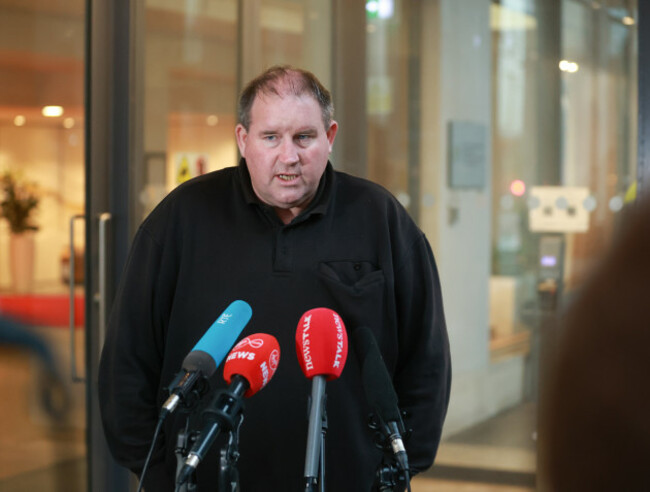
Fuel talks-15_90746498 Protestor spokesperson Christopher Duffy addresses the media on Friday RollingNews.ie RollingNews.ie

Geoghegan has also posted a stream of anti-government and anti-Green Party messaging on social media in recent years, though his views are not as extreme or do not lean heavily into conspiracy theories.

In July 2020, he re-shared an image showing the Green Party leader Roderic O’Gorman with UK LGBT activist Peter Tatchell, a meme previously described by O’Gorman as a “homophobic” smear against him.

Geoghegan has also suggested without evidence that chemicals in vegan burgers “can’t be good for you” and shared images of electric vehicles on fire, a common misinformation trend to suggest that green policies are dangerous.

International actors

But although they were embedded from early, the far-right figures didn’t seem to have much of a focus besides producing content and soliciting donations for the first few days.

That changed on Thursday morning, when Justice Minister Jim O’Callaghan asked the Defence Forces for assistance in moving vehicles from roads and fuel depots.

The moment seemed to invigorate the movement and draw in international actors who had until then not noticed the nationwide protests, despite rallying around similar events in Canada and Brussels in recent years.

British far-right activist Tommy Robinson was among the first to take heed.

Posting footage of army vehicles (which the Defence Forces has clarified were on the streets because for an entirely separate reason), he claimed that the government here was “now at war with the Irish people”.

Robinson has posted incessantly about events Ireland in the days since, calling on Irish people to “take their country back” and describing the government as “traitors”.  

Other prominent far-right figures followed Robinson’s lead, including commentator Katie Hopkins, who re-shared a message of support for protesters alongside footage from old anti-immigrant protests, and the Canadian activist Ezra Levant, who has travelled to Ireland to join those already here to use the protests to create content.

The international dimension has also brought a deluge of misinformation to social media, largely (though not exclusively) from far-right and anti-immigrant accounts abroad.

The included videos of old anti-immigration protests shared as if they were present events, and irrelevant footage of sulkies racing down O’Connell Street.

Others posted AI-generated images of gardaí using water cannons, and in one case, a video circulated of an army vehicle trapped under a railway bridge that wasn’t even captured in Ireland.

The involvement of international figures and accounts seems to have created something of a feedback loop, drawing in other personalities from Ireland’s anti-immigrant and far-right movement who had shown little interest before then in posting about the protests. 

Conor McGregor was among those to join in on social media platform X, where he initially offered to feed the protesters at his pub, before sharing videos of his workers handing out food on O’Connell Street on Friday.

After a period of relative quiet on political matters following his unsuccessful presidential bid last year, McGregor has also used the protests to reignite his anti-immigrant campaigning in a string of invective posts against the government.

The MMA fighter, who has been found civilly liable by the High Court of sexually assaulting Nikita Hand, claimed that it’s “amazing” that the streets of Dublin are now safe because of the protesters.

The claim is an apparent reference to an unfounded anti-immigrant claim he has previously made that the capital is no longer safe because of mass immigration.

But as misinformation has spread and fringe figures have become more involved, tensions have also gone up a notch.

A lot of the most extreme rhetoric and misinformation has come from within Ireland in a way that is creating a fragile situation, like a slow moving version of events on the day of the Dublin riots.

After gardaí and the Defence Forces took action against protesters at the Whitegate oil refinery on Saturday afternoon, former far-right electoral candidate Derek Blighe claimed that “children as young as 12” were pepper-sprayed by “regime forces”.

In other posts, Blighe has framed the protests as a direct route to the collapse of the government, and claimed that any response will see this outcome, even if the protesters are granted concessions.

Even if many of the protesters are peaceful and simply care about fuel prices, the involvement of far-right figures is increasingly sharpening the tone of events.

With such inflammatory rhetoric and levels of misinformation increasing, so does the potential for a volatile culmination when the protests end.

Readers like you are keeping these stories free for everyone...
A mix of advertising and supporting contributions helps keep paywalls away from valuable information like this article. Over 5,000 readers like you have already stepped up and support us with a monthly payment or a once-off donation.

Close
JournalTv
News in 60 seconds