We need your help now

Support from readers like you keeps The Journal open.

You are visiting us because we have something you value. Independent, unbiased news that tells the truth. Advertising revenue goes some way to support our mission, but this year it has not been enough.

If you've seen value in our reporting, please contribute what you can, so we can continue to produce accurate and meaningful journalism. For everyone who needs it.

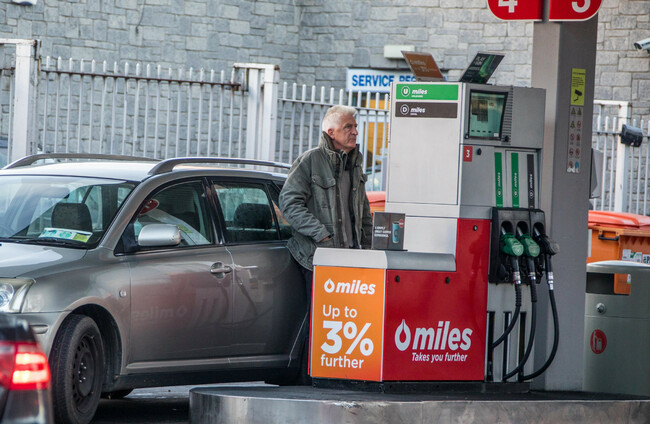
Tax reductions on fuel were announced yesterday. File photo. Alamy

Fuel supports must be temporary to protect Budget, says head of state spending watchdog

An excise cut is in place until the end of July – and the Irish Fiscal Advisory Council says deadlines will be important.

THE CHAIR OF the Irish Fiscal Advisory Council (IFAC), the state spending watchdog, has said there will be knock-on consequences for Budget 2027 in October if expensive fuel support measures continue.

The €500 million package announced yesterday afternoon, which comes on top of a €250 million package announced last month, is time-bound but on an enormous scale. Economist Seamus Coffey, the IFAC chair, said the two emergency fuel support packages were comparable to a tax package in an annual budget.

Coffey told the Claire Byrne Show on Newstalk: “From a budgetary perspective, we’re now getting to the stage where the impact, €750m, is quite significant already.

“If the measures are temporary, we wouldn’t expect there to be knock-on consequences for the Budget package for 2027, but if the temporary measures continue then we could expect there to be knock-on consequences,” Coffey said.

A 10c VAT-inclusive cut in fuel excise – which applies across the economy, not just to the agricultural and haulage sectors – will run until 31 July 2026. A scheduled increase on 1 May for carbon tax for ‘green’ diesel (for non road vehicles such as tractors), home heating oil and natural gas will now kick in in October.

A €40m scheme to support hauliers and coach operators with fuel prices will be in place for three months, while a €100m subsidy scheme for farmers, agricultural contractors and fishing is due to end in July.

Coffey argued that supports should be targeted at the poorest households, and noted that the cut in excise, for example, is universal.

Fossil fuels

He said government intervention to offset price increases on fossil fuels, at a time when the government actually wants to reduce use of fossil fuels and reduce fossil fuel-related emissions, represented a “contradictory approach”.

It could reduce the incentive for people to switch to solar power or electric vehicles, Coffey said.

“If the government steps in every time the price [of fossil fuels] goes up that offsets that signal,” he said.

Readers like you are keeping these stories free for everyone...
A mix of advertising and supporting contributions helps keep paywalls away from valuable information like this article. Over 5,000 readers like you have already stepped up and support us with a monthly payment or a once-off donation.

Close
28 Comments
This is YOUR comments community. Stay civil, stay constructive, stay on topic. Please familiarise yourself with our comments policy here before taking part.
Leave a Comment
    Submit a report
    Please help us understand how this comment violates our community guidelines.
    Thank you for the feedback
    Your feedback has been sent to our team for review.

    Leave a commentcancel

     
    JournalTv
    News in 60 seconds