Sign in. It’s quick, free and it’s up to you.
An account is an optional way to support the work we do. Find out more.
Sign in. It’s quick, free and it’s up to you.
An account is an optional way to support the work we do. Find out more.
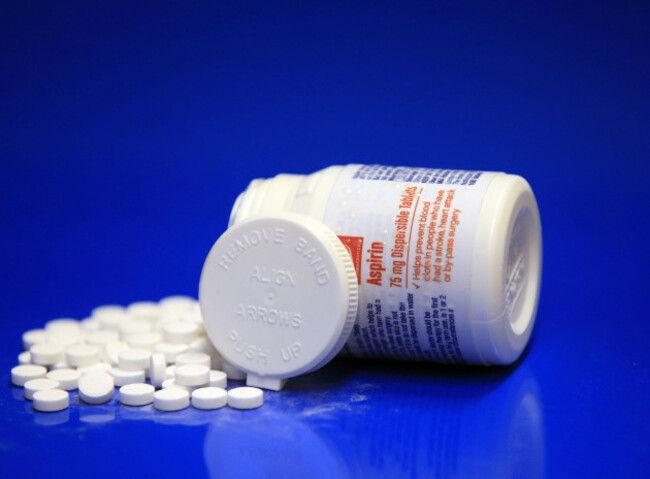
A LARGE-SCALE TRIAL to investigate if aspirin, an inexpensive common drug, can prevent early stage cancer from returning after treatment has begun in Ireland.
This is the Irish part of an international trial Add-Aspirin, which involves collaboration among experts from Ireland, UK and India. It will have 11,000 participants from all three countries; there will be around 300 participants from Ireland.
In Ireland the trial is co-ordinated by Cancer Trials Ireland and supported by funding from the Health Research Board and the Irish Cancer Society.
The participating hospitals in Ireland are Beaumont Hospital, Tallaght Hospital, Mater Misericordiae University Hospital, Mater Private Hospital, St Vincent’s University Hospital, all in Dublin, and Bon Secours Hospital Cork, Cork University Hospital, Sligo University Hospital, University Hospital Galway and University Hospital Limerick.
What will be examined
The Add-Aspirin trial will investigate whether taking aspirin daily for 5 years after receiving standard therapy, including surgery, chemotherapy and/or radiotherapy, can prevent a patient’s cancer returning and prolong their life.
Aspirin is often used to prevent and treat heart attacks and strokes, and also as a painkiller.
Studies that have looked at the effect of aspirin on heart disease and its side effects found that fewer people taking aspirin appeared to developed cancer. Among those who developed cancer, the cancer appeared to be less likely to spread.
As these studies were not specifically designed to investigate the impact, if any, of aspirin on cancer, the evidence to support its use to prevent the spread of cancer isn’t strong enough.
“It is necessary therefore that data on its efficacy in relation to cancer is compiled and analysed in the context of a large clinical trial,” Cancer Trials Ireland said.
The Add-Aspirin trial will look at both the benefits and the side-effects of taking aspirin in a large group of people who have had early stage cancer.
The Irish leg
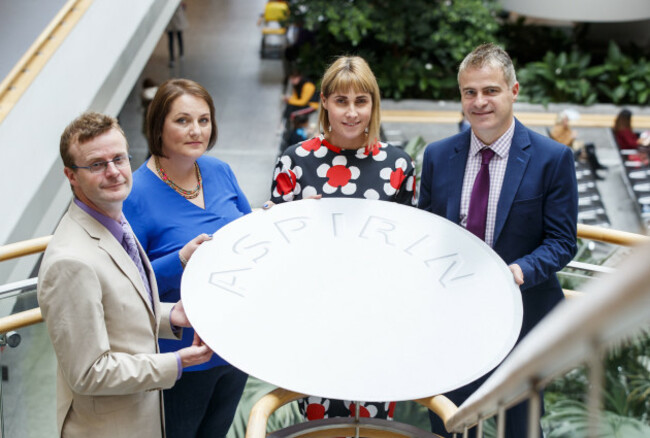
Participants will be recruited over three to six years and will self-administer tablets daily for at least five years. Participants will be actively followed up for a further 10 years after treatment.
The Add-Aspirin trial is a phase III, double-blind, placebo-controlled, randomised trial. The trial will have three groups. Two groups will receive a different dose of aspirin. This is because it is not yet know how much aspirin may be needed to have an effect, if any, against cancer. The third group will receive a placebo.
Participants for each group will be selected at random by a computer. Neither the participant nor the research team will know who receives aspirin and who does not.
Dr Gregory Leonard, Consultant Medical Oncology at Galway University Hospital, is the trial’s chief investigator for Ireland. The overall Chief Investigator for the study is Professor Ruth Langley, based at UCL in London.
Dr Leonard said that while aspirin has been in use for over 100 years for pain relief, and more recently to prevent heart attacks and strokes, there has been a growing body of evidence during the past decade of its potential as an anti-cancer agent.
This is the first trial ever to investigate if aspirin could stop or prevent the return of cancer among such a significantly large group of patients with early stage cancer.
“At a time when we are used to new cancer treatments being relatively costly, the possibility of repurposing an inexpensive, generic drug that is available worldwide to stop or slow cancer is potentially groundbreaking,” he said.
“The results of this trial could have a huge impact on the global cancer burden, particularly given the increasing cancer incidence in lower resource countries” he said.
The participating hospitals in Ireland are in Dublin Beaumont Hospital, Tallaght University Hospital, Mater Misericordiae University Hospital, Mater Private Hospital, St Vincent’s University Hospital, Bon Secours Hospital Cork, Cork University Hospital, Sligo University Hospital, University Hospital Galway and University Hospital Limerick.

To embed this post, copy the code below on your site












have your say