We need your help now

Support from readers like you keeps The Journal open.

You are visiting us because we have something you value. Independent, unbiased news that tells the truth. Advertising revenue goes some way to support our mission, but this year it has not been enough.

If you've seen value in our reporting, please contribute what you can, so we can continue to produce accurate and meaningful journalism. For everyone who needs it.

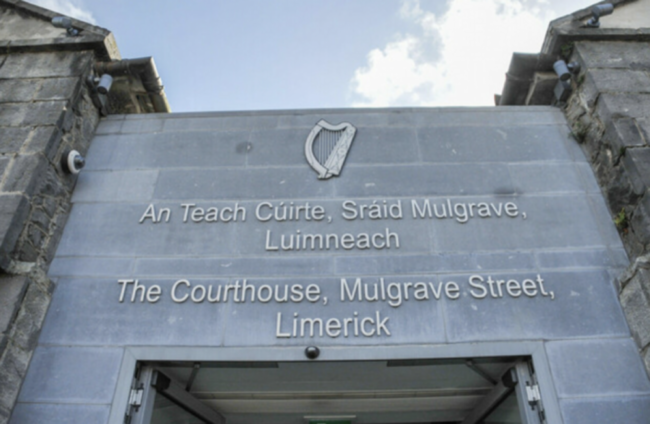
File image of Limerick Court House Alamy

Ex-GNBCI head denies seeking to quash road traffic summons in trial of gardaí accused of the same

Retired Detective Chief Superintendent Walter O’Sullivan denied allegations put to him that he, himself, had previously asked another Garda if he could quash a road traffic summons.

THE FORMER HEAD of the Garda National Bureau of Criminal Investigation (GNBCI) denied suggestions at a trial that he pursued Limerick Garda Superintendent, Eamon O’Neill, on suspicion of alleged interference in road traffic summonses as he had failed to bring charges against him on other alleged matters.

Retired Detective Chief Superintendent, Walter O’Sullivan, also denied allegations put to him that he, himself, had previously asked another Garda if he could square/quash a road traffic summons issued to a motorist.

O’Sullivan refuted this allegation put to him by Felix McEnroy, senior counsel for Superintendent O’Neill, and said the Garda was “mistaken”, that he had “zero recollection” of it happening, and agreed that he was calling the allegation “a lie”.

O’Sullivan was giving evidence on behalf of the prosecution in the trial of retired Superintendent Eamon O’Neill, and four serving gardaí, at Limerick Circuit Criminal Court.

The four gardaí on trial with O’Neill are his partner, Sergeant Anne Marie Hassett; Sergeant Michelle Leahy; Garda Tom McGlinchey and Garda Colm Geary.

The five accused deny a combined total of 39 counts of engaging in conduct tending or intended to pervert the course of justice in respect of road traffic summonses.

The court has heard evidence that O’Sullivan led GNBCI Officers on a dawn raid of Superintendent O’Neill’s home in Co Clare in May 2019.

O’Sullivan was met at the front door of the home by Sergeant Hassett who was “upset” and she asked the GNBCI officers to take off their “GARDA” raid jackets.

The witness said he asked where Eamon O’Neill was, and he was told he was asleep upstairs. It was 6:38am when gardaí entered the house. 

O’Neill was brought to Athlone Garda Station where he was questioned on suspicion of breaching section 62 of the Garda Síochána Act, disclosing information that could be harmful to an ongoing Garda Investigation.

O’Neill was released without charge and the DPP later directed he had no case to answer.

A number of mobile phones that were seized as part of the search at O’Neill’s home, some belonging to O’Neill, and one phone belonging to Hassett, were examined by GNBCI.

Following the seizure of the phones, other phones were seized from other gardaí, including Garda McGlinchey, Garda Geary, and Sergeant Leahy, as well as a number of citizens who had allegedly sought help from O’Neill in squaring summonses.

O’Sullivan denied suggestions Mr McEnroy, that his first investigation into O’Neill, which lasted two years, was “a significant failure” and that the second probe was an “attempt to distract away from the failure of the first investigation” and a face-saving exercise to prevent another “scandal” in An Garda Síochána.

O’Sullivan agreed that he had been generally aware of previous scandals in the force involving penalty points statistics, after concerns had been raised by the Central Statistics Office over figures provided by An Garda Síochána.

Later O’Sullivan agreed with senior prosecuting counsel Carl Hanahoe that any suggestion the GNBCI’s second investigation was a “tag onto the first investigation, that ‘we (GNBCI) can’t get him (O’Neill) for the serious stuff, we’ll get him on this’, is nonsense”.

O’Sullivan also gave evidence that he contacted a named senior ranking garda, now retired, and informed them they were under suspicion for attempting to pervert the course of justice by contacting O’Neill and seeking to have summonses squared in two separate cases.

Text messages sent by the high ranking officer’s mobile phone to O’Neill were shown in court.

The first message sent to O’Neill was the name and address of a citizen to which O’Neill replied “who is he?”

The messenger replied: “Eamon, that’s a friend of mine, stopped for a seat belt in Oola. Could you enquire? If it’s too late, no problem.”

When asked by O’Neill’s barrister what he interpreted the message to mean, O’Sullivan replied: “My interpretation is that it’s to intervene and to stop a matter.”

O’Sullivan said he telephoned the high ranking garda and told them they were a “suspect” in the GNBCI FCPN probe.

Under questioning from McEnroy, for O’Neill, O’Sullivan agreed he sent the high ranking officer a list of dates and text messages and call logs between his phone and O’Neill’s phone in respect of the summons matters.

O’Sullivan said the high ranking officer’s phone was not seized nor were they ever charged with any offence.

The high ranking officer was interviewed for 23 minutes under caution at GNBCI headquarters by O’Sullivan and Assistant Commissioner John O’Driscoll, and gave “short answers” to questions.

The officer referred questions from the two seasoned interviewers to a prepared statement, which was not read into evidence.

John Byrne, counsel for Garda McGlinchey, put it to O’Sullivan that his client handed over his phone and pin code and was questioned for over four hours in a garda station, while the high ranking garda was interviewed in a “cosy” office, for 23 minutes, and their phone was not seized.

O’Sullivan said there was “nothing cosy” about being interviewed under caution, and he denied suggestions by Byrne that he had not robustly interviewed the senior officer.

The four gardaí on trial were asked to meet with GNBCI detectives prior to their arrest, and handed over their mobile phones and pin codes and engaged in interviews under voluntary caution.

The trial, which is in its fourth week, continues tomorrow.

Readers like you are keeping these stories free for everyone...
A mix of advertising and supporting contributions helps keep paywalls away from valuable information like this article. Over 5,000 readers like you have already stepped up and support us with a monthly payment or a once-off donation.

Close
JournalTv
News in 60 seconds