We need your help now

Support from readers like you keeps The Journal open.

You are visiting us because we have something you value. Independent, unbiased news that tells the truth. Advertising revenue goes some way to support our mission, but this year it has not been enough.

If you've seen value in our reporting, please contribute what you can, so we can continue to produce accurate and meaningful journalism. For everyone who needs it.

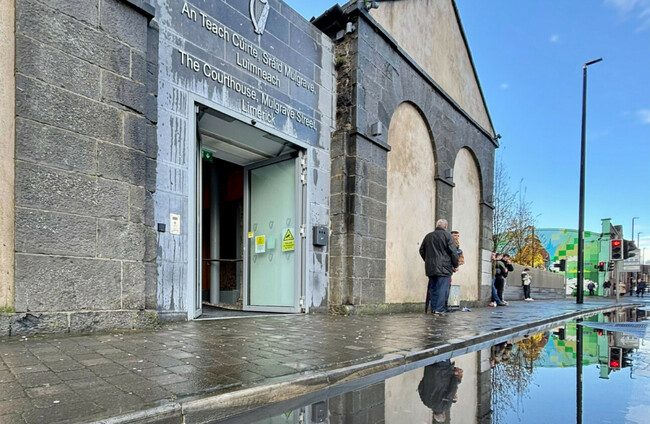
Limerick City courthouse. Niall O'Connor/The Journal

Chief Superintendent denies offering 'inducements' to alleged suspects in garda traffic probe

The trial of a retired superintendent and four serving gardaí is in its sixth week.

A GARDA CHIEF Superintendent denied he told two gardaí – suspected of involvement in alleged unlawful squaring of road traffic summonses – that what they told the investigation, which he was leading at the time, could result in them being treated as witnesses rather than suspects in the case.

Chief Superintendent Michael McNulty, Dublin Metropolitan Region, agreed under oath that offering “inducements” to potential suspects in any type of criminal investigation would be improper, and in his opinion “unacceptable”.

McNulty was giving evidence today in the sixth week of the trial of retired superintendent Eamon O’Neill and four serving gardaí, Sergeant Anne Marie Hassett, Sergeant Michelle Leahy, Garda Tom McGlinchey and Garda Colm Geary.

The five accused deny a total of 39 counts of engaging on conduct tending or intended to pervert the course of justice, while allegedly communicating among themselves and others in relation to requests to square away fixed charge penalty notices (FCPNs) or summonses.

McNulty, who at the time was a Detective Inspector, said he was appointed to lead the probe by Detective Chief Superintendent Walter O’Sullivan, who at the time was head of the Garda National Bureau of Criminal Investigation (GNBCI).

The court heard that McNulty made a list of suspects and witnesses, including Garda Niall Deegan and Garda Alan Griffin, both Limerick Garda Division, who were included on the list of suspects.

The court heard McNulty directed the investigation team that they seek warrants for the two garda’s mobile phones, and that the two officers be invited to be interviewed by GNBCI under voluntary caution.

McNulty denied suggestions by Felix McEnroy, senior counsel for retired superintendent O’Neill, that he told the two gardaí that whatever they were potentially going to say a interview, under caution, could “change” or “move” them from being suspects to witnesses.

The two gardaí would give evidence of this, McEnroy said.

river - 2025-12-17T200052.458 Former Garda Superintendent Eamonn O'Neill.

Suspects are suspected of committing a criminal offence, McNulty agreed and witnesses would not have to worry about being considered suspects.

McEnroy said Garda Griffin would also tell the court that McNulty told him that he was “only interested” in Supt O’Neill and that he would “not be looking at anyone else”.

Garda Deegan and Garda Griffin, are not defendants in the case, and made the allegations in statements provided to the prosecution and defence in the trial, excerpts of which were put to McNulty in front of the jury.

McNulty refuted these allegations. He told the court Gda Griffin was “mistaken” and he agreed with McEnroy that Garda Deegan was “lying”.

Discovery of text messages

The court had previously heard that the GNBCI investigation led to the discovery of a mobile phone text message sent from then Chief Superintendent John Scanlon, Laois Offaly Division, to O’Neill querying a garda stopping a motorist for driving without using a seatbelt.

Jim Heneghan, senior counsel for Garda Geary, asked McNulty if Scanlon, now retired, had been considered “a suspect” in the GNBCI probe, and he replied “he was”.

McNulty said he had not been aware O’Sullivan had not taken any notes whatsoever when he interviewed Scanlon under voluntary caution.

Dozens of mobile phones belonging to the five accused as well as others, including civilians, were seized under warrant as part of the probe, the court heard.

James O’Mahony, senior counsel for Sgt Hassett, asked McNulty if he had been “disappointed” that Scanlon’s mobile phone had not been seized as part of the probe that he had been in charge of.

McNulty replied: “I would have rathered that his phone was seized as well.”

The matter of “garda discretion”, when gardaí legitimately use their own decision-making when dealing with the public, has been a central talking point in the trial.

McNulty said discretion was part and part of policing, and he could see it being applied, for example, in the case of a motorist being given a warning rather than a ticket if they were detected driving a little above the speed limit — however he argued it would be “inappropriate” to use ones discretion in respect of a “family member, friend or associate”.

The state’s case is that, while a serving superintendent, Eamon O’Neill allegedly received requests from civilians and other gardaí about the summons matters, which he passed on to some of his co-accused, who in turn communicated within themselves and with other gardaí in attempts to have the cases struck out or not pursued.

The prosecution, led by Carl Hanahoe and Jane Horgan Jones, instructed by the state solicitor’s office, has alleged that what all the offences have in common is the alleged interference or involvement of Supt O’Neill and that, in the vast majority of the cases Supt O’Neill had a personal connection with the motorists.

The trial continues Thursday.

Readers like you are keeping these stories free for everyone...
A mix of advertising and supporting contributions helps keep paywalls away from valuable information like this article. Over 5,000 readers like you have already stepped up and support us with a monthly payment or a once-off donation.

Close
JournalTv
News in 60 seconds