We need your help now

Support from readers like you keeps The Journal open.

You are visiting us because we have something you value. Independent, unbiased news that tells the truth. Advertising revenue goes some way to support our mission, but this year it has not been enough.

If you've seen value in our reporting, please contribute what you can, so we can continue to produce accurate and meaningful journalism. For everyone who needs it.

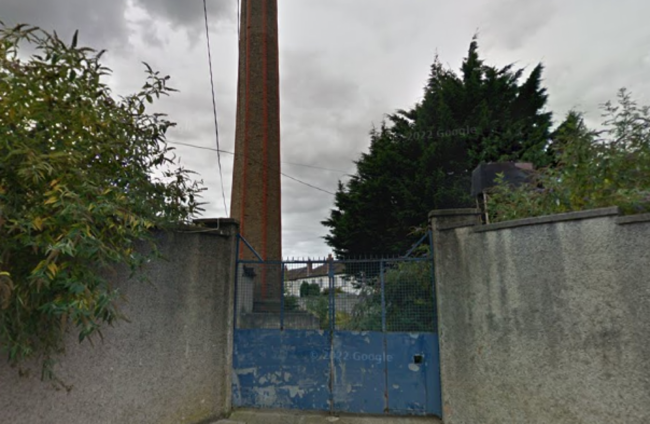
The entrance to the former laundry.

Order of nuns who formerly ran Magdalene Laundry raise issues with plans to turn it into housing

Justice for Magdalene Research has recorded the names of 314 women and girls who died at the Donnybrook Magdalene Laundry.

AN ORDER OF nuns in Donnybrook that previously ran a Magdalene Laundry are among a number of people who have raised concerns about the plans to develop the former laundry into homes.

Dublin City Council has requested that developer Pembroke Partnerships Ltd provide additional information on a number of issues related to the planning application. The company applied for permission to construct 38 housing units, comprising a mix of apartments (31), duplexes, and houses, on the site of the former Magdalene Laundry at The Crescent, Donnybrook, Dublin 4. 

Pembroke Partnerships was previously granted permission in 2020 for a development on the site. The latest application is an update to the previous one.

The former laundry was run there by the Religious Sisters of Charity from 1837 until it was sold to a private company in 1992. It continued to operate there as a commercial laundry until 2006.

Justice for Magdalene Research has recorded the names of 314 women and girls who died at the Donnybrook Magdalene Laundry.

The proposed plans would retain the old chimney stack (a protected structure) on the site, and convert the old laundry building into duplexes and housing.

The Religious Sisters of Charity are still present in the area, and have their convent – St Mary’s – immediately adjoining the site of the proposed development.

In a submission to the council, Brian Kelly, head of planning and place with commercial property advisor Avison Young, acting on behalf of the order, raised a number of issues with the proposed development. 

Kelly described St Mary’s as “the historical and spiritual home of the Religious Sisters of Charity”, in which 25 nuns still live. The order also has a graveyard on the site in which hundreds of nuns are buried, as well as the women who lived and worked there.

He said that an increase of height in the latest development proposal would result in excessive height and scale, and that there was a “significant opportunity for overlooking” into the convent.

Kelly also raised issues with the likely impacts of the construction phase on the nuns, the loss of private amenity, and the potential impacts on sunlight and daylight.

“It is our considered opinion that the proposed development fails to appropriately consider impacts on the sensitive residential use of the adjoining St Mary’s Convent Campus. Prescribed mitigation measures are inadequate to screen or to reduce the potential impacts,” he concluded.

“The resulting scheme would be detrimental to the continued well-being and residential amenity of the sisters”.

Other issues

A number of local residents in the area also raised concerns about the proposed development, raising concerns about the height and scale of the plans, as well as the historical significance of the site.

Independent Councillor Mannix Flynn said in a submission that the council had an “immense duty of care to execute in its decision making”, as a result of the historical significance of the site, and to pay respect to those who suffered there.

“I respectfully ask that the essence and residue that are ever present on this historic site be foremost in your mind and your hearts in consideration of this planning application,” he said.

We should not erase the past, painful as it is in this place, in this city, in this country. 

Dublin City Council has requested eight pieces of additional information from the applicant. These have to do with various aspects of the proposal, including its height and the potential for the building to overlook other buildings.

The council also requested updated archaeological, industrial and cultural heritage information, information to do with parking and the layout of the buildings.  

Readers like you are keeping these stories free for everyone...
A mix of advertising and supporting contributions helps keep paywalls away from valuable information like this article. Over 5,000 readers like you have already stepped up and support us with a monthly payment or a once-off donation.

Close
JournalTv
News in 60 seconds