We need your help now

Support from readers like you keeps The Journal open.

You are visiting us because we have something you value. Independent, unbiased news that tells the truth. Advertising revenue goes some way to support our mission, but this year it has not been enough.

If you've seen value in our reporting, please contribute what you can, so we can continue to produce accurate and meaningful journalism. For everyone who needs it.

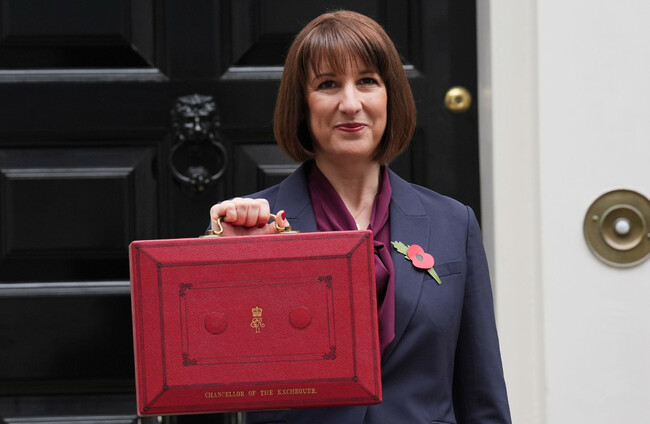
Chancellor of the Exchequer Rachel Reeves outside Downing Street with her ministerial box Alamy Stock Photo

Mansion taxes, milkshakes and smorgasbords: Here's what's going on with the UK's Budget

The Chancellor is planning on raising a number of taxes, which will reportedly affect both workers and pensioners.

THE UK’S CHANCELLOR Rachel Reeves, who is tasked with setting out the Budget for the next year, faces a black hole in public finances of around £20-30 billion.

While Reeves floated a number of ideas in recent weeks to gauge public opinion, her experiments may not have had the desired effect.

The speaker of the House of Commons, Lindsay Hoyle, called it “the hokey cokey budget”, as politicians heard of mooted measures through the press.”One minute it’s in, the next minute it’s out.”

In today’s reveal, the Chancellor is widely expected to extend a freeze on personal tax allowances, which will mean almost one million more people will pay income tax. The goal is to equip the exchequer for the projected slowdown in economic growth.

‘Smorgasbord’ tax hikes

In a filmed address posted on social media this morning, Reeves said the government had started to see results in the past year with “wages rising faster than inflation, hospital waiting lists coming down, and our economy growing faster and stronger than people expected”.

She described this Budget as being for “the British people” and said the government would work with them to “build a fairer, stronger and more secure Britain”.

Reeves insisted she will introduce measures to tackle the cost-of-living crisis, as the beleaguered government hopes to keep backbench Labour MPs on side.

She is reportedly going to adopt what is being called a “smorgasbord” approach to raising taxes at the Budget.

Earlier this month, she dropped plans to hike the headline rate of income tax, something which would have broken a Labour manifesto pledge, after receiving economic forecasts which were not quite as grim as first feared.

Extending a freeze on personal tax thresholds for a further two years would raise around £8.3 billion a year by 2029-30, the UK’s Institute for Fiscal Studies said.

As incomes rise beyond the £12,570 threshold, the economic think tank said it would result in around 960,000 more people paying income tax, with around 790,000 more people paying the 40p higher rate. Scotland sets its own income tax rates.

Pensioners could be hit, with the full new state pension set to increase to a level above the threshold.

Reeves is also said to be considering limits on how much employees can put into their pensions under salary sacrifice schemes before it becomes subject to national insurance.

Mansion tax and milkshakes

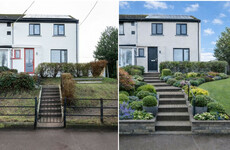
Among the confirmed Budget measures is an increase on taxes on high-value properties. The “mansion tax” would generate an estimated £400-450 million for the Treasury.

This could look like a new tax of 1% annually on properties valued above £2 million, meaning a £3 million home would have a £10,000 yearly fee.

Separately, the Budget is to expand the pre-existing sugar levy – which currently only includes soft drinks and energy drinks – to packaged milkshakes and lattes.

A gambling levy and pay-per-mile charging for electric vehicles are also on the cards.

Spending

The Chancellor is expected to scrap the two-child benefit cap, a move estimated to cost between £3 billion and £3.5 billion by the end of this government.

Several newspapers also reported that Reeves is mulling over a continued freeze in fuel duty, set to cost a further £3 billion.

On Tuesday, she announced she would accept the latest recommendations of the Low Pay Commission to raise the minimum wage.

The minimum wage for over-21s will increase by 50p per hour from April, from £12.21 to £12.71 – that’s a rise of 4.1%. It translates to roughly an extra £900 per year.

Workers aged 18 to 20 will get a bigger increase of 8.5%, to £10.85 an hour. 16 and 17-year-olds will get a 6% increase to £8 an hour.

With reporting by PA

Readers like you are keeping these stories free for everyone...
A mix of advertising and supporting contributions helps keep paywalls away from valuable information like this article. Over 5,000 readers like you have already stepped up and support us with a monthly payment or a once-off donation.

Close
46 Comments
    Submit a report
    Please help us understand how this comment violates our community guidelines.
    Thank you for the feedback
    Your feedback has been sent to our team for review.
    JournalTv
    News in 60 seconds