Sign in. It’s quick, free and it’s up to you.
An account is an optional way to support the work we do. Find out more.
Sign in. It’s quick, free and it’s up to you.
An account is an optional way to support the work we do. Find out more.
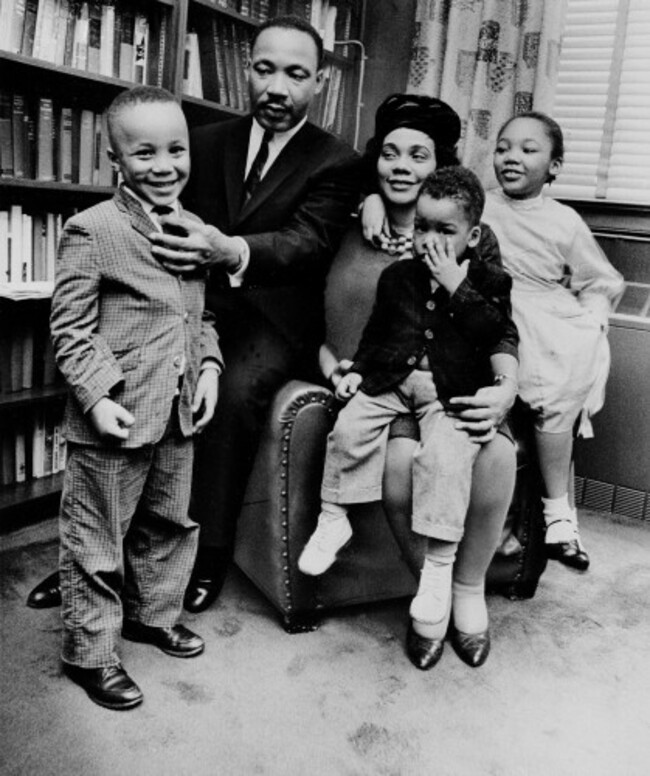
MARTIN LUTHER KING Jr died on 4 April 1968, shot by a sniper while on the balcony of his Memphis motel room.
Every January, people across the United States remember the African-American reverend for the huge role he played in advancing the civil rights movement in America.

A proponent of nonviolent civil disobedience, King showed that activism can find strength in peaceful action.
Today, his achievements and tragic death are being remembered across not just the US, but the world. Here, we take a look at his life through the photos of the era.
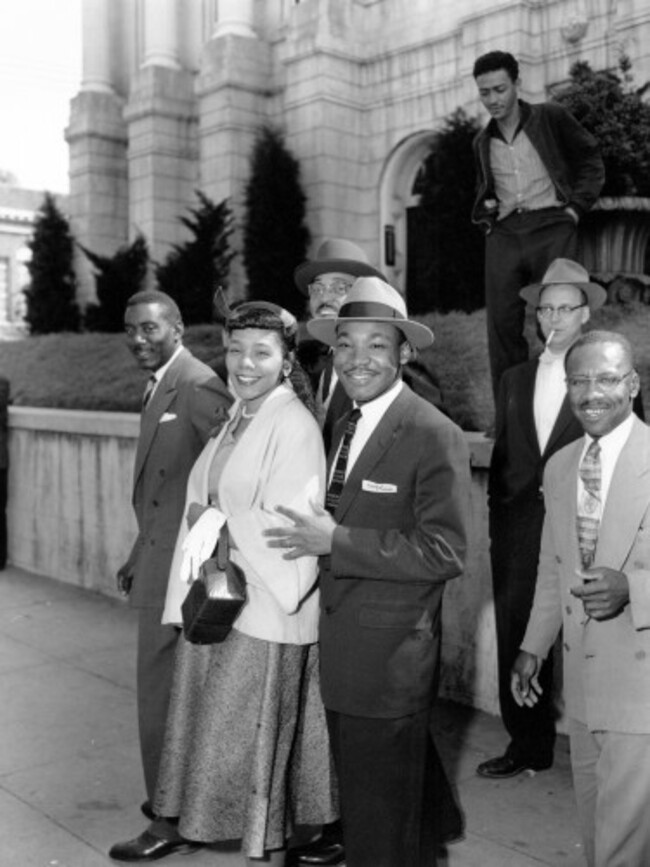
King first emerged as a major name in 1955, when he was involved in the Montgomery bus boycott, which was against racial segregation on public transport in the Alabama town.
Here, he and his family are pictured in 1963:
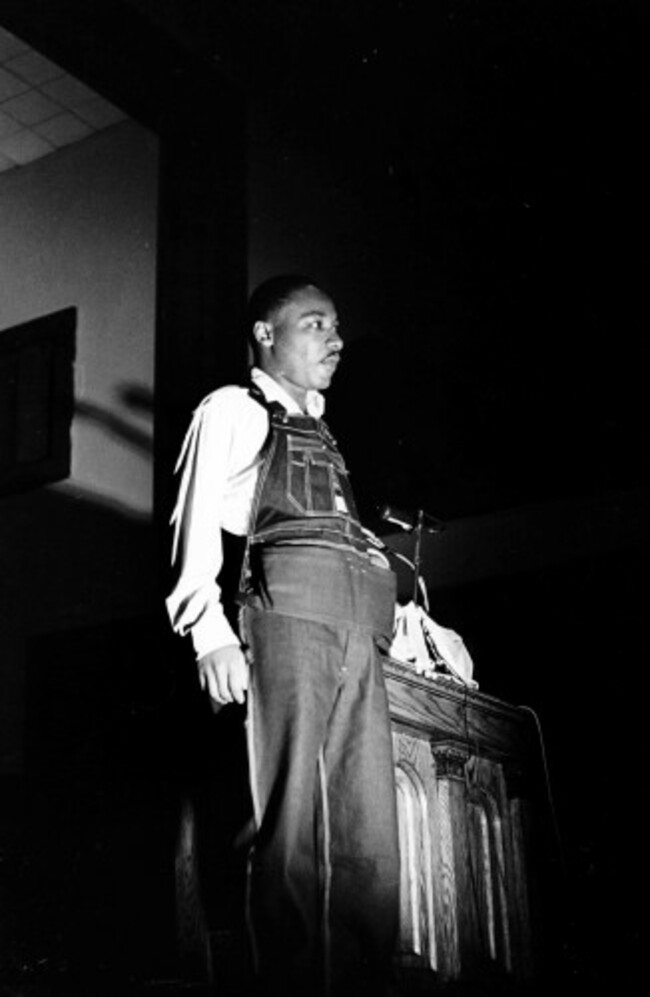
Here he is in Birmingham Alabama on April 6 1963. During this speech he said that all men should join him in wearing coveralls until Easter, to protest against the segregation of city facilities.
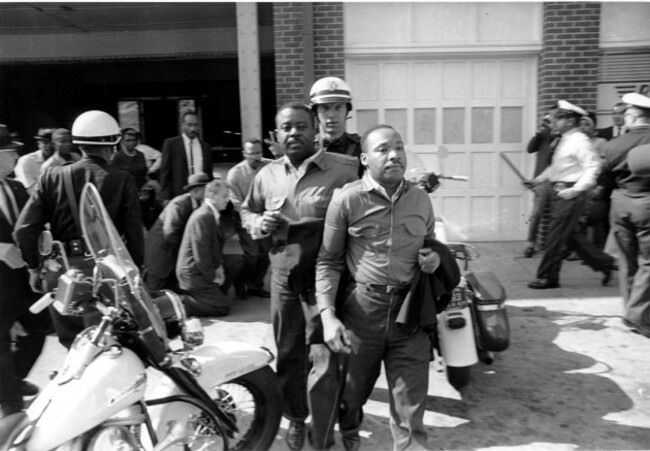
When he and Rev Ralph Abernathy (left) led a line of demonstrators into the business section of Birmingham on April 12, 1963, they were removed by police.
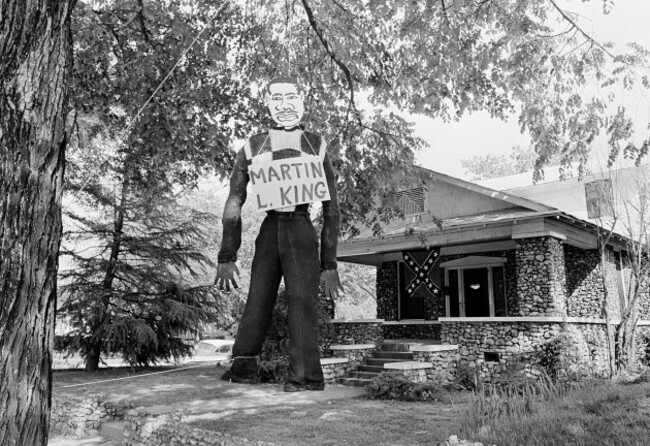
An effigy of King is pictured hanged in front of the National States Right Party headquarters in Birmingham on May 5, 1963.
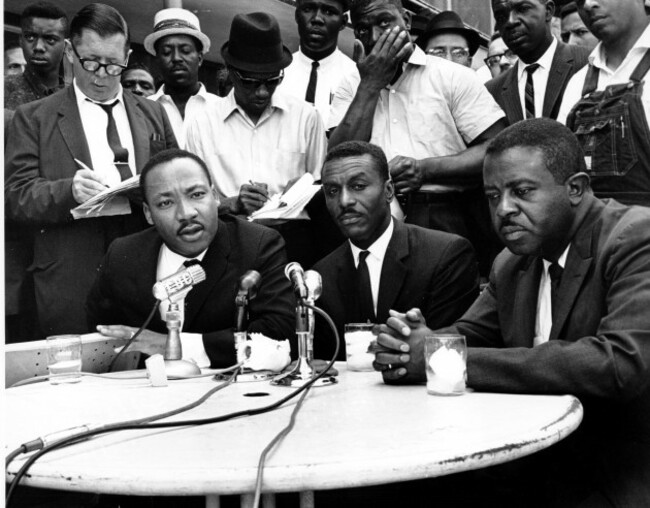
Here is King pictured with fellow civil rights leaders, Rev Fred Shuttlesworth, centre, and Rev Abernathy, at a press conference on suspending demonstrations in 1963,
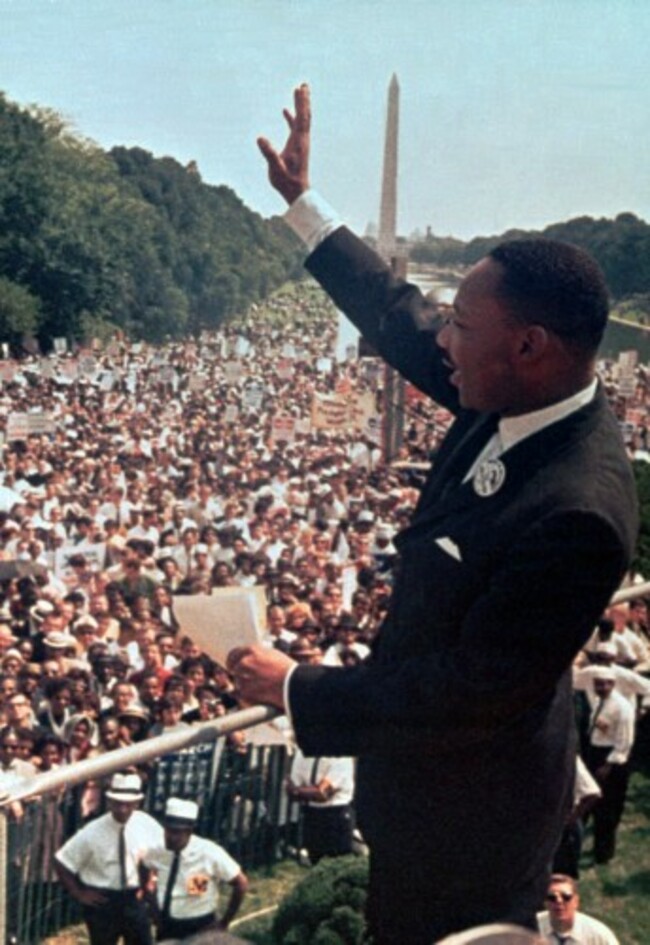
August 28, 1963: The Reverend waves to the crowd at the Lincoln Memorial for his “I Have a Dream” speech during the March on Washington.
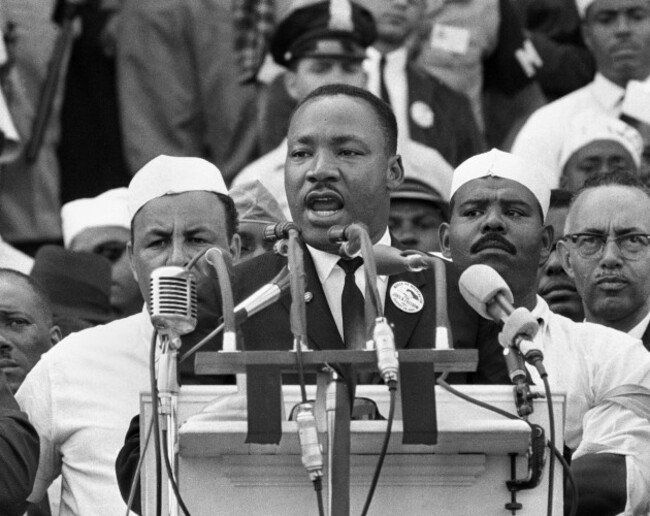
Making the famous speech:
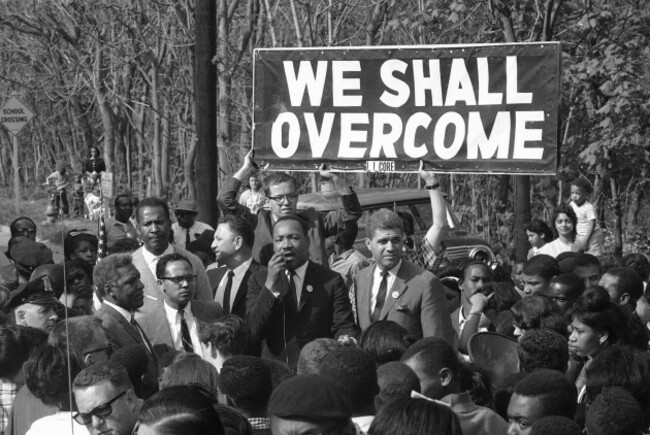
In 1965 there was Bloody Sunday, a turning point for the fight for civil and voting rights. The new movie Selma looks at this period, when King and others tried to organise a march from Selma to Montgomery. But police violence against the 600 marchers during the first attempt led to one death and multiple injuries.
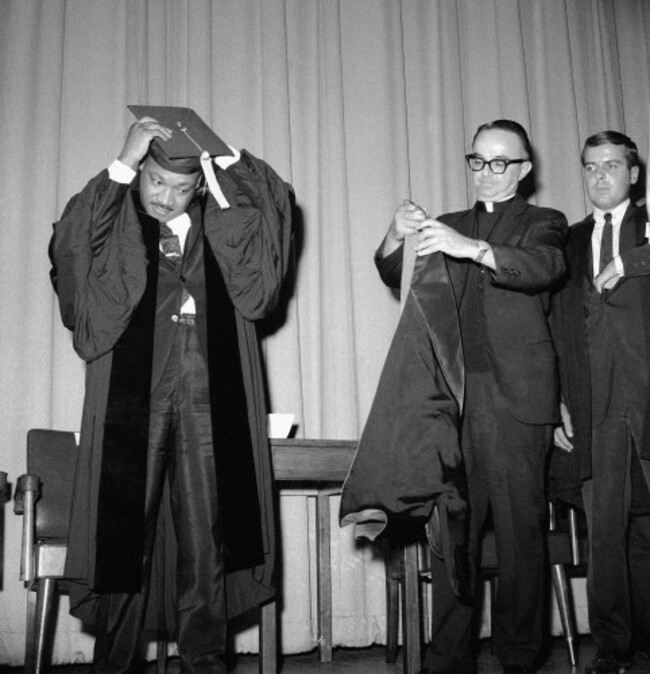
King speaks to residents at the Robert Taylor Homes on Chicago’s South Side. In 1966, he became involved in the Chicago Freedom Movement, and even moved into a building in the Chicago slums as part of his work to reform housing.
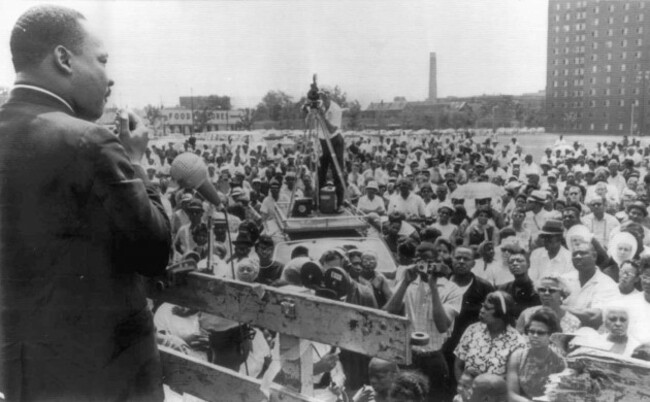
He travelled around the country to raise support – here he is addressing a crowd on a street in Lakeview, New York, on May 12, 1965.
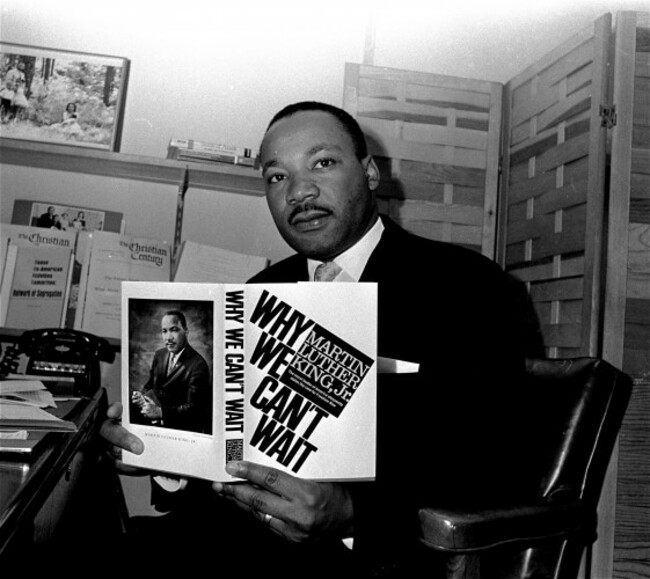
His book, ‘Why We Can’t Wait’, was about the nonviolent movement, in particular his work in Birmingham, Alabama. In 1968, along with the SCLC, he started the Poor People’s Campaign, which led to a march on Washington, DC. This campaign focused on the poor, on economic difference and poverty, and the need to address these issues.
In April 1968, King went to Memphis, Tennessee, where black sanitary workers had been on strike since 12 March that year. They were looking for better treatment and wages. He stayed at the Lorraine Motel, and spoke at a rally at Mason Temple. This was to be his final speech.
Here he is pictured with other civil rights leaders on the balcony of the motel on April 3, 1968. A day later, he was shot dead while standing almost in the same location.
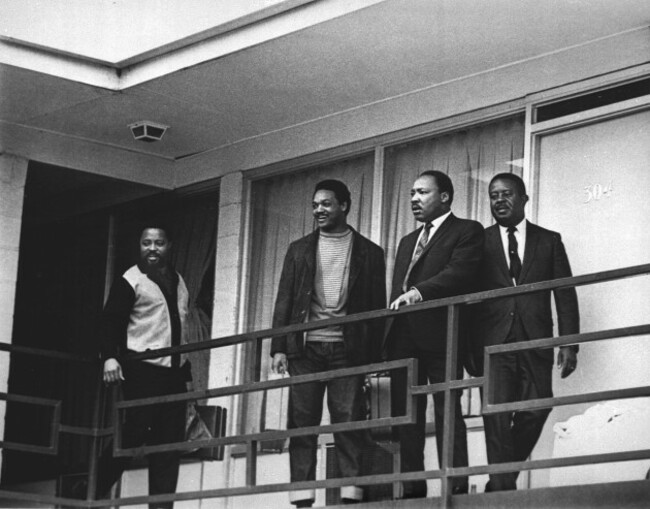
King was shot in the face and was pronounced dead that evening after chest surgery in hospital. An escaped convict named James Earl ray was charged with King’s murder. He was sentenced to 99 years in prison, and wasn’t put on trial after pleading guilty.
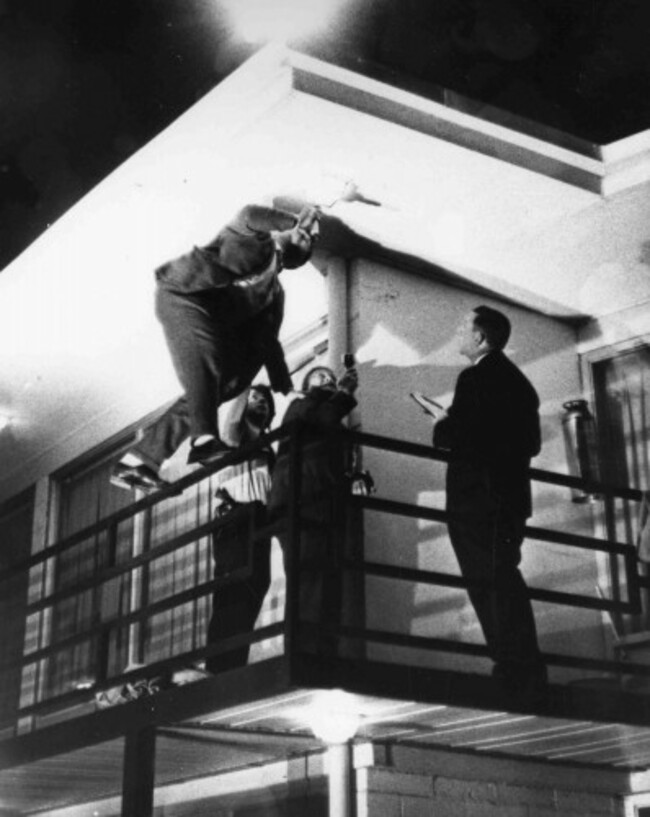
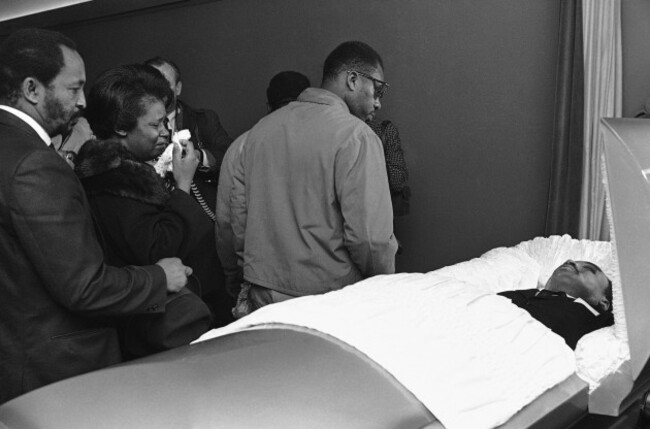
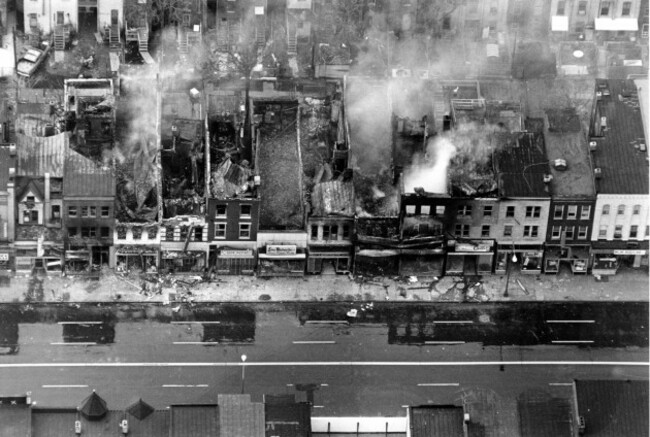
The shock shooting led to riots:
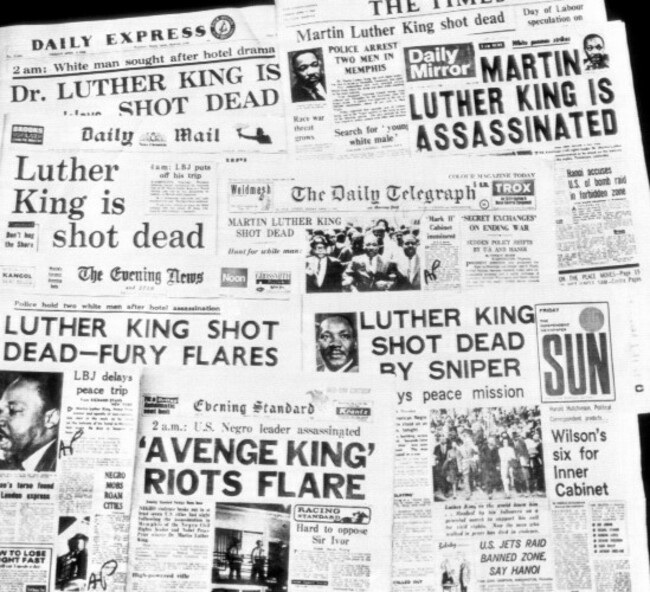
Despite his early death by assassination, by the age of 39 Rev Martin Luther King Jr had helped to bring about major change in the USA. During his lifetime, the civil rights acts were brought in that helped end segregation in the US. He stood behind the US President, Lyndon B Johnson, when he signed the momentous Civil Rights Act of 1964.
But as he showed, the fight against injustice didn’t end there – it also meant fighting for the poor, the vulnerable, and those who are marginalised in society.
Our lives begin to end the day we become silent about the things that matter.
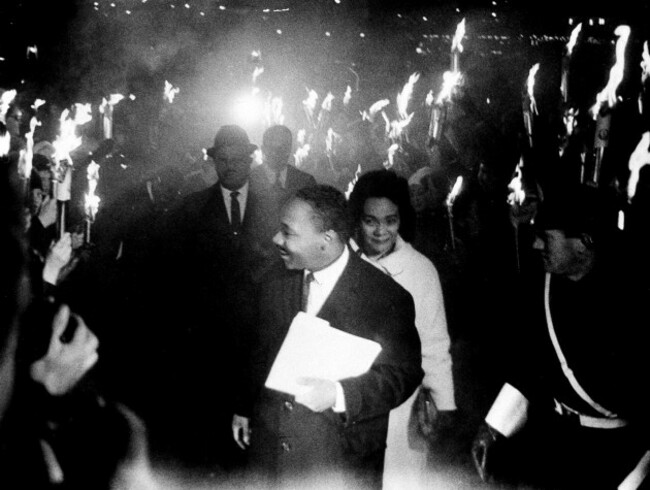
Today, he is remembered as a man who helped change history, and, as the photo below marks, the winner of the 1964 Nobel Peace Prize:

To embed this post, copy the code below on your site





have your say