We need your help now

Support from readers like you keeps The Journal open.

You are visiting us because we have something you value. Independent, unbiased news that tells the truth. Advertising revenue goes some way to support our mission, but this year it has not been enough.

If you've seen value in our reporting, please contribute what you can, so we can continue to produce accurate and meaningful journalism. For everyone who needs it.

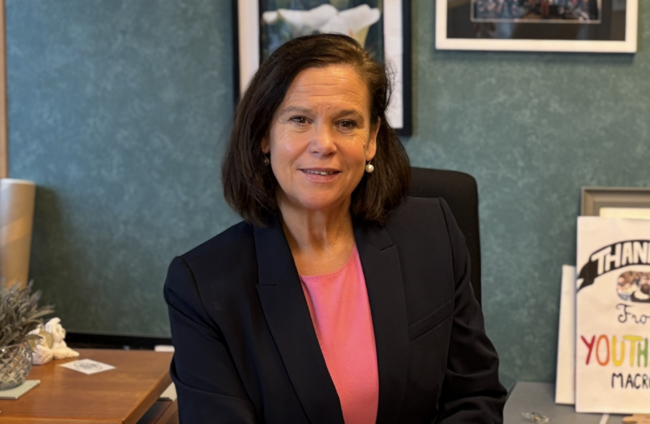
McDonald pictured today in her Leinster House office. The Journal

McDonald on her health, Gerry Hutch, and how there will never be too many tricolours flying

The Journal sat down with the Sinn Féin leader to reflect on the year that was, and what is to come in 2026.

LOOKING BACK OVER 2025, Mary Lou McDonald describes it as an “interesting and eventful” year. 

Politically, she says she knew that Fianna Fáil and Fine Gael being back in government would be “bad news”.

“But even I could not have predicted just how bad,” she says mournfully from her office in Leinster House earlier today. 

She is sat down with The Journal for an end-of-year interview before the Dáil goes on its break until mid-January. 

Reflecting on the year that was, McDonald says there were many low points.

The lowest for her was the death of Harvey Morrison Sherratt, the nine-year-old boy who died in July after waiting years for scoliosis surgery.

“Worst of all, Harvey wasn’t on his own. I could mention TJ [Coughlan], I could mention young Mikey [Henry-Benson] in Mayo, and a couple of hundred children with scoliosis and Spina Bifida who are still waiting for their treatment,” McDonald says, noting also that the cost-of-living crisis, housing, and a lacklustre Budget that has left people worse off were also memorable failings this year.

The high point, McDonald says, was obviously Catherine Connolly’s win in the presidential election, which she says showed what parties on the left can achieve when they do work together.

“I think that was a really important message, especially for people who may have felt angry or despondent at the fact that, for all the talk of a change of government, it didn’t happen,” she says.

On a personal level, 2025 has been a better year for the Sinn Féin leader than the year prior, when both she and her husband dealt with serious health issues. 

Shortly after undergoing a hysterectomy operation in August 2023, McDonald’s husband, Martin, collapsed and was later diagnosed with colorectal cancer.

Asked how they are both doing now, McDonald says good.

“Martin’s back at work and normal service has resumed, and we’re very, very lucky.

“I’m conscious that not everybody who’s gone through that experience comes out the far end quite as lucky.

“But you know what, you learn a couple of things when the going gets tough – just how decent and supportive people are, which is so lovely.

“There isn’t a family now in Ireland, really, that hasn’t been touched by cancer. It’s kind of scary, but once you’re in the system, the level of professionalism, care, and the people in the system here are just amazing, and we are forever, eternally grateful to them,” McDonald says.

2026: The year of the by-election

Turning to the year ahead, McDonald is expecting two “vigorous” contests in the Galway West and Dublin Central by-elections, two constituencies where Sinn Féin topped the poll in the 2024 general election. 

To her mind, the elections will be “a referendum on the government” and on what she terms their failures in healthcare for children, the housing crisis and their “inability to respond to the cost of living crisis”.

Previously, McDonald has said she is in favour of a transfer pact among left-wing opposition parties for both elections, but she says no formal talks around this have taken place yet. 

Sinn Féin will choose its candidates for both elections via selection conventions at some point in early 2026.

Right now, it looks to be a race between the party’s only two councillors in Dublin Central – Janice Boylan and Séamus McGrattan.

Despite McDonald topping the poll in Dublin Central last year, her running mate, Janice Boylan, did not enjoy the same response from voters as her leader, faring quite poorly. 

Similarly, while Maireád Farrell also topped the poll in Galway West, there are no clear contenders for the party in the upcoming by-election.

Undoubtedly, one of the key talking points in the Dublin Central by-election will be about the performance of gangland criminal Gerry ‘The Monk’ Hutch if he does run again

Last year, Hutch came close to securing the final seat in the constituency, with 9.5% of first preference votes, but was ultimately beaten on transfers by Labour’s Marie Sherlock. 

By comparison, Sinn Féin’s Janice Boylan secured 3.8% of first preference votes while Mary Lou secured 19.5%.

McDonald says whether he runs or not is a matter for him, she will be focused on ensuring he doesn’t get the seat. 

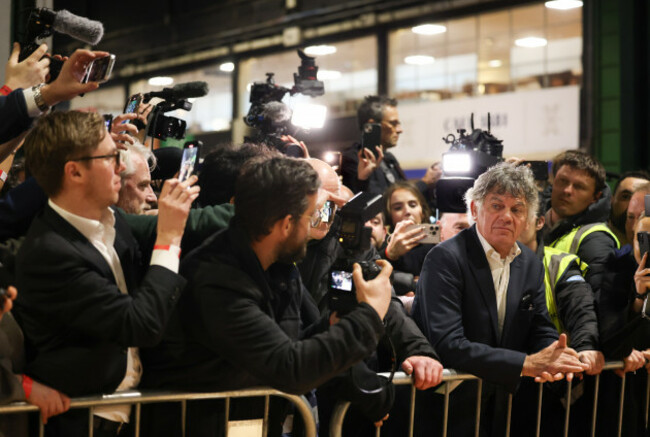
Gerard Hutch 00024_90718203 Gerry Hutch caused chaos when he arrived at the RDS during the count last year. Rollingnews.ie Rollingnews.ie

On his significant vote share in the 2024 general election, McDonald says it was “undoubtedly an F you” to the Government, but denies that there are any lessons in it for Sinn Féin.

“I think it just says things about Irish life and Irish politics and how poor the government is and how angry sections of the community feel. And rightly so, they’re right to be angry.

“I mean, we live in a wealthy society now, and Micheál Martin and Simon Harris can try and put whatever gloss they want on it, but we shouldn’t have the levels of disadvantage in many of our communities that we still see. It’s intergenerational, and there has been no attempt made by anyone in government, really, to get into the roots of that,” she says.

Tricolours

One of the ways some of that anger McDonald speaks about has manifested itself in the last year has been in relation to immigration. 

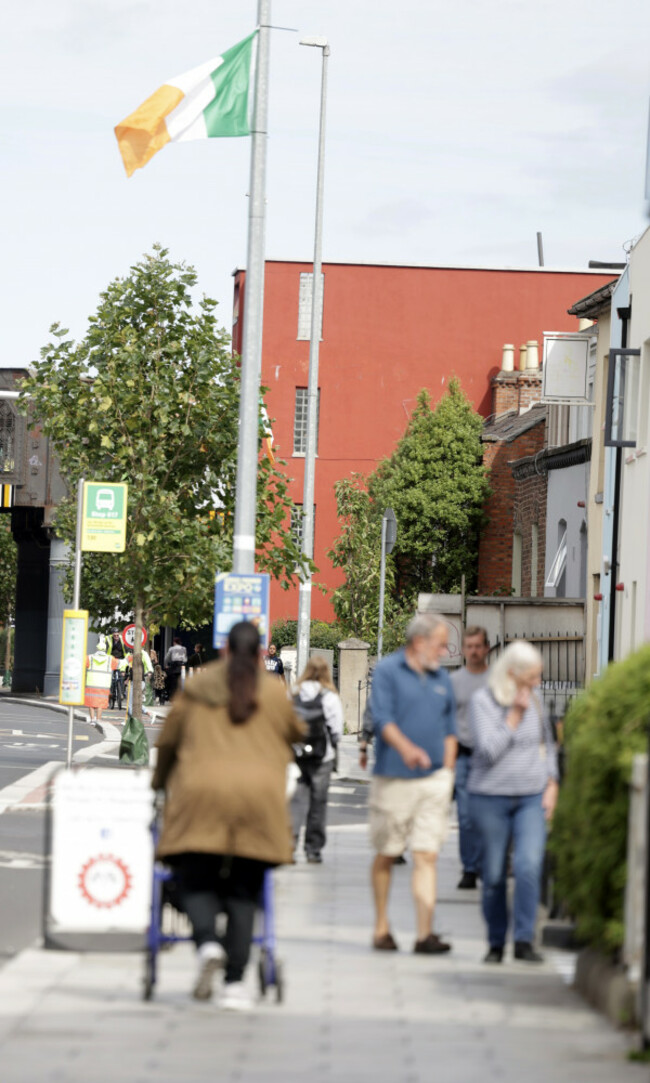
During the late summer, tricolours began popping up on roads and streets across the country, and while some of the organisers of the campaign claim the flags are being flown as an act of patriotism, others argue that the motivation stems from anti-migrant sentiment.

The issue first made the news at the start of September, when Dublin City Council suggested it would take action over the impromptu appearance of the flag on lampposts around the capital.

This was amid concerns that the flags were being used as a form of ‘territorial marking’ rather than straightforward patriotism.

The flags began appearing after a similar trend in England, where Union Jack flags and white flags bearing the red St George’s cross both began to appear in large numbers in towns and cities as part of a far-right social media campaign called Operation Raise the Colours.

Asked how she feels about the tricolours that now line many streets in her constituency, McDonald says: 

“I always like to see the tricolour flying. For me, it’s the symbol of who we are, the green, the white, the orange, the entente between our two ancient traditions. For me, the Irish tricolour is a symbol of pride and respect.

“So as far as I’m concerned, we will never fly too many tricolours.

“I know that there are some who would try to use it as a symbol of division, or who are trying to make some point in their own minds, some negative point around it, but personally, when I see the tricolour flying, [I think] that’s our flag. That represents who we are.”

Does she think this even in the context that they have been flown this year?

“Well, I’m not going to surrender the context of our flag to anyone. Why would we do that?,” she says. 

813Irish Flags on Poles_90733211 Photo shows Irish tricolour flags hanging on poles on the North Strand, Dublin. 02/09/2025 Leah Farrell / Rollingnews.ie Leah Farrell / Rollingnews.ie / Rollingnews.ie

To McDonald, the tricolour’s meaning is clear, and she will not “play ball” with it being altered.

“Why would we concede that point to negative people who think that it’s, you know, one-upmanship, or one in the eye by flying our national colours? I don’t think we should concede that point. I think it’s quite dangerous,” she says.

During a meeting in relation to the flags in Dublin City, when the issue was at its peak back in September, Labour councillor Darragh Moriarty said that “far-right and malicious agitators” were seeking to wield the emblem as a “means to intimidate” local areas.

Asked what she would say to constituents who may feel intimidated by the tricolour being flown in the context of anti-immigration sentiment, McDonald says more education is needed around the origin of the flag.

“I haven’t met a lot of people who are telling me that they feel intimidated by tricolours, I also have to say that. People note that they’re up, they know that there is an intent among some people to try and be hard chaws by putting up the flag. I don’t think that’s washing.

“I think most people think like me, actually. And certainly, Republican minded and nationalist minded people like me take great pride in the flag.

“I will say this, if you fly the flag, keep it clean and keep it appropriate.

“You should not see tattered, ragged tricolours flying anywhere. That’s a real disrespect to our national colours. That drives me mad,” the Sinn Féin leader says.

More from our interview with the Sinn Féin leader will be published in the coming days.

Readers like you are keeping these stories free for everyone...
A mix of advertising and supporting contributions helps keep paywalls away from valuable information like this article. Over 5,000 readers like you have already stepped up and support us with a monthly payment or a once-off donation.

Close
57 Comments
This is YOUR comments community. Stay civil, stay constructive, stay on topic. Please familiarise yourself with our comments policy here before taking part.
Leave a Comment
    Submit a report
    Please help us understand how this comment violates our community guidelines.
    Thank you for the feedback
    Your feedback has been sent to our team for review.

    Leave a commentcancel

     
    JournalTv
    News in 60 seconds