We need your help now

Support from readers like you keeps The Journal open.

You are visiting us because we have something you value. Independent, unbiased news that tells the truth. Advertising revenue goes some way to support our mission, but this year it has not been enough.

If you've seen value in our reporting, please contribute what you can, so we can continue to produce accurate and meaningful journalism. For everyone who needs it.

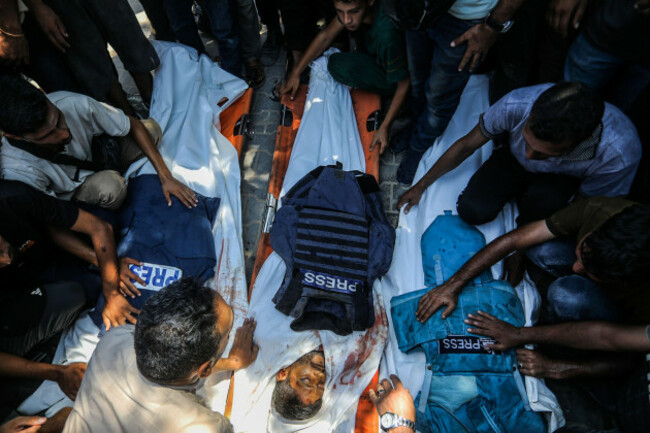
When will international media be allowed into Gaza?

Over 200 journalists have been killed in Gaza since 7 October.

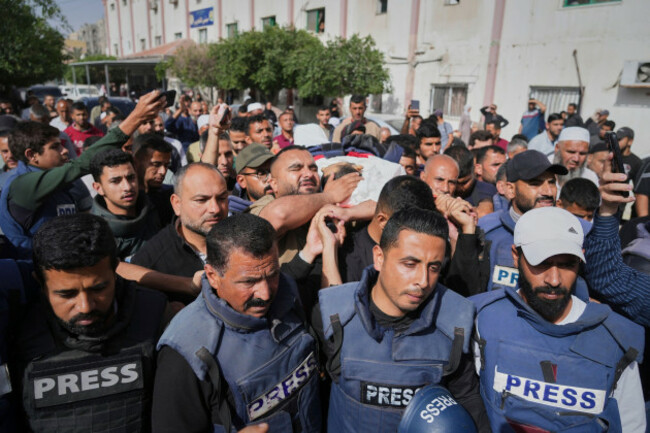
palestinians-mourners-attend-the-funeral-of-reuters-photojournalist-hossam-al-masry-al-jazeera-cameraman-mohamed-salama-journalist-mariam-abu-daqqa-who-worked-with-several-media-outlets-including Palestinians mourners attend the funeral of Reuters photojournalist Hossam al-Masry, Al Jazeera cameraman Mohamed Salama, journalist Mariam Abu Daqqa, and NBC News journalist Moaz Abu Taha, all of whom were killed in an Israeli airstrike on a hospital in Khan Younis, Gaza, on Monday, 25 August, 2025. Alamy Stock Photo Alamy Stock Photo

A FRAGILE CEASEFIRE has been in place in Gaza since 10 October. 

In that time, 94 people in Gaza have been killed by Israeli forces and over 344 have been wounded.

Although there has been a resumption of aid into the territory and many displaced Palestinians have made their way back into the territory, there remains uncertainty as to when international media will be allowed into the Gaza Strip to report on the conditions of those living there.

Since October 2023, Israeli authorities have prevented foreign journalists from entering the devastated territory, taking only a handful of reporters inside on tightly controlled visits alongside its troops.

Last week, Israel’s Supreme Court heard a petition filed by an organisation representing international media outlets in Israel and Palestine, demanding independent access for journalists to Gaza.

The court granted Israel’s government 30 days to respond to the petition.

Sara Qudah, Regional Director for the Middle East of the Committee to Protect Journalists (CPJ), says it is still unknown when international media will be allowed to report from the area. 

Media outlets are mostly reliant on reporting from Palestinian journalists based in Gaza who work for major wire agencies. This reporting is backed up by figures from Gaza’s health ministry, photography from inside Gaza, and aerial footage of the strip. Witness testimonies from medical professionals operating within the area and humanitarian workers have further testified to what has unfolded within Gaza.

Journalists from international media have reported from the Israeli border, where much of the bombardment of Gaza can be seen and heard.

This has led Israel to accuse global media of being partisan – but the state has yet to announce when various media outlets will be allowed to rely on its own independent reporting.

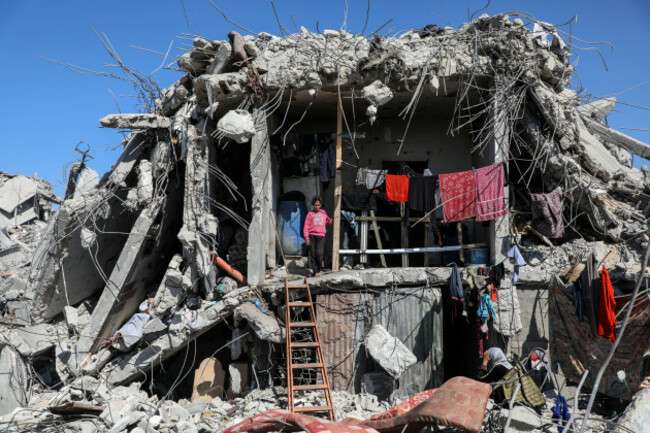
gaza-27th-oct-2025-palestinians-are-seen-at-a-street-with-destroyed-buildings-in-jabalia-refugee-camp-northern-gaza-strip-oct-27-2025-the-united-nations-estimates-that-approximately-92-percent Palestinians are seen at a street with destroyed buildings, in Jabalia refugee camp northern Gaza Strip, 27 October 2025. Alamy Stock Photo Alamy Stock Photo

Qudah told The Journal: “While we don’t know when journalists will be able to enter the Gaza Strip under fully independent conditions, the Committee to Protect Journalists has made its position and concerns very clear.”

The CPJ has described the ban on media access to Gaza since 7 October 2023 as a “blanket prohibition”.

On 5 October, the CPJ filed an amicus brief in support of the Foreign Press Association in Israel’s petition to the Supreme Court. It has argued that the ban violates Israel’s obligations under the International Covenant on Civil and Political Rights, particularly Article 19, which deals with freedom of expression. 

Qudah said that despite media reports indicating that Israeli officials held a high-level discussion on 15 October about possible ending restrictions there has been no formal announcement of such or a clear timeline. 

“CPJ emphasises that any access must be immediate, independent and unrestricted, not simply tours escorted by military or highly‑controlled coverage. Limited, guided access fails to meet the standard of independent journalism,” she said.

Since 7 October 2023, it is estimated that between 224 and 278 journalists have been killed in Gaza. The vast majority were Palestinian.

Surviving journalists that continue to report from the strip have previously spoken out about their hunger and illness from lack of food and clean water.

colleagues-carry-the-body-of-palestinian-journalist-hassan-essliah-for-burial-after-he-was-killed-in-an-overnight-israeli-army-strike-on-nasser-hospital-in-khan-younis-gaza-strip-tuesday-may-13-20 Colleagues carry the body of Palestinian journalist Hassan Essliah for burial after he was killed in an overnight Israeli army strike on Nasser Hospital in Khan Younis, Gaza Strip, Tuesday, 13 May 2025. Alamy Stock Photo Alamy Stock Photo

Qudah said that the unprecedented number of journalists killed in this war “marks a deeply troubling milestone in the history of press freedom”. 

She said one of the most “alarming” implications is the “apparent normalisation” of targeting journalists – “a practice that not only violates international humanitarian law but also sets a deeply dangerous precedent globally”.

“When journalists are deliberately targeted and killed with no consequences, it sends a chilling message: that those documenting war, injustice, or humanitarian crises are no longer protected, even nominally, by international norms.”

Coverage of the dire situation in Gaza is not just important for accountability, Qudah explained, but is essential for informed global discourse. 

Access for foreign media in Gaza is limited to “embedding with the Israeli military”, meaning reports from such at present face censorship. The killing of local journalists has led to significant blind spots in global coverage and understanding.

Qudah said even more “troubling” is “the use of broad and often unverified claims that legal Palestinian journalists are combatants or terrorists” that seek to undermine their legitimacy.

“This not only distorts public discourse but also weaponise disinformation to obscure the truth.”

Qudah thinks the consequences of this could be profound, potentially resulting in media organisations growing more relaxants to send their correspondents into high-risk zones.

Local journalists may be forced into silence or exile, and conflict zones could become “informational black holes”, she said.

At CPJ, Qudah and her colleagues have documented a rise in drone use against journalists across the Middle East and Africa after Israel’s use of drones to target journalists in Gaza. 

“This is a deadly implication that we’re witnessing now, one that could not only
be catastrophic on journalists in conflict zones, but on journalists everywhere,” she said.

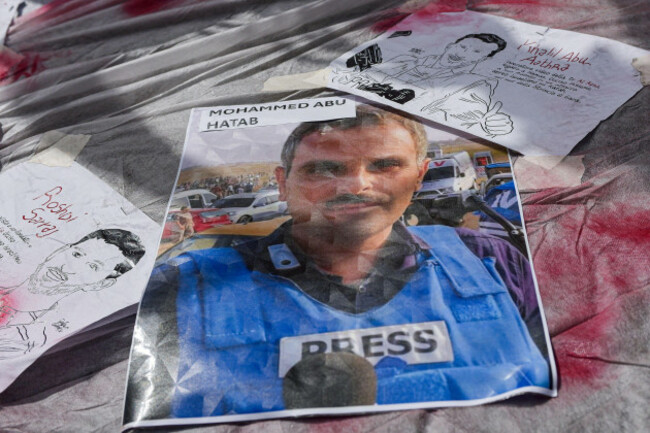
rome-italy-09th-sep-2025-placards-in-memory-of-journalists-killed-in-gaza-are-visible-during-a-public-commemoration-organized-by-the-order-of-journalists-of-lazio-and-articolo-21-at-piazza-santi Placards in memory of journalists killed in Gaza are visible during a public commemoration organized by the Order of Journalists of Lazio and Articolo 21, at Piazza Santi Apostoli. Alamy Stock Photo Alamy Stock Photo

The risk faced by journalists entering an active war zone or area of conflict is borne by the journalists, their editors, and their organisations, Qudah said. The safety of journalists is one of two reasons supplied by Israel as a barrier to allowing media access to Gaza, the first being the integrity of its national security and military operations. 

“Foreign journalists have independently reported from many recent, high-casualty wars, including Iraq, Afghanistan and Ukraine,” she said.

The CPJ remains concerned about the safety and working conditions for Palestinian journalists despite the ceasefire. 

Just days after the ceasefire, journalist Saleh Aljafarawi was shot and killed in Gaza city, reportedly by members of an armed Palestinian group, Qudah said, adding that his death highlights the ongoing risks for journalists even when active hostilities have paused.

Based on CPJ’s data, Israel has killed 237 journalists and media workers, of which:

  • 197 were Palestinians killed in Gaza
  • 31 Yemenis in Yemen
  • 6 Lebanese in Lebanon
  • 3 Iranians in Iran.

“The year 2024 is the deadliest year for journalists in CPJ history; almost 70% killed by
Israel. Until this moment, no investigation or justice has yet been launched to hold those responsible for the killing of more than 200 journalists and media workers by Israeli forces.

“This ongoing impunity only adds to the climate of danger and fear in which journalists are operating.”

Readers like you are keeping these stories free for everyone...
A mix of advertising and supporting contributions helps keep paywalls away from valuable information like this article. Over 5,000 readers like you have already stepped up and support us with a monthly payment or a once-off donation.

View 41 comments
Close
41 Comments
This is YOUR comments community. Stay civil, stay constructive, stay on topic. Please familiarise yourself with our comments policy here before taking part.
Leave a Comment
    Submit a report
    Please help us understand how this comment violates our community guidelines.
    Thank you for the feedback
    Your feedback has been sent to our team for review.

    Leave a commentcancel

     
    JournalTv
    News in 60 seconds