We need your help now

Support from readers like you keeps The Journal open.

You are visiting us because we have something you value. Independent, unbiased news that tells the truth. Advertising revenue goes some way to support our mission, but this year it has not been enough.

If you've seen value in our reporting, please contribute what you can, so we can continue to produce accurate and meaningful journalism. For everyone who needs it.

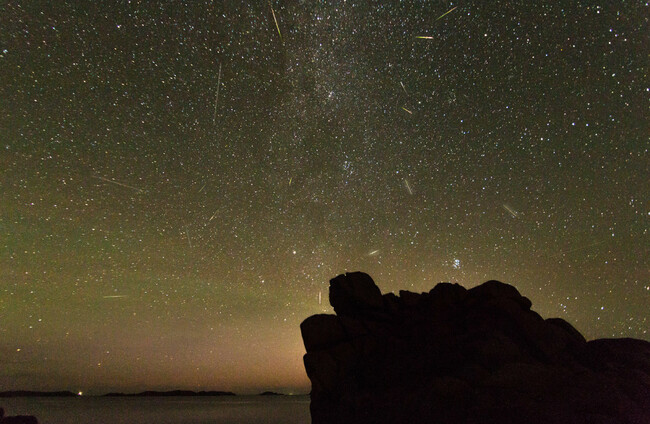
The annual Perseid meteor shower pictured in 2016. Alamy Stock Photo

Meteor shower and rare 'double planet' to light up Irish skies tonight - here's how to spot them

The Perseid meteor shower will peak tonight with up to 20 meteors an hour, followed by a rare visible planet pairing before dawn.

LAST UPDATE | 12 Aug

IRELAND’S NIGHT SKIES will light up this evening as the annual Perseid meteor shower reaches its peak, offering one of the most dazzling natural spectacles of the year.

Stargazers can expect dozens of bright meteors streaking overhead every hour, even with a full Moon in the mix.

Conditions should be largely favourable for viewing, according to Met Éireann, with clear spells in many areas overnight and just the odd shower.

Some cloud will build in the south towards dawn, with patchy drizzle, mist and fog possible, but temperatures will stay mild at 13 to 16 degrees with light breezes.

David Moore, editor of Astronomy Ireland magazine, said the Perseids are always a highlight of the astronomical calendar – even with this year’s bright Moon reducing the visibility of the faintest streaks.

“The most spectacular brighter ones will still be well seen, so we are urging people to get the whole family out and watch this ‘celestial fireworks’ display provided by Mother Nature!” Moore said.

He explained to The Journal that the Perseid meteor shower comes from leftover comet particles and fragments of broken asteroids.

As comets pass near the Sun, they leave a dusty trail behind them. Every August, Earth ploughs through this debris, sending tiny bits of material burning up in our atmosphere and creating fiery, colourful streaks across the night sky.

Perseid meteors can appear anywhere overhead, though their trails point back towards the constellation Perseus, visible in the northeast from Ireland each evening.

For the best experience, Moore advises waiting until the sky is fully dark, finding an unobstructed horizon, and keeping the Moon behind you to avoid glare.

“In the middle of the cities, it’s always bright. In the countryside, the moonlight will only drown out the faintest meteors — you should still see most of them,” Moore said.

“The meteors can appear anywhere in the sky, so if there’s cloud, just look in the clear patches. A reclining chair or a sun bed is fantastic – you can fill your whole vision with the sky and enjoy the show!”

Even with the strong moonlight, Moore expects people to see around 20 meteors per hour.

Some Perseids leave long-lasting glow trails, while others flare brightly before vanishing in a split second.

“It’s a spectacular natural event that connects you directly to space,” Moore said.

He is also asking members of the public to count the meteors they spot in 15-minute intervals and send results to Astronomy.ie for publication in the magazine.

‘Spectacular’ planet spotting

For those willing to stay up late, or set an early alarm, there’s an added astronomical treat this week: a rare pairing of Venus and Jupiter in the pre-dawn sky.

At around 4am on Wednesday morning, the two brightest planets will appear strikingly close together above the horizon. Moore said it’s an unprecedented sight in his career.

“Venus is 100 times brighter than the brightest star in the sky, so it’s extremely impressive,” Moore said.

“Jupiter is nearly as bright and will be extremely close, just above Venus. It’s spectacular viewing!”

Although it’s only a chance alignment (Venus is actually five times closer to Earth than Jupiter) the effect is a dazzling visual pairing visible to the naked eye.

“It’s rare enough to be able to spot two planets that close without help from a telescope or binoculars, so it’s a natural eye spectacle worth looking out for,” Moore said.

“The great thing about them being so bright is that they’re also visible to phone cameras, so it’s easy to get pictures.

“Pictures help us observe how our view changes due to material in space, as well as how close they are, so there’s real scientific value in those pictures.”

The Venus–Jupiter pairing will remain visible for several mornings after the peak, giving observers a few chances to catch it if clouds intervene.

Readers like you are keeping these stories free for everyone...
A mix of advertising and supporting contributions helps keep paywalls away from valuable information like this article. Over 5,000 readers like you have already stepped up and support us with a monthly payment or a once-off donation.

Close
27 Comments
This is YOUR comments community. Stay civil, stay constructive, stay on topic. Please familiarise yourself with our comments policy here before taking part.
Leave a Comment
    Submit a report
    Please help us understand how this comment violates our community guidelines.
    Thank you for the feedback
    Your feedback has been sent to our team for review.

    Leave a commentcancel

     
    JournalTv
    News in 60 seconds