Sign in. It’s quick, free and it’s up to you.
An account is an optional way to support the work we do. Find out more.
Sign in. It’s quick, free and it’s up to you.
An account is an optional way to support the work we do. Find out more.
THE BOYS ARE still in town…in bronze form.
Ireland has produced some of the finest works in art, literature and music. In music, the country has a strong legacy across many genres from traditional folk songs to electrifying rock numbers. From 17th-century harpists to leather-clad rock legends, up and down the country, these figures have been given a new lease of life, overlooking the hustle and bustle of the spaces they occupy and bringing joy to the fans that come to pay their respects to them.
Music fans from around the world have come to Ireland to visit the life-like recreations of the likes of guitarist Rory Gallagher in Ballyshannon, Mullingar’s Joe Dolan and legendary piper Seamus Ennis in Co Dublin. They are all part of Ireland’s extraordinary cultural identity and contribution to the wider history of music.
We’ve compiled some of Ireland’s most celebrated and influential musicians commemorated across the country.
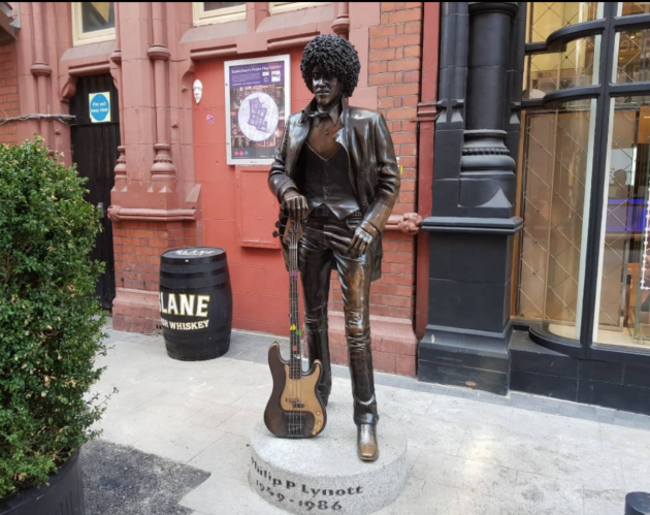
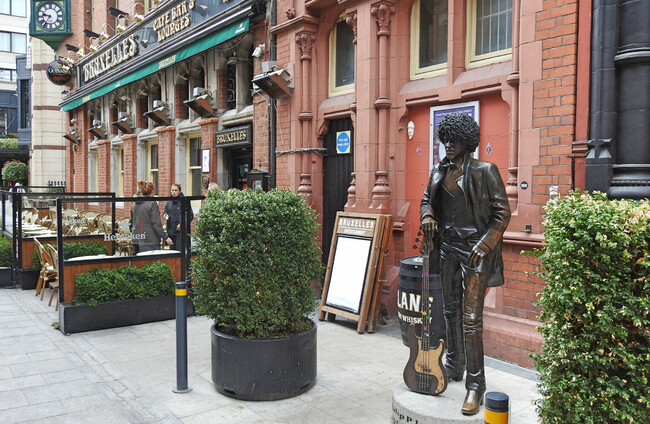
One of Ireland’s coolest musical figures, Thin Lizzy frontman Phil Lynott was commemorated with a bronze statue almost 20 years after his untimely death in 1986 when the musician was only 37. In his short life, Lynott left the world with some of the most electrifying rock songs of all time, with titles such as ‘The Boys Are Back In Town’, ‘Whiskey In the Jar’, ‘Jailbreak’ and ‘Old Town’ in his repertoire.
You can find Phil Lynott’s statue standing outside of Bruxelles Pub, off Grafton Street, where the Dubliner regularly raised a pint of Guinness.
Born over 100 years ago, Willie Clancy was destined to be a great musician. At the age of 5, the young Willie started his musical career when he picked up the tin whistle. From there, he added the flute and, later on in the mid-1930s, uilleann pipes to his repertoire.
Clancy’s contribution to Ireland’s traditional music continues to inspire budding musicians every year at the Willie Clancy Summer School held in Miltown Malbay. This is Ireland’s largest school with a focus on celebrating traditional music and has been in operation since 1973.
To many people across Ireland, Turlough O’Carolan, the tremendously gifted blind harpist who lived from 1670 until 1738, is regarded as the country’s national composer. O’Carolan left his birthplace of Nobber, Co Meath with his family to Roscommon. There his father, a blacksmith by trade, took a job with the McDermott Roe family who ensured that the young Turlough received a good education and later apprenticeship with a harpist.
O’Carolan was blinded at the age of 18 following complications with smallpox. His legacy endured centuries with his compositions being recorded by many renowned artists hundreds of years after O’Carolan’s death, notably Planxty and The Chieftains. A statue was erected in O’Carolan’s memory in 1986 in Mohill, Co Clare.
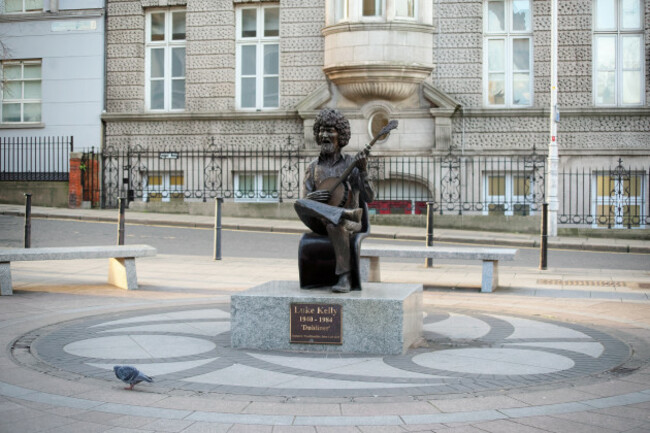
As one of the founding members of The Dubliners, the Ronnie Drew-fronted group received acclaim both at home in Ireland and internationally throughout their career. Kelly, born in Dublin’s Sheriff Street in 1940, remains one of the country’s most distinguished voices in our history. His distinct gravelly tones are immediately recognisable in his adaptation of Patrick Kavanagh’s ‘Raglan Road’ and ‘The Auld Triangle’.
In 2019, on the 35th anniversary of Luke Kelly’s death, there were 2 statues erected in his hometown of Dublin. One is situated close by his birthplace of Sheriff St by artist Vera Klute, while the other, a life-size depiction of the musician by sculptor John Coll captures the flame-haired Kelly mid-song on South King Street.
To embed this post, copy the code below on your site



have your say