We need your help now

Support from readers like you keeps The Journal open.

You are visiting us because we have something you value. Independent, unbiased news that tells the truth. Advertising revenue goes some way to support our mission, but this year it has not been enough.

If you've seen value in our reporting, please contribute what you can, so we can continue to produce accurate and meaningful journalism. For everyone who needs it.

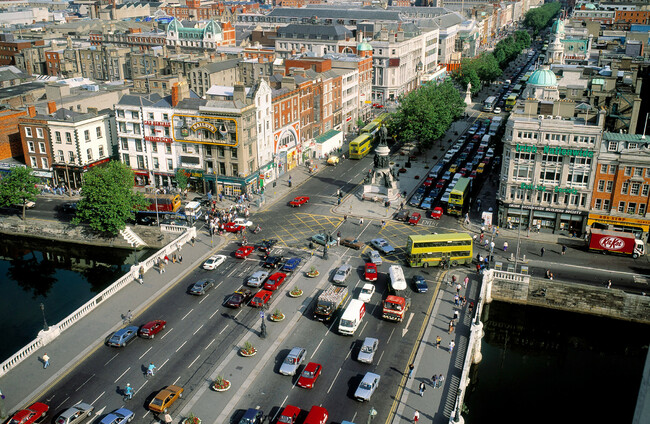
Aerial view of the O'Connell Bridge Alamy Stock Photo

New private members club to open on site of former O'Connell Street hotel

The plans provide for O’Connell Hall to have a multi-purpose space with the potential to accommodate occasional public events by invitation of the club and its members.

PLANS FOR A large new private members club on O’Connell Street have been welcomed by Dublin City Council, who claim the restoration of a significant Georgian building will have wider benefits for the area.

The development firm behind a a €500 million masterplan for a major regeneration of a 2.2-hectare site in the O’Connell Street area has applied for planning permission for a change of use of the former Royal Dublin Hotel at the northern end of the city’s main thoroughfare to a private members club.

Dublin Central GP is seeking approval for extensive conservation, repair and refurbishment works on the interior of the property as well as for a temporary mural on the side of the building.

The company is a wholly owned subsidiary of the British property development group, Hammerson, which owns Dundrum Town Centre as well as the Swords Pavilions and ILAC shopping centres.

The developers said the interior design of the proposed club was “to provide a comfortable home-from-home environment where members can meet, work, eat and socialise in the heart of Dublin city.”

The plans provide for various dining and recreational facilities across all four floors of the building including a stage, two dining rooms, two living rooms, several bars including a library bar and “snug lounge” as well as changing rooms and locker rooms.

The site at 42 O’Connell Street Upper contains O’Connell Hall – a protected structure – to its rear adjoining Moore Lane with another building known as “the Billiard Room” linking it to the main building.

The plans provide for O’Connell Hall to have a multi-purpose space with the potential to accommodate occasional public events by invitation of the club and its members.

Dublin Central GP said a number of potential end users to run the private members club, who have extensive experience “in the sophisticated design and operation of hospitality venues” have been identified.

It added: “The proposed use will reopen the buildings for active use and enjoyment by members and their guests, and will make a positive contribution to reviving cultural heritage assets and sustaining the activation, vitality and passive surveillance of O’Connell Street both by day and night.”

Planning files show council planners supported and welcomed the restoration of the building as well as acknowledging the significant investment required to bring it back into use fully.

They also expressed satisfaction that a proposal to use O’Connell Hall as a commercial gym was no longer going ahead.

The council said it was satisfied that the development is compatible with the overall policies and objectives of the zoning of the site and would have “a positive, imperceptible and long term and not significant impact on local tourism and amenities.”

However, planners have sought further information about the plans from Dublin Central GP to address some concerns about aspects of the project before reaching a final decision on the company’s planning application.

Construction of the four-storey Georgian townhouse began in 1752 when it was used as a private home.

It went through periods of use as a solicitor’s office and by various societies and clubs before being taken over in 1882 by the Catholic Commercial Club, which was established to provide a social space for Catholic businessmen excluded from other clubs.

The club, which remained in the property until the 1970s, built O’Connell Hall as a multi-purpose space used for concerts as well as a gymnasium.

The property subsequently became an extended part of the Royal Dublin Hotel in 1991 after briefly being used as a Garda Advice Centre.

The building has been vacant since the closure of the hotel in 2008 and the demolition of the original hotel property.

Planning permission for various elements of the masterplan, which includes the retention of historic lanes associated with the Easter Rising and the development of two new public squares was approved by An Coimisiún Pleanála last year.

Readers like you are keeping these stories free for everyone...
A mix of advertising and supporting contributions helps keep paywalls away from valuable information like this article. Over 5,000 readers like you have already stepped up and support us with a monthly payment or a once-off donation.

Close
80 Comments
This is YOUR comments community. Stay civil, stay constructive, stay on topic. Please familiarise yourself with our comments policy here before taking part.
Leave a Comment
    Submit a report
    Please help us understand how this comment violates our community guidelines.
    Thank you for the feedback
    Your feedback has been sent to our team for review.

    Leave a commentcancel

     
    JournalTv
    News in 60 seconds