We need your help now

Support from readers like you keeps The Journal open.

You are visiting us because we have something you value. Independent, unbiased news that tells the truth. Advertising revenue goes some way to support our mission, but this year it has not been enough.

If you've seen value in our reporting, please contribute what you can, so we can continue to produce accurate and meaningful journalism. For everyone who needs it.

Now Streaming: The Irish surgeon who made a game-changing cancer discovery

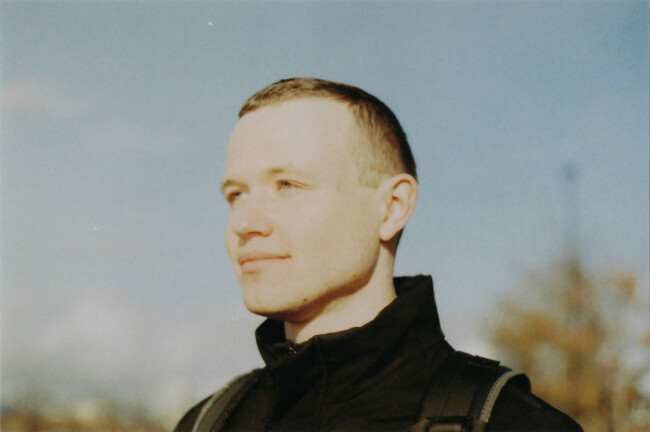
Filmmaker Éanna Mac Cana, a survivor of the lymphoma that Denis Burkitt discovered, tells his story in a documentary.

WHEN ÉANNA MAC CANA was diagnosed with Burkitt’s lymphoma in 2017 aged 19, he knew nothing about the man who had given his cancer its name.

But a few years after undergoing three months of treatment in hospital, the Belfast native made a fascinating discovery which led to the making of his moving documentary Burkitt, which is available to watch on the Seinnteoir TG4 (Player).

Mac Cana was studying filmmaking in Manchester when he was first diagnosed with Burkitt’s lymphoma, which is uncommon in adults. “Usually my cancer would present itself in the abdomen, so that’s more difficult to feel or see – but I could see it at the back of my throat,” he says. “There was an element of being lucky with that.”

After his treatment he stayed in Belfast, making artworks and films while going for regular checkups. He was told that if he didn’t have a recurrence of the lymphoma in five years it wouldn’t come back, and he hasn’t had a recurrence.

One day, he stumbled across a book in a bookshop called Irish Masters of Medicine, by Davis Coakley, and spotted Denis Burkitt’s name.

“I read in the bookshop a chapter about Denis Burkitt – it was basically a summary of his life and work, and I immediately knew that there was something in this,” he says.

HC (1) Éanna Mac Cana

Mac Cana began researching Burkitt and discovered there is a large archive of items related to him at the Wellcome Collection medical museum and library in London. He spent a week looking at the collection, and became “overwhelmed by how much there was to this story, to all the work he had done, to him – there’s so much to dig into”.

Though at the time he was making a different documentary, Mac Cana switched to focusing on Burkitt. He soon had enough material for a short feature-length documentary. 

Burkitt’s life – Saol Burkitt 

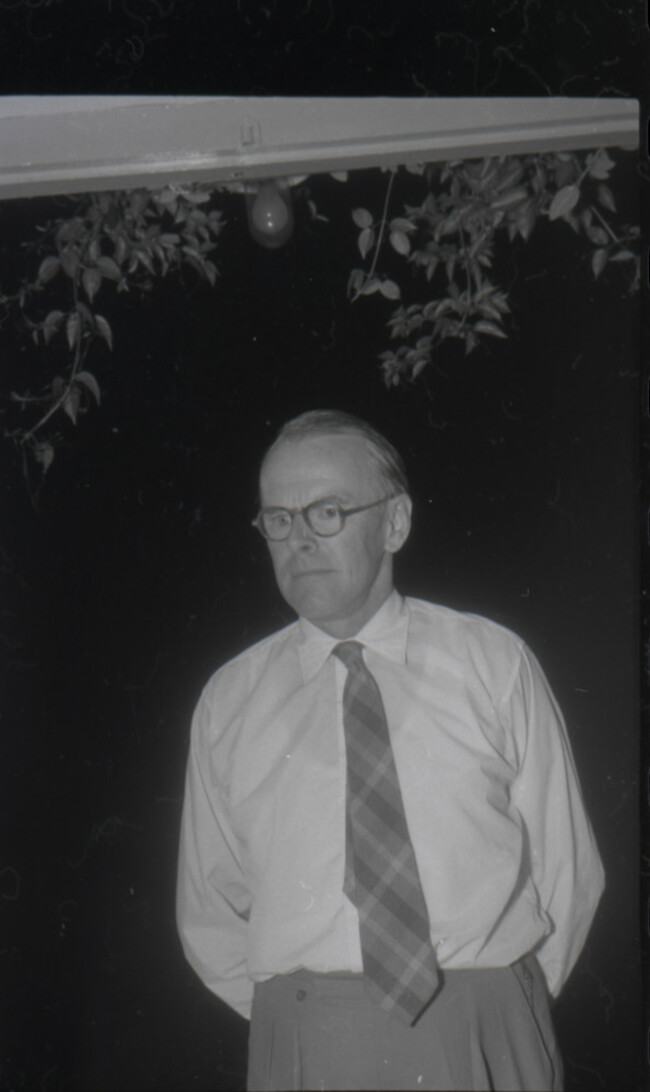
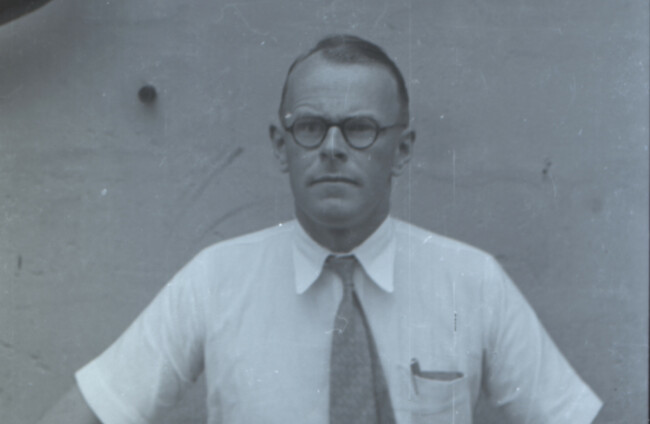
SAFARI0003 Denis Burkitt Éanna Mac Cana Éanna Mac Cana

Denis Parsons Burkitt was born in Enniskillen in 1911. At 11, he lost an eye in an accident. Though he initially studied engineering in Trinity College Dublin, he changed to medicine due to believing this was his calling (Burkitt had a very strong religious faith).

After serving with the Royal Army Medical Corps, Burkitt became involved in medical service in Uganda, and lived in its capital Kampala until 1964.

It was while in Uganda that Burkitt noticed children who had tumours in their jaws and other parts of their bodies, and set about trying to figure out what could be causing them.

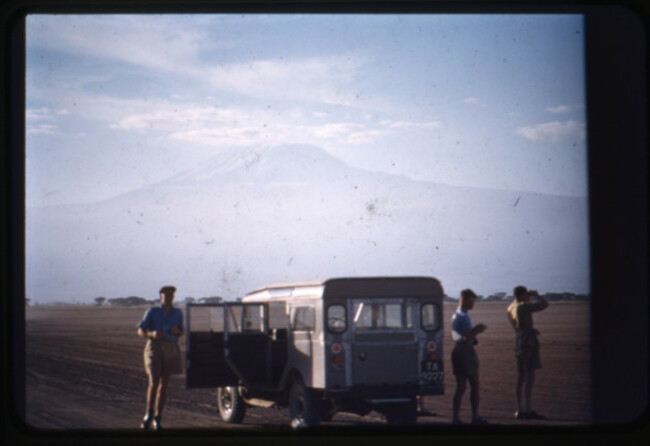
The documentary shows how a safari journey that Burkitt went on with colleagues helped him to map the incidences and figure out important connections. (Burkitt was also later responsible for work that linked low fibre rates with colorectal cancers.)

Mac Cana connected with Burkitt’s family while making the documentary. “He passed away in 1993 and then his wife Olive passed away in 2017, but his three daughters are still alive,” he says. “I became really close with them and some other members of his family, and I’m really close with his eldest daughter, Judy. They’ve been really welcoming.”

“I think it has been special for them to see all these old interviews, and it must be difficult as well, and emotional for them.”

Luckily, Denis Burkitt was a great photographer and had taken many photos and videos which Mac Cana got permission to use in the documentary. They bring to life a man dedicated to medicine, who doggedly pursued the cause of the lymphoma that would eventually be named after him.

They also serve as a link between Mac Cana and Burkitt that goes beyond lymphoma and into how both men interact with the world – through images and ideas. 

As gaeilge

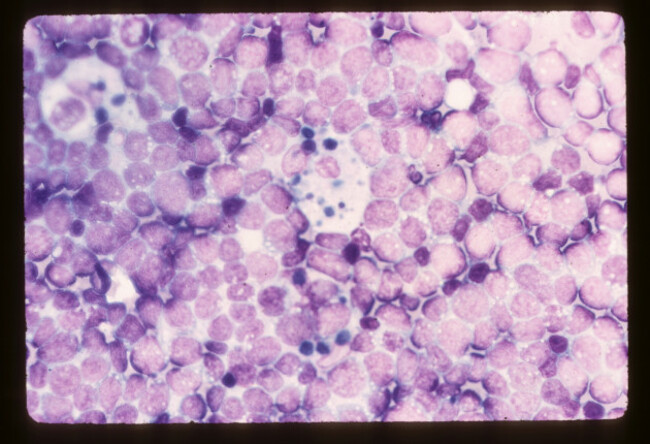
Burkitts lymphoma cells Burkitt's lymphoma cells Éanna Mac Cana Éanna Mac Cana

The film features narration by Mac Cana as gaeilge. “I’m the only Irish speaker really in my family,” he says. “I first interacted with Irish at school in Newry. And then for years I went out with a gaeilgóir… she was really important and instrumental in getting the film made, in helping me on a personal level.”

His Irish teacher, Breandán Ó Fiach, helped him with his narration, which is in Ulster Irish. “We worked really hard on making sure it was in a dialect that would be heard up here,” says Mac Cana. “I’m really proud to have it in Irish, and to add my two cents to the Irish revival which is happening.”

The film explores treatments for Burkitt’s lymphoma, and how the legacy of colonialism means not everyone has equal access to them today.

“I really wanted to stress the importance of preventative medicine. If you prevent cancer,  from happening, you prevent the cancer cells, but you prevent all that trauma and all the stuff that the patient has to go through,” says Mac Cana.

Creativity and illness – Cruthaitheacht agus tinneas

Good Photos0026 Burkitt on safari Éanna Mac Cana Éanna Mac Cana

A big theme in Burkitt is how art and creativity can help people deal with difficult experiences. It includes images and clips from Mac Cana’s time in hospital, which he took to help him make sense of what was happening, as well as exploring how his artist parents processed their experiences through art.

“I’m very lucky to be able to tell that side of things, and have that trust with my family, especially with mom and dad, to tell their story,” says Mac Cana.

While making the film was difficult at times, Mac Cana says it helped too.

“I was always hesitant learning about Burkitt’s lymphoma when I was in hospital. But what’s actually really helped is understanding more about the disease, which I didn’t expect. It’s made it a lot less scary. And realising how treatable this cancer is, and also other cancers as well.

“I suffered from that classic thing of thinking cancer is the end of the world – but there’s a lot of reason for optimism with present-day treatments and new research into cancer.”

Coming out of the treatment was difficult for Mac Cana on a personal level. “My head was in a different space. I had built things up in my head so much that I couldn’t get out of that mindset, of not being able to think about the future properly, always being afraid of relapse,” he explains.

Doing more research into Burkitt helped him understand the disease, and he realised how fortunate he was in terms of getting an early diagnosis.

What has also been positive is receiving “lovely messages” from people who connected emotionally with the beautifully-made film.

“I knew people who had gone through their own respective cancer journeys would obviously be able to connect to aspects of the film. But I didn’t expect it to have that real, deeper emotional impact. It’s been really special,” he says.

Burkitt is available to view for free on The Seinnteoir TG4 (Player)

Close