Sign in. It’s quick, free and it’s up to you.
An account is an optional way to support the work we do. Find out more.
Sign in. It’s quick, free and it’s up to you.
An account is an optional way to support the work we do. Find out more.
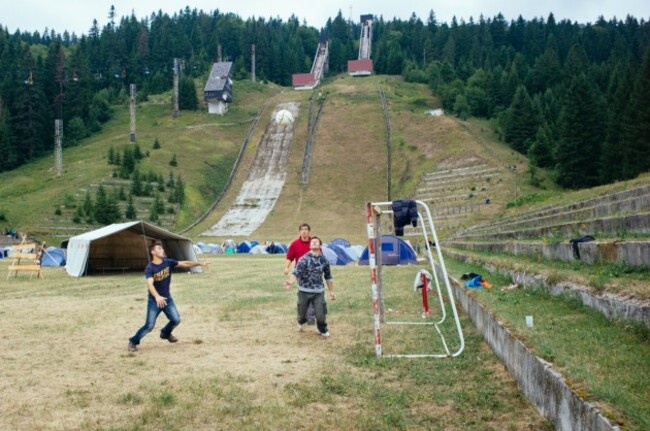

SINCE THE INCEPTION of the modern Olympics, there have been 49 winter and summer games held in 41 different cities around the globe. Some were great successes. Others, not so much.
Researchers have known for years that cities that host large sporting events like the Olympics generally spend more money and make less than anticipated. And investing in an Olympic Games won’t necessarily lead to long-term economic growth or improved infrastructure.
Photographers and artists Jon Pack and Gary Hustwit set out to document what exactly happens when the games are over, and discovered varying answers.
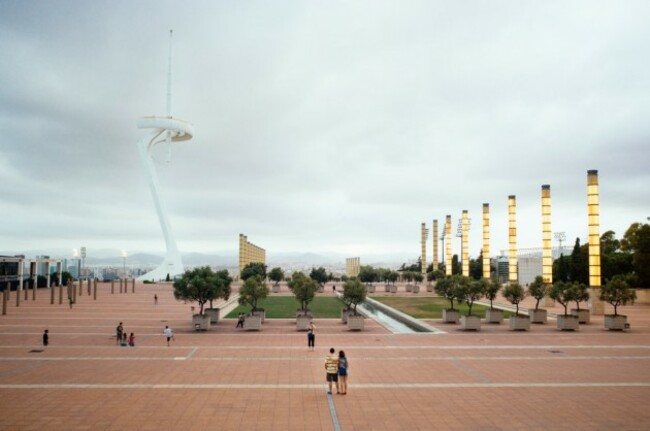
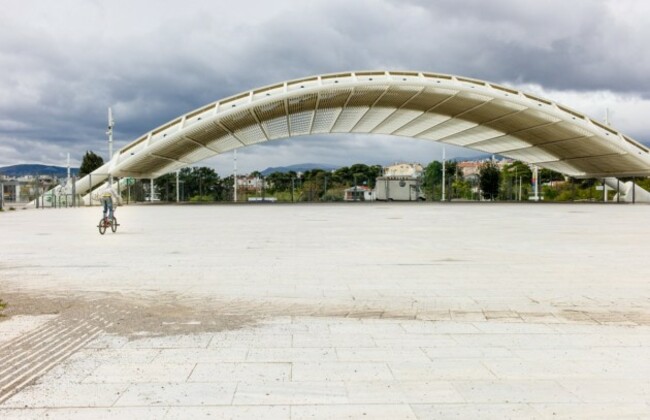
Pack and Hustwit explored and photographed relics and remains of once-new Olympic features in 13 cities. Their photos, collected in a new book entitled “The Olympic City,” show the varied remnants of Olympic Games gone by.
“We’re interested in the idea of government-approved spending — and these are huge amounts of money — to build massive structures, some of it temporary, all to host an event that will only last a couple of weeks … Are [the people] benefiting from having been a part of the Olympics? Are the games a point of pride or regret?” Pack explains.
Some places faired well, standing the test of time by adapting to new roles. Other structures fell to shambles after years of disuse. Both aspects, rebirth from ingenuity and death from poor planning, are documented in the series, which acts as a interesting behind-the-scenes look at the games we know and love.
 Here, we see the large wall that has been placed at the foot of the ski jumps which still bears the Olympics Rings insignia.
 The Jesse Robinson Olympic Park still sits, rather unkempt, in the middle of the busy neighborhood of Compton, Los Angeles. Jesse Robinson, a local advocate for amateur sports, was honored by having the park named after him when the Summer Olympics were held in LA in 1984.

To embed this post, copy the code below on your site








have your say