Sign in. It’s quick, free and it’s up to you.
An account is an optional way to support the work we do. Find out more.
Sign in. It’s quick, free and it’s up to you.
An account is an optional way to support the work we do. Find out more.
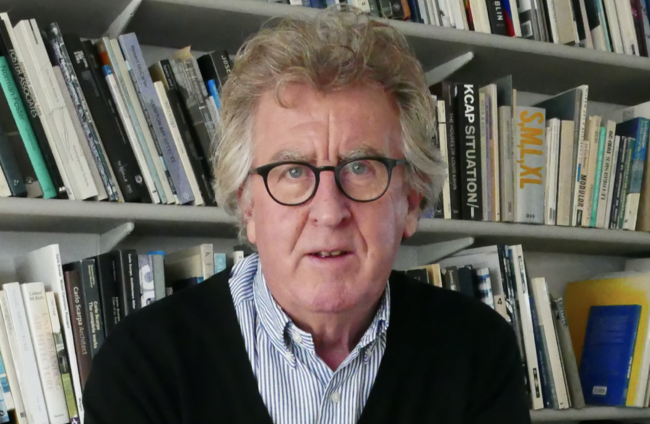
PAUL KEOGH IS the founder of the multi-award-winning Paul Keogh Architects. Established in 1984, Paul Keogh Architects combine creativity, expertise and experience in their design of both one-off private homes and major public works for local authorities and voluntary bodies. The company is based in Dublin 8 where its team provides a wide range of services from architecture to interiors, conservation to urban design. One of Paul’s projects, Glin Court, an older person’s housing development in Dublin 17, is part of this week’s Irish Architecture Foundation’s Open House Dublin 2025.

What inspired you to start your business?
It was by chance rather than design that I started PKA. After UCD and my masters at London’s RCA, I worked with de Blacam & Meagher, James Stirling and the Office of Public Works. Small commissions from friends enabled me leave the OPW in 1984. The office grew bit-by-bit until, with our colleagues in Group 91, we won our first public project – the Temple Bar Framework Plan – which opened the door to the range of prestigious schemes we’ve done since.
What have you learned so far in business?
Conventional wisdom has it that an ability to draw and proficiency in maths are what’s required to be an architect. Not quite! While creativity and design skills are fundamental, running an architecture practice also requires a degree of expertise in management, business, technology, administration and communications.
What has been the most challenging time for you in business?
Without doubt, the five years after the 2007 financial crash. With 15 staff and a strong pipeline of projects, we had just moved to our New Street South studio, only to have scheme after scheme cancelled, our staff reduced to three and our bank closed for business. In addition, the political and economic narrative was that Ireland had built too much housing and that architects should seek work opportunities abroad. That was such a stressful time.
What sets your designs or projects apart from the work of other architectural practices?
Dublin has an incredibly vibrant architecture culture. What sets PKA apart, I think, is that my partner Rachael Chidlow has a background in interiors and we both have masters degrees in environmental design from the Royal College of Art. This expertise and our track record over twenty years has put PKA in the front line of architecture practices, especially in housing, public realm and urban design.
What are key considerations when it comes to your designs?
Meeting, and wherever possible exceeding, the needs and aspirations of our clients, responding sensitively to the physical and cultural contexts in which we work, and providing designs that are durable and meet the test of time. A vision shared with clients is of the utmost importance.
How has your work changed over the years?
Responding to the challenge of climate change has a prominence today that didn’t exist when I started practice. Environmental responsibility should now be the overarching objective in determining the type, scale and form of the cities, towns and villages we build. We’ve been privileged, I believe, in having done some exemplar projects over the years.
What is the difference in approach to designing something for a private client versus a large scale public development for, say, a housing authority or charity?
Private clients undertake projects with their own funds, to meet their own needs and aspirations. On the other hand, public developments provide the infrastructure – transport, housing, education, healthcare, leisure, etc. – required by society. This requires a different design mindset – one that responds to broad cultural criteria rather than purely personal ones.
Do you have any ideas on how to solve the current housing crisis with clever design?
Low-rise, out-of-town development is environmentally unsustainable, and high-rise, inner-urban development is financially unviable. Commonplace across Europe, the mid-height, mid-density housing model is, I believe, the key to regenerating our cities, towns and suburbs as affordable and attractive places to live – not forgetting rehabilitation of the masses of vacant historic buildings they contain.
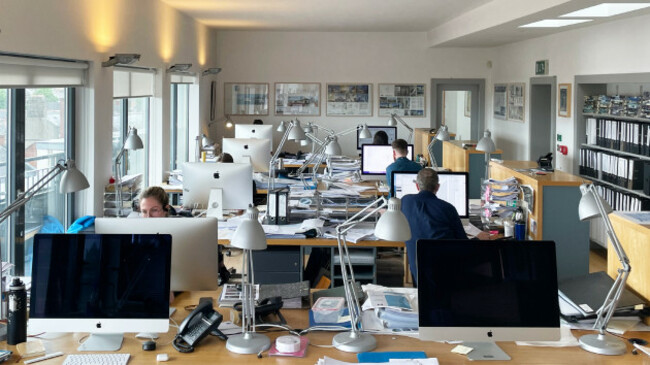
Describe your workspace.
I cannot imagine a better place to work than the fourth-floor, Dublin 8 offices we bought in 2007. With a large studio and two meeting rooms, we enjoy great natural light, views across the city and towards the mountains, as well as an outdoor terrace for coffee and lunch on summer days. It adds greatly to the wellbeing of our staff and enjoyment of their work.
How important is collaboration to what you do?
Unlike painters, writers and poets, architecture practice is one hundred percent collaborative. The pandemic hasn’t resulted, as elsewhere, in more home working. On the contrary, our designs evolve from directors, associates and project architects working alongside each other in the studio. Collaboration with the planners, engineers and other consultants we work with is also vital to the success of our projects.
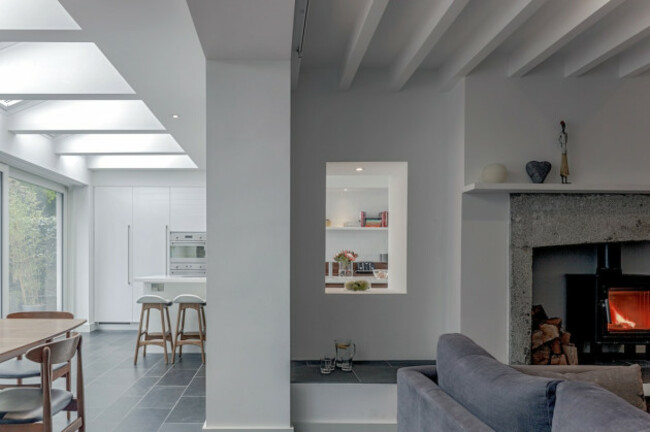
Describe your typical working day.
Depending on the stage projects are at, I can spend the day at my desk, at meetings with clients or consultants, on construction sites, or a mix of all three. Typically, though, I have a swim in Rathmines pool before cycling to the office. We break for coffee at 11am and tea at 4pm, so that everybody is au fait with what everyone else is up to – both architecturally and socially!
If you weren’t doing this what would you be doing?
I got great pleasure recently restoring the copy of Gerrit Reitveld’s 1917 Red and Blue chair that I made when I was a student. That’s one possibility! Much of my student pocket money was earned behind the bar, working for my father in Peter’s Pub, and, before that in Ashton’s in Clonskeagh so that’s another!
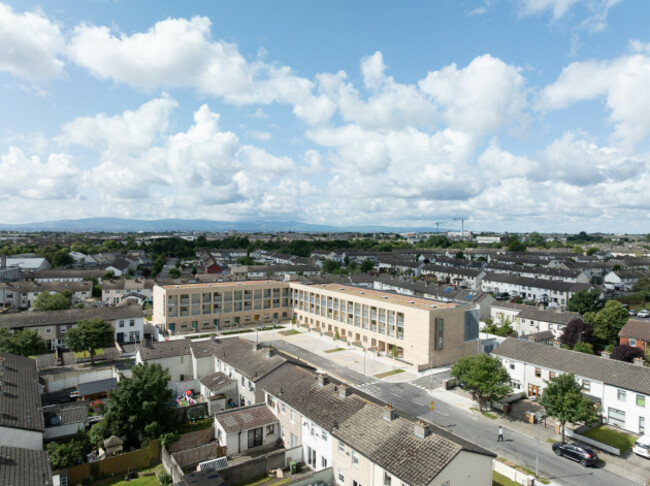
Why did you want to showcase your project Glin Court during Open House 2025?
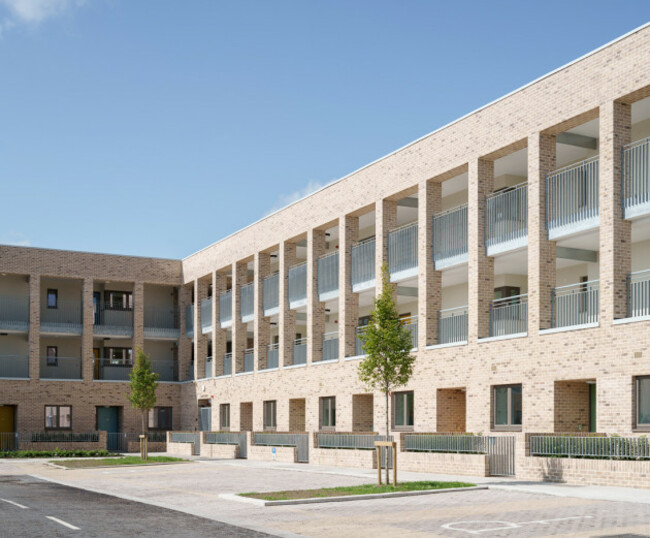
The current dumbing-down of apartment design standards really depresses me. Glin Court illustrates much of what I believe is important in making apartments attractive places to live, for example a high quality public realm, access decks and communal gardens that facilitate social engagement, dual aspect apartments with spacious room sizes, balconies that are both private and secure and quality materials and detailing. The success of the project is also largely down to our collaboration with the
City Architects office.
What has been your proudest moment/ favourite project so far?
With our Group 91 colleagues, winning the Union of International Architects’ Abercrombie Medal for urban design, followed by the joy of seeing projects successfully completed – in this case, Glin Court.
Notes:
The building tour of Glin Court by Paul Keogh Architects is just one of over 200 free events taking place during Open House Dublin from 11–19 October 2025. Ireland’s largest architecture festival, with this year’s theme of ‘Future Heritage’, offers free access (with plenty of drop-in options) to hundreds of buildings, tours, talks and family events across the city and county. From iconic landmarks to hidden gems, it’s a chance to explore Dublin’s built heritage and to meet the people who shape it. Hosted by the Irish Architecture Foundation, the programme invites everyone to discover Dublin’s past, present and future through its remarkable spaces. The full 2025 Open House Dublin programme is available to explore at openhousedublin.com.
Paul Keogh Architects: pka.ie
To embed this post, copy the code below on your site



have your say