We need your help now

Support from readers like you keeps The Journal open.

You are visiting us because we have something you value. Independent, unbiased news that tells the truth. Advertising revenue goes some way to support our mission, but this year it has not been enough.

If you've seen value in our reporting, please contribute what you can, so we can continue to produce accurate and meaningful journalism. For everyone who needs it.

Alamy Stock Photo

Postal services around the world are suspending parcel deliveries to the US - here's why

Donald Trump’s removal of a tax exemption has caused uncertainty and is likely to lead to disruption and higher prices for US consumers.

POSTAL SERVICES IN some 25 countries have suspended parcel shipments to the US before a new import tax kicks in.

Starting from the end of this month, low-priced goods that are being sent to the states will be subjected to higher duty thanks to an executive order signed by US President Donald Trump last month. 

The change means that, for US consumers, buying stuff online may be about to get a lot more expensive. 

So what exactly is changing?

The change involves something called the de minimis exemption. “De minimis” is a Latin term that refers to something that is too small or immaterial to be taken into consideration. 

The de minimis exemption dates back to 1938, when US Congress voted to drop duties on low-cost goods “in order to avoid expense and inconvenience to the Government disproportionate to the amount of revenue that would otherwise be collected”. In short, to save time and a lot of paperwork. 

The rule allowed these goods to be shipped to the US duty-free. While the amount was a lot lower back in the 1930s, the ceiling was raised to $800 in 2015.

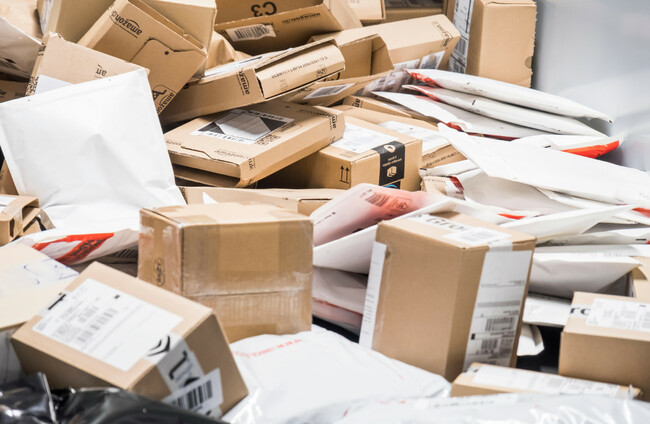
This has been good for online retailers like Shein and Temu, who have been able to ship millions of packages to US consumers without paying import tax on them. Last year, the US valued these shipments at more than $1.36 billion. 

But in July, Trump signed an executive order to suspend the loophole for all countries, labelling it a “big scam” that has harmed American businesses.

It came three months after he ended the practice for China and Hong Kong as a means of tackling the opioid crisis in the US, with him claiming smugglers were using the exemption to ship the drugs into the country. 

The higher duties will kick in from 29 August. They will not apply to letters, documents or small gifts with a stated value of $100 (€85) or less. 

How much will it cost?

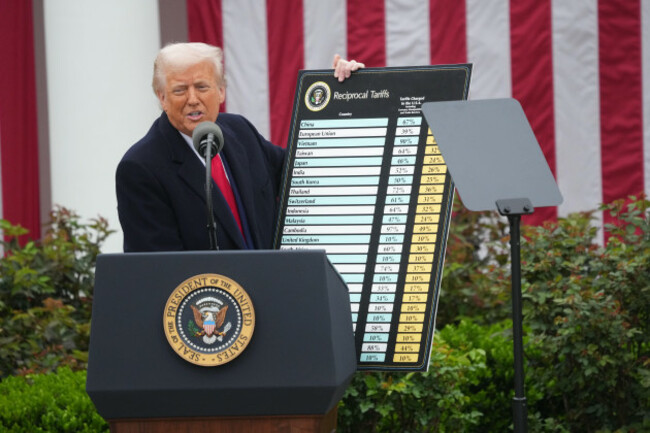
According to the new rules, any small goods shipped to the US from abroad will now be subjected to tariff rates based on the value of the package itself and its country of origin. For example, goods from the EU will be subject to a 15% tariff

united-states-president-donald-j-trump-holds-a-chart-of-reciprocal-tariffs-as-he-makes-remarks-during-a-make-america-wealthy-again-event-in-the-rose-garden-of-the-white-house-in-washington-dc-on From 29 August, duties on small goods packages will be based on the country of origin's tariff rate. Alamy Stock Photo Alamy Stock Photo

For US consumers, the end of the duty-free arrangement will mean that anything they buy that is made or shipped from another country is going to be more expensive. Supply disruptions are also likely due to shipments being suspended. 

What are postal services saying?

While consumers might be concerned about the cost of their goods, postal companies and couriers are complaining about a lack of information surrounding the change and having too little time to prepare for it.

The UK’s Royal Mail, France’s La Poste, Deutsche Post and Poste Italiane are among some of the European postal services to have temporarily suspended these shipments to the US, citing uncertainty about how the new tariffs would work and a lack of time to prepare.

In a statement, German courier DHL said it will not accept and transport parcels and postal items containing goods from business customers destined for the US.

The company cited “new processes required by US authorities for postal shipping, which differ from the previously applicable regulations” as a reason for the restriction. 

“Key questions remain unresolved, particularly regarding how and by whom customs duties will be collected in the future, what additional data will be required, and how the data transmission to the U.S. Customs and Border Protection will be carried out.”

Today, the Universal Postal Union, a UN agency that coordinates postal policies among member nations said that postal operators in 25 countries have suspended their outbound postal services to the US. 

It said they have expressed concerns around uncertainties related to transit services, regulations and continuity of postal flows. 

“These suspensions will remain in place pending further information on how US authorities will operationalise these measures as well as actual implementation of the required operational changes,” it said.

The UPU said it has conveyed these concerns to US Secretary of State Marco Rubio, and that it is working with US authorities “to ensure that information on the operational requirements of the measures is communicated effectively to other member countries”. 

What about Ireland?

An Post told The Journal that they are maintaining parcel services to the US as usual while they seek “a solution” to the new rules. 

In a statement, the postal service said that while a large amount of parcels being posted from Ireland to the US are gifts with stated values lower than $100, the change “will disrupt some Irish trade into the US, and risks causing confusion, delay and inconvenience for sending and receiving customers”. 

“Rather than simply suspend all parcel services to the US, as some other European postal carriers are planning, An Post is actively seeking a solution for Irish companies selling into the US through the postal service so that we can support them and the Irish economy by keeping trade routes open.”

This will involve the receiving US customers having to pay the required duties locally before delivery can be completed, An Post said.

“We want to assure Irish customers that we are working on their behalf and will advise them of the new arrangements for their US parcels in the coming days. An Post is also directly contacting Irish business customers who sell goods into the US through the postal service.”

Readers like you are keeping these stories free for everyone...
Our Explainer articles bring context and explanations in plain language to help make sense of complex issues. We're asking readers like you to support us so we can continue to provide helpful context to everyone, regardless of their ability to pay.

Close
16 Comments
This is YOUR comments community. Stay civil, stay constructive, stay on topic. Please familiarise yourself with our comments policy here before taking part.
Leave a Comment
    Submit a report
    Please help us understand how this comment violates our community guidelines.
    Thank you for the feedback
    Your feedback has been sent to our team for review.

    Leave a commentcancel

     
    JournalTv
    News in 60 seconds