We need your help now

Support from readers like you keeps The Journal open.

You are visiting us because we have something you value. Independent, unbiased news that tells the truth. Advertising revenue goes some way to support our mission, but this year it has not been enough.

If you've seen value in our reporting, please contribute what you can, so we can continue to produce accurate and meaningful journalism. For everyone who needs it.

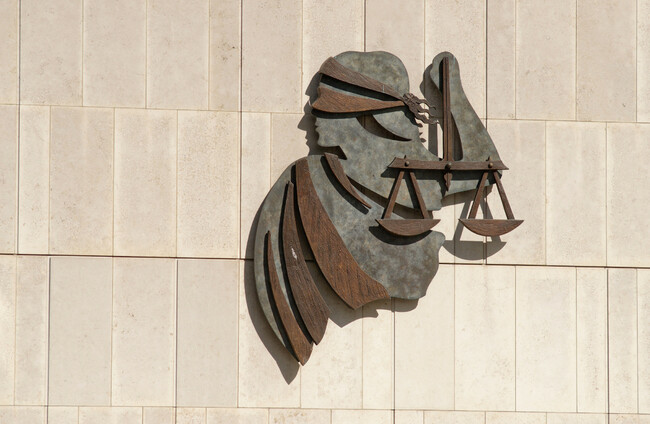
Alamy Stock Photo

Opinion Are men and families forgotten when it comes to sexual violence and abuse?

Dr Marie Keenan looks at how society views men who are victims of abuse and asks if we’re approaching the issue in a fair manner.

I SAT IN a circle with three adult men trying to come to terms with the revelation that their father had sexually abused their sister as a child.

Shocked to their core and distraught for their sister, another issue was on their minds. Was this ‘thing’ hereditary? Could they – all fathers themselves – do this to their children? One of the men’s wives had stopped being intimate with her husband since the revelations were made about his father.
 
In another case, the mother of a young man requested a meeting one day. Her son was serving a sentence for rape. He attacked and raped a young woman, who was unknown to him. Regretting his actions, he pleaded guilty. From a privileged background, John’s mother wanted to know if she was the cause of her son’s behaviour. She wondered if, somehow, she had failed. Why would her son do such a thing if he did not hold anger towards women – and was she the source of this anger? The man’s father resigned from his job. He could not face his peers. 
 
In the course of my recent Seanad campaign, while individuals made contact regarding various issues, most correspondence came from men, some of whom are victims of abuse. These men asked that male victims of sexual violence are not forgotten or their families and partners, as they support them in dealing with the legacy of abuse. They asked that attention be given to the hidden problems of domestic violence in which males are victims. Families of victims and families of perpetrators are sometimes referred to as indirect victims. 

Fear of speaking out  

My contacts emphasise the difficulties for male victims in speaking out and the fear of not being believed. While female victims report this too, for males it includes a gendered normative dimension of supposed strength.

If we need further evidence of this, one would be advised to listen to the disclosures of emotional abuse involved in the catfishing of men in recent episodes of The 2 Johnnies Podcast. When all things are considered, we need to think seriously about these matters, in public discourse, in private life, in political action.
 
I have worked with many men, women and children over the course of my professional life, supporting male and female victims of sexual and domestic abuse, and those who are otherwise finding life challenging. I have also worked with males, and a smaller number of females, who perpetrated offences, some of a sexual nature, helping them desist from further offending, to turn their lives around and make good. 
 
In some cases, I facilitated or supported male and female victims to meet with the person who abused them, or with institutional leaders willing to be accountable for institutional failures. I have witnessed lives change through these restorative justice meetings, which are entirely voluntary. 

Victims are victims 

Some men who contacted me talked about the impact of the dominant narrative on them — that all men are potential suspects — while at the same time recognising the majority of victims of sexual and domestic violence are female. The ‘not all men’ [are abusers] disclaimer that is now part of common discourse does not really address their concerns. They ask us to consider how a boy child of 17 years and 364 days old can be seen as a male victim, but on his 18th birthday, he moves to a potential male suspect. 
 
CSO data released in 2023 shows that 52% of females and 28% of males have experienced sexual violence either in childhood or adulthood over their lifetime. These are simply staggering figures and one should not overshadow the other. Both require serious attention. 
 
While several commitments are made in the draft programme for government to address interpersonal violence and abuse, there is also a need for more nuanced debate and understanding. Let us not descend into the usual binaries of males vs females, men vs women. Instead, let us realise that while the gender dividend is alive and well in some spheres of life, such as the gender pay gap, or perceived safety in public spaces, many factors influence power relations, only one of which is gender.

Other factors include class, wealth, ability/disability, race, sexuality and of course normative assumptions, such as those regarding mothering and fathering. In essence, we all engage in multiple power relations on a given day in which power shifts around, and the potential to abuse power is influenced by many factors, including individual features, societal norms, opportunity and context. Research shows that many people who abuse power believe they can avoid detection.  

Family courts  

When the treatment of men in the family courts is mentioned by my contacts, I prefer to see this issue from another angle. To my mind, the district courts are not fit for purpose in family law matters for men, women or children. The courts need a serious overhaul, and I would like to see a lot more training for the judiciary and legal professionals involved in family law proceedings. 

Some citizens unfortunate enough to have to engage with the district courts regarding family law rightly refer to them as ‘cattle marts’. I include barring order hearings, the ‘parental alienation’ debacle, disrespectful cross examination practices by some legal professionals, and more. 
 
While not ignoring the importance of gender, particularly regarding domestic homicides/familicides, in which women and children are the main victims, we need to stand together as men and women to stop all this unnecessary suffering of men, women and children.

We also need people in the Dáil and Seanad with the right skill set, frontline experience and research background to ask the right questions and get the right action.
 
Dr Marie Keenan is Associate Professor of social policy, social work and social justice at UCD, a criminologist, forensic psychotherapist, restorative justice practitioner and registered social worker.

Readers like you are keeping these stories free for everyone...
A mix of advertising and supporting contributions helps keep paywalls away from valuable information like this article. Over 5,000 readers like you have already stepped up and support us with a monthly payment or a once-off donation.

Close
JournalTv
News in 60 seconds