We need your help now

Support from readers like you keeps The Journal open.

You are visiting us because we have something you value. Independent, unbiased news that tells the truth. Advertising revenue goes some way to support our mission, but this year it has not been enough.

If you've seen value in our reporting, please contribute what you can, so we can continue to produce accurate and meaningful journalism. For everyone who needs it.

Alamy Stock Photo

You've Got Mail Dial-up is finally dead, but maybe it wasn’t all that bad?

Who knew people were still dialling up to get internet, but that’s all over now, writes Niamh O’Reilly.

LAST UPDATE | 23 Aug 2025

IN THE YEAR of our lord, 2025, who knew people were still using dial-up to get on the internet? Well, apparently, some poor souls in the US were relying on the outdated service for their internet needs.

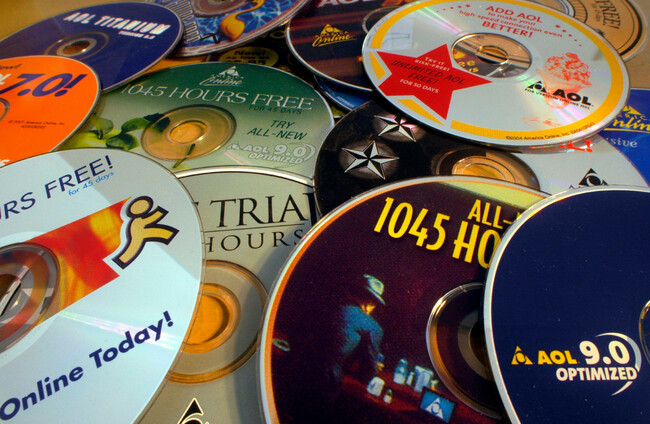
They’ll be using it no longer, however, as AOL has announced it is ditching its dial-up services once and for all.

For those of us who were born before the advent of broadband and Wi-Fi, it’s not just a blast from the past; it’s yet another chapter of our technology history closing. Dial-up is more than just a word; however, for those of us who remember it, it’s a sound we instantly feel in our bones.

I tried to re-create the noise for my curious five- and eight-year-olds, who had no concept of having to wait to get on the internet or wait for anything else, for that matter. To these everything-on-demand, Generation Alpha kids, the buffering symbol on their favourite streaming services is a fate worse than death. As I tried to explain dial-up to them, I realised they had never even used a landline before in their lives and might have seen one in a museum or as a toy when they were in crèche.

The sound of the outside world

When I went on to recreate that trademark dial-up sound, they thought I was maybe having a stroke, because it sounded so odd. It was those high-pitched electrical beeps, whistles, static, and clicks that signalled you were about to get on the internet back in the 90s and early 2000s.

That was, of course, if your sibling wasn’t hogging the phone, and your connection actually went through, which, plenty of times, it didn’t.

Dial-up was unreliable as hell and slow as be-jaysus, and if my 21st century kids can’t cope with the buffering symbol on their streaming services, I’d love to have seen their reaction to late 90s/early noughties dial-up speeds that were like something out of the Flintstones.

Most of the time, it was patchy at best. Sometimes you’d have to jiggle wires here and there as you begged your parents to be allowed to take the cable out of the phone and put it into the modem for a bit of ‘surfing.’ If you did get a connection, you’d probably check your Indigo, Eircom, or iol email account, maybe hop over to a forum or chatroom, before trying to log onto some new website, which in reality looked like a slightly more colourful version of teletext and loaded three times as slowly.

Sluggish and unreliable as it was, the internet was a simpler, less crowded place back then, and the online world hadn’t infiltrated every aspect of our lives yet or arrived in our pockets. The home computer was usually in the downstairs kitchen or living room, and getting online wasn’t the solo activity it’s now morphed into. It wasn’t so insidious, and sometimes I wonder if the old days of dial-up, as old-fashioned as they seem to my kids, aren’t actually a little bit of what we need right now?

Tech is everywhere

Attention spans are being destroyed by our collective addiction to our screens and devices, with studies showing that AI is literally rotting our brains.

It doesn’t take research from the experts MIT to tell us this either, one look on public transport, a queue in the supermarket or coffee shop or people in restaurants or any public place and almost everyone is peering into their phones scrolling at the speed of light through reams of content, usually on two times speed with the sound blaring.

I stood on a Luas the other day and watched as the teenager sat beside me scrolled through hundreds of videos on the social media app TikTok, barely registering what he was looking at before scrolling to the next, with nothing seeming to satisfy this insatiable need for stimulation. He’s not alone, and doom-scrolling before bedtime on that particular app is an exercise in exhaustion I know all too well.

The internet is impossible to get away from now, even if you’re not physically on it. Studies have shown that the mere presence of a smartphone impairs our attention. In one study, students in the presence of a turned-on smartphone, students performed poorly in neuropsychological tests compared to students who did the tasks without the presence of a smartphone.

In another study by Carnegie Mellon University’s human-computer interaction lab, students who had their phones switched on and received intermittent text messages performed 20% worse than those who had them switched off.

It’s not just smartphones, either. So far, I’ve managed to keep my two young children away from owning or using a smartphone. It’s not an easy feat, as research shows we’re giving kids as young as nine smartphones with unfettered access to the internet. But is on-demand TV really any better for the attention span?

Instead of the days of my childhood, when you’d watch one episode of your favourite cartoon once a week, they can now binge-watch every episode ever created with no space to breathe. And let’s not mention the buffering symbol again, because as I’ve said, it may as well be the end of the world, as I try to explain to them the heartache of having four TV channels, regular ads you couldn’t fast forward, and no pause button, as a child. Or the excitement and joy of going to Extra-vision to rent a movie, when they can, at the touch of a button, put on one of a hundred movies they want to watch.

It’s not just the kids’ viewing patterns heading this way; it’s the grownups in the room, too! We either spend all evening trying to find something to watch and conk out within five minutes of putting it on, or don’t give the show or film a chance and quit because our capacity to pay attention is being eroded. Either that, or we watch while on our phones.

I’m a realist, of course, and as much as I hark back to simpler times, there’s no putting the genie back in the bottle and no way the world will ever go back to dial-up or regress our level of technology. Still, while dial-up may have been slow, at least it didn’t have the ability to sink its claws into every aspect of our lives and rot our attention span, and maybe just maybe we could learn something from it.

Niamh O’Reilly is a freelance writer and wrangler of two small boys, who is winging her way through motherhood, her forties and her eyeliner.  

Readers like you are keeping these stories free for everyone...
A mix of advertising and supporting contributions helps keep paywalls away from valuable information like this article. Over 5,000 readers like you have already stepped up and support us with a monthly payment or a once-off donation.

Close
15 Comments
This is YOUR comments community. Stay civil, stay constructive, stay on topic. Please familiarise yourself with our comments policy here before taking part.
Leave a Comment
    Submit a report
    Please help us understand how this comment violates our community guidelines.
    Thank you for the feedback
    Your feedback has been sent to our team for review.

    Leave a commentcancel

     
    JournalTv
    News in 60 seconds