We need your help now

Support from readers like you keeps The Journal open.

You are visiting us because we have something you value. Independent, unbiased news that tells the truth. Advertising revenue goes some way to support our mission, but this year it has not been enough.

If you've seen value in our reporting, please contribute what you can, so we can continue to produce accurate and meaningful journalism. For everyone who needs it.

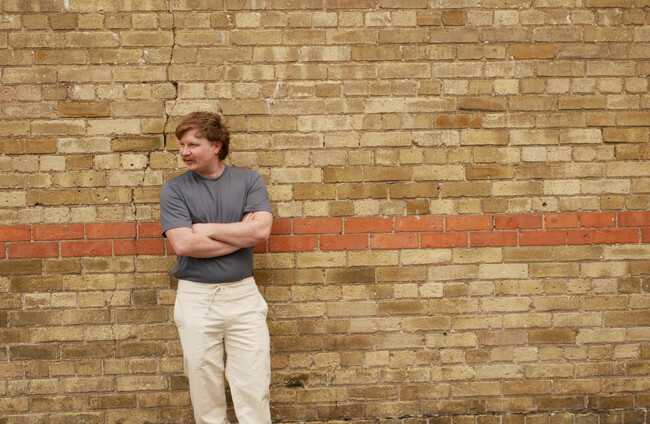
Ciara Quinlan

Carl Kinsella 'Instead the song took on the characteristics of an English football chant'

An extract from Kinsella’s bestselling book of essays, At Least It Looks Good From Space.

At Least It Looks Good From Space: A catalogue of modern, millennial and personal catastrophes by Carl Kinsella is published in trade paperback by Hachette Ireland, €16.99

ON OUR WAY to Lahinch we spent at least an hour of sojourn in Obama Plaza, posing with the bronze statues of Barack and Michelle, eating garlic chips from the Supermac’s, and fruitlessly spending all of the coins we had on a claw machine trying to win a plushy Super Mario or some such. We set off again at around 4pm and as the overcastness of the day made for a dark evening, Conor piped up to mention that if we didn’t get there by six we wouldn’t be able to check in.

We’d spent too much time and money on the claw machine trying to win those toys. Classic ‘lad’ behaviour. We made it in time all the same, set our things down and examined the accommodation. Two rooms with two single beds each and one master bedroom, to be occupied by Johnny as a reward for driving us down. We decided who would room with whom – a ritual I have always found strangely intimate, like a sort of confession. Is it a question of which of our friends we love the most? Who we trust the most? At the risk of generalising, I believe that most men in that situation will tell you they don’t have a preference, and maybe some of them mean it. Affecting an air of having no preference is a posture that requires practice, and its evolutionary purpose is unclear. What did nonchalance do for the neanderthals when they were being chased by sabre-tooth tigers? What does it do for us now? In the end, Jamie and I threw our bags down onto two parallel single beds. Partnered for the duration of the trip. In situations like this, partnered is a word that you should only think, never speak aloud. And so we headed off to find a pub.

The young man playing his guitar in the corner seemed to be more or less our age, and talented. He’d been playing trad songs all night, it seemed. It was that kind of pub. Brass lamps, revolutionaries and old alcohol memorabilia on the walls. Do you know the difference between a traditional Irish pub and a traditional English pub? English pubs are like open-plan offices, tables laid out across the floor, evenly spaced, perfect for keeping an eye on everyone while they play bingo.

Traditional Irish pubs are more labyrinthine. Snugs, drinkers hidden huddled behind corners, ledges jutting out of big thick load-bearing pillars, steps and mezzanines and nooks and crannies perfect for planning a rising. There were four of us sitting around the table. Cormac had stayed back at the accommodation working on a job application that, a few months later, would take him out of Dublin for the next seven years and counting. I nursed a pint of Guinness which tasted like every other pint of Guinness I’ve ever I’ve ever panic-ordered when I end up in a bar that doesn’t serve ginger beer. Ginger beer was my thing then, ginger beer or Kopparberg Mixed Fruits. You know, wuss drinks. Anything sweet enough to make the joints in my shoulders hurt if I drank enough of it. I’ve matured since – now I struggle to drink anything that isn’t a pina colada. Guinness, however, has grown to dominate the panic order market.

(I have a theory about how Guinness became so popular, by the way, and it’s not about ‘splitting the G’ or the fact that they can print your face on the head of a pint when you do a tour of the Storehouse. It’s because of Instagram, and the fact that Guinness is one of the only photogenic beers in existence. If you know your night out is going to be immortalised on the grid, would you rather be holding something solid black and creamy white than a sloshing glass of piss?)

As the evening grew late and the kitchen closed, the door was eventually darkened by at least a dozen young men, young enough that I would perhaps have described them as ‘boys’ but for the sheer size of each of them without exception. The boys gave the impression of an all-conquering local sports team, the pride of the village, county champions of this or that. At first, I assumed our evening had been interrupted by the fresh young princes of Lahinch, until one of my own cohort spoke up. ‘I recognise some of those guys. I think they were a few years behind me in school.’

These boys didn’t all look the same, but there were what one would call ‘commonalities’. You could tell that not one of them weighed any less than 90 kilograms, and it would have been almost entirely muscle. There was no outlier, no token dweeb, no speccy little 1980s high school movie geek following them around with an RC Car remote control coming up with hare-brained schemes for how to get into mischief. These guys were jocks. We might have been The Lads™, but these guys were lads for real – lad as in UniLad, LadBible, the kind of guys who Danny Dyer could admire.

While they might not have been the celebrated sons of the village, they quite quickly seized control of the pub. They must have been in town longer than we’d been because within minutes of arriving they were standing over an older gentleman, encouraging him to drink the shots that had been laid out before him. By that point, me and my crew were still trying to figure out who these guys were, their place in the town. How was it that they had so quickly commandeered the entire building? How come it hadn’t occurred to us to do the same? Granted there were fewer of us in number, and there was less of us in sheer body mass, but we were smart guys. Surely, if we’d put our heads together, we could have finagled it so that we were the ones forcing an old man to drink shots for our amusement.

 I’m not sure how far into the song he was before we clocked that the guitarist had swung hard out of his own trad playlist and was now playing ‘How To Save a Life’, apparently at the behest of the pub’s new guests. There were enough of the boys to line out at Donnybrook, and every ounce of pressure they could generate between them was being brought to bear on the creaking floorboards of this Lahinch pub. This wood that had been soaking up alcohol for decades no doubt was now enduring the weight of over a dozen fully grown men, bouncing and heaving to the syncopation of The Fray frontman Isaac Slade’s chorus. In a phenomenon that you have likely experienced before, the collective timbre somehow lost its Irishness as the voices rose and converged. Instead the song took on the characteristics of an English football chant. Sung in the same accent that you might hear “Football’s coming home” or that song about Vindaloo by Lily Allen’s dad and the floppiest one out of Blur. This impulse to parrot English football and rugby
chants in English accents seems to be one of the harder-to-shake colonial legacies, though I had never seen it applied to such a song.

These guys were punching the pub’s low ceiling, some of them had their arms around each other like they’d just won a cup game. The air was humid with sweat all of a sudden. Imagine the thumping on the walls and the floor and the ceiling all in tempo with the song’s four-four time signature, this weedy little trad singer who just minutes ago had been having another easy night by the fire with a smattering of American tourists and us, just some dorks who barely had the confidence to request a song between them. It seemed that without word or gesture, a bloodless coup had taken place in that pub, and now we were all wrapped up in the anthems of these young men. From the days of Gregorian monks to the most poorly attended amateur local sporting event of the weekend, the boys have always loved a chant.

At first, there was a raucous delight in watching the American tourists try to figure out what was going on, watching them run the same calculations that I had already been through myself: I guess these are the local sporting heroes? Wrong, my friend, I’m pretty sure that these guys went to a private school in Dublin. As the cluster of boys began to break apart and set up satellites across the bar, I noticed the unfolding of a few parenthetical scenes. My eyes were drawn to one corner in which a man who, if he resembled any celebrity it was a young Woody Allen, sat stone-faced with his beautiful wife, his wife who happened to be engaged in conversation with two of the rowdy boys. They spoke to her as if her partner was not even there, and he seethed visibly, eventually getting up to go to the bathroom. Big mistake, pal. Even at an across- the-room sort of distance, I could see her affecting a posture of interest and intent listening that came from a place of what might have looked like naivety, but was more likely strategic appeasement.

Eventually, after the boys had wrung every tune they’d asked for out of the poor guitar player, things settled down. Not for long. God only knows how, but it seems that through some kind of osmosis, the rugby lads had learned that it was the birthday of some mid-forties-looking American with a bad haircut who appeared to be in town with three or four others, all about his age. He had an unsuspecting air, a lack of self-preservation that even I – with very few bullying instincts – could sniff out. Call it a sixth sense, but I think some part of me knew what they were about to do to this man. I’ve been around the block; I went to a rugby school. I know how these things are done.

Somehow, they talked him into getting up on a chair. Standing there charmlessly in his button-down shirt, I believe that for one brief and shining moment he probably thought he was king of Ireland. The crowd knew to sing ‘Happy Birthday’. I don’t know how, I don’t think the rugby lads passed out a memo or anything, but the song began to swell as more and more people cottoned on that we were singing for this man up on the chair. They don’t sing for me back home, he was probably thinking, already fantasising about going back to his buddies and making them jealous. Regaling them with tales of the Emerald Isle, that he’d been treated to a real, traditional Irish birthday. An authentic Irish experience where we lowly spudmen serenaded him as he extended his arms before us like a benevolent regent. By this point, we were maybe halfway through the second line of ‘Happy Birthday’.

What happened next can only have taken seconds, though in my memory it feels eternal. This man, helpless fool that he was, made the unconscionable mistake of believing that he was in some way in on the joke. One of many happy participants, rather than the unsuspecting object. But that was neither his last mistake nor his gravest.

Up on the chair, with every eye in the pub drawn to him, the singalong crawl of ‘Happy Birthday’ entering its second round, he did something that I have in fact seen other men do when they are trying to make themselves look as though they are comfortable with the attention they are receiving.

He began, teasingly, to unbutton his shirt. I suspect he pulled this move to give the perception of confidence, or good-humoured self-deprecation, or some combination of the two. The first button, gone. The second button, gone. Perhaps he looked out over this small sea of cheering, muscular young men and mistook their gleaming, glinting eyes and their cheers as good-faith encouragement. Ah, my sweet Yankee Doodle, if only it were thus.

His shirt hung open by now, revealing the paunchy belly that was to be expected of this small man who appeared smaller with every passing syllable of the world’s most famous song. The enthusiasm for transparency and communication around mental health that had been so fervent throughout this pub only minutes ago had ebbed, and left behind a cut-throat world where no American man was safe to stand on a chair before a legion of boys hardened in rugby dressing rooms, for whom hazing might as well be a second language. Where were we in the song when it all started to go wrong? Maybe ‘Happy Birthday’ had finished, maybe the pub had moved on to the interminable addendum of ‘For He’s A Jolly Good Fellow’ by the time two of the lads flanked the man on the chair and encouraged him to give us a little bit more with his performance. Sure, you’ve unbuttoned your shirt, but is that all you’ve got for us? You want to be a star, don’t you? C’mon, pal. The whole pub is watching.

The whole pub is watching. One of the boys made a reach for his waistband. Jokingly. A joke. A simple joke. What would you do in this situation? You’ve already made the mistake of getting up on the chair, and the Irish people are still singing to you, so you can’t exactly get down or you’ll risk their wrath. You don’t know the rules, after all, and you haven’t been around the Irish for long. You’ve no idea what happens when they turn on you. Maybe the safest thing to do is to stay on the chair. That’s probably what’s going through your mind. At the time I thought the man was a moron, 2 feet off the ground and performing for us all, for some reason believing himself to be safe. Why would anyone ever be so stupid as to believe themselves to be safe? Now I think that he was probably terrified. Probably had no idea what to do. But of all the things he could have done, I will never understand why he opted for unbuttoning his pants.

Read more in Carl Kinsella’s debut essay collection, At Least It Looks Good From Space

Readers like you are keeping these stories free for everyone...
A mix of advertising and supporting contributions helps keep paywalls away from valuable information like this article. Over 5,000 readers like you have already stepped up and support us with a monthly payment or a once-off donation.

Close
JournalTv
News in 60 seconds