We need your help now

Support from readers like you keeps The Journal open.

You are visiting us because we have something you value. Independent, unbiased news that tells the truth. Advertising revenue goes some way to support our mission, but this year it has not been enough.

If you've seen value in our reporting, please contribute what you can, so we can continue to produce accurate and meaningful journalism. For everyone who needs it.

Alamy Stock Photo

Doom and zombie scrolling 'Some believe humans go through 300 feet of content in a single day'

Dr. Catherine Conlon examines how most of us are unable to put down our phones and asks if constantly scrolling is really helping us.

WHAT IS THE first thing you do when you wake up in the morning? If you’re like the majority, you will reach for your phone and engage in a spot of doom scrolling — scanning the headlines in the various news outlets that compete to catch your eye with the latest news.

Wars rage, stocks sink, tariffs teeter, while low pressure approaches from the southwest and threatens to submerge the country in mist, drizzle and gloom.

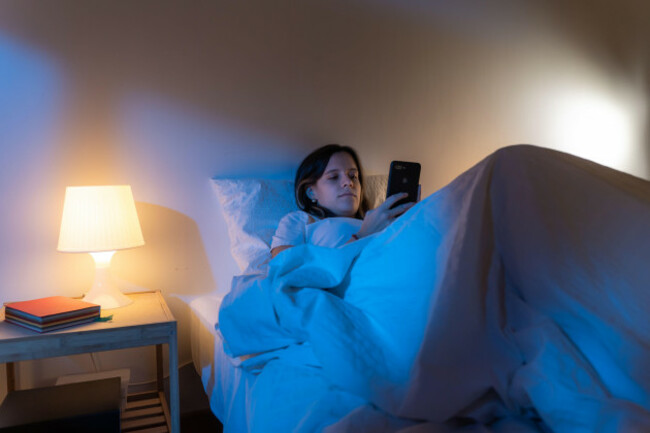
girl-looking-her-smart-phone-doom-scrolling-on-bed-in-the-middle-of-the-night-technology-at-bed-concept Alamy Stock Photo Alamy Stock Photo

I am one of the millions that wake up every morning, and apart from a quick detour to the kitchen for a hot coffee, I return to bed with my phone while I put my brain on hold.

Doom scrolling

It’s an understandable urge. The world is in a precarious place with wars, climate disasters and migration filling the news feed with horror, negativity and intolerance. Many of us fall for the clickbait and refresh our feeds constantly for the latest update.

As social, political and economic unrest continues to spiral, doomscrolling is now emerging as a significant threat to our physical and mental health.

‘It has been one onslaught after other,’ lecturer in the Division of Global Health and Social Medicine at Harvard Medical School, Dr Aditi Nerurkar told Harvard Health.

‘Our brains and bodies are expertly designed to handle short bursts of stress. But over the past several years, the stress just doesn’t seem to end. Doomscrolling is our response to that.’

thoughtful-middle-aged-man-doom-scrolls-through-phone-at-home Alamy Stock Photo Alamy Stock Photo

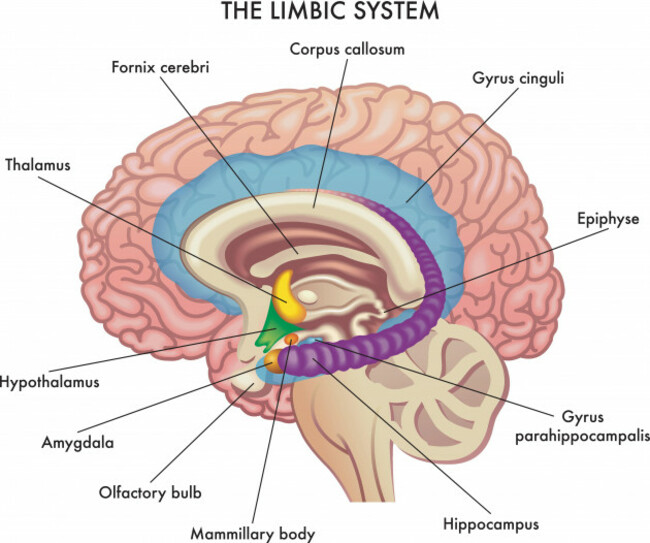
Doom scrolling is rooted in the area of the brain called the amygdala, that promotes self-preservation and drives the fight or flight response to danger, reminding us to be vigilant for threats.

‘Stress strokes our primary urge to scroll,’ suggests Dr Nerurkar. ‘We’re hypervigilant and scanning for danger. The more you scroll, the more you feel you need to.’

Women are more vulnerable to scrolling than men because of their tendency to nurture and protect, while much of the violence portrayed in newsfeeds involves women and children.

medical-illustration-shows-the-major-organs-of-the-limbic-system-of-the-human-brain-with-annotations Doom scrolling is rooted in the 'fight or flight' centre, the amygdala. Alamy Stock Vector Alamy Stock Vector

But doom scrolling has the potential to have a long-term impact on our well-being. Nausea, headaches, muscle tension, low appetite, difficulty sleeping, even high blood pressure, according to experts at Harvard.

A research review in Applied Quality of Life (2023) that analysed three separate studies involving 1,200 adults suggested that doomscrolling is linked to worse mental well-being and life satisfaction.

Another paper in Computers in Human Behaviour (2024) reported that doomscrolling was linked to increased levels of existential anxiety – a feeling of dread or panic that arises with the suggestion that life as we know it is about to end.

Zombie scrolling

A similar phenomenon to doom scrolling is zombie scrolling. I am not a particular fan of bad news, but I do engage in a bit of zombie scrolling – much more than is good for me.

I make excuses. ‘I’m working.’ ‘I’m researching.’ ‘I’m looking for news hooks for something I want to write about.’

It’s all lies. I’m zombie scrolling like the rest of us. And I am not alone. Neither is it confined to the early morning hours. My phone is on the desk at work. Break times are spent scrolling the most recent health reports, while the latest news floats in and out of my feed, distracting me with its intoxicating mix of disaster, revelation and shock.

top-view-young-woman-uses-smartphone-in-bed-at-night-when-her-male-partner-trying-to-fall-asleep-beside-couple-fight-argue-addictive-world-of-social-media-doom-scrolling-fake-news Alamy Stock Photo Alamy Stock Photo

Zombie Scrolling Syndrome refers to habitual mindless scrolling with no real destination or benefits. There is evidence that this behaviour could be linked to mental health conditions, including depression and anxiety.

Signs of zombie scrolling include an inability to be away from your phone and even ignoring personal hygiene due to technology overuse.

We all know that feeling. Recently, on transferring my sim card into a newly purchased smartphone, a technological hitch caused me to be without my phone for two days. I can admit to feeling acute anxiety and unease, only relieved by an expert in the nearest phone shop agreeing to complete the operation for a fee which I would gladly have tripled if it meant restoring my precious device in good order.

Are you a doom or a zombie scroller? If so, it may be impacting your health in ways that you do not realise. Thankfully, there are steps you can take to prise yourself away from what has become an addiction.

One estimate suggests that the average person scrolls through 300 feet of content in a single day. What keeps us so glued to our phones? The answer, like most things, is in our brain.

That dopamine hit

Like mice in a lab, pulling a lever in the hope of a reward, we click on news stories in the hope of a hit that releases that pleasure hormone, dopamine, in our brain. It is the random nature of these rewards that sparks the habitual nature of scrolling – never quite sure when that dopamine hit is going to occur.

We are most likely to revert to zombie scrolling in awkward situations. Sitting alone in a café or a pub, waiting in a queue, sitting on a bus – all those moments when we relieve our anxiety by a spot of zombie checking.

couple-smartphone-and-conflict-in-bed-ignore-and-annoyed-with-reading-chat-or-social-media-addiction-in-home-man-woman-and-doom-scrolling-with Alamy Stock Photo Alamy Stock Photo

But this type of scrolling impacts our health as well. Facebook’s own research found that Instagram – which is used by almost three-quarters (71%) of young adults according to research from the UK Pew Research Centre, negatively impacts mental health. The research suggests that this is because the carefully curated images on the app elicit feelings of negativity and inferiority.

The other side of zombie scrolling is the impact on what we could be doing otherwise. That hour in bed in the morning could be spent out in the fresh air, walking to work, an early morning swim or even an extra hour of sleep.

How often do we walk into a restaurant and see couples or families, all zombie scrolling? All those interactions and experiences that could be happening – lost in the ether of endless clickbait, blocking real interactions between people who are losing the ability to connect emotionally.

young-femle-hipster-chatting-on-cell-phone-online-with-her-friends-and-listening-to-music-pretty-woman-reading-text-message-on-her-cell-phone-while-r Alamy Stock Photo Alamy Stock Photo

Zombie scrolling has after effects too – eye strain, brain fatigue (or ‘brain rot’), difficulty focusing and symptoms of addiction.

There are things we can do to cut back and lose the addiction while still staying abreast of the news. What is needed are digital boundaries that give the brain a chance to recalibrate.

The experts suggest keeping your phone out of reach at night, preferably out of the bedroom altogether. Similarly, in the workplace, the phone could be kept on mute and in a drawer.

Don’t bring your phone to the dinner table or into a restaurant or café, especially if you are in company. Switch your phone to grayscale so that it doesn’t light up every time you hit a news story. Opt out of notifications, including headlines and emails, to help you resist the urge to constantly zone in on the latest beep that registers a new notification.

Other measures include taking up new activities that keep you active and interested while defining a time and place for catching up on the news.

The bottom line is taking back control – you are in charge of your phone and your time, rather than your phone being in charge of you.

Limiting the time and place for scrolling makes it all the more engaging when you do get around to it, giving it the time and space in your life that it deserves.

Dr Catherine Conlon is a public health doctor in Cork.

Readers like you are keeping these stories free for everyone...
A mix of advertising and supporting contributions helps keep paywalls away from valuable information like this article. Over 5,000 readers like you have already stepped up and support us with a monthly payment or a once-off donation.

Close
20 Comments
This is YOUR comments community. Stay civil, stay constructive, stay on topic. Please familiarise yourself with our comments policy here before taking part.
Leave a Comment
    Submit a report
    Please help us understand how this comment violates our community guidelines.
    Thank you for the feedback
    Your feedback has been sent to our team for review.

    Leave a commentcancel

     
    JournalTv
    News in 60 seconds