We need your help now

Support from readers like you keeps The Journal open.

You are visiting us because we have something you value. Independent, unbiased news that tells the truth. Advertising revenue goes some way to support our mission, but this year it has not been enough.

If you've seen value in our reporting, please contribute what you can, so we can continue to produce accurate and meaningful journalism. For everyone who needs it.

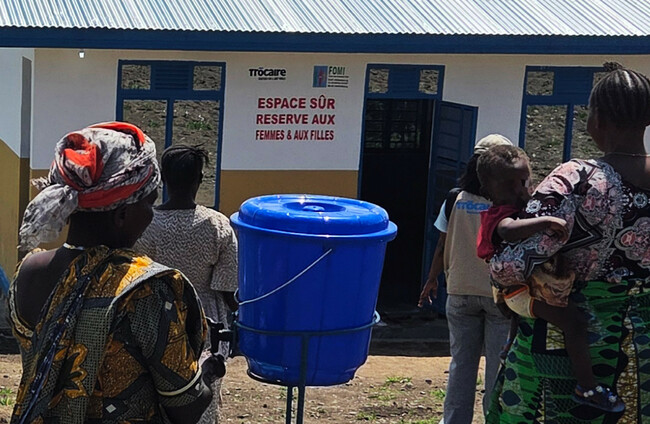
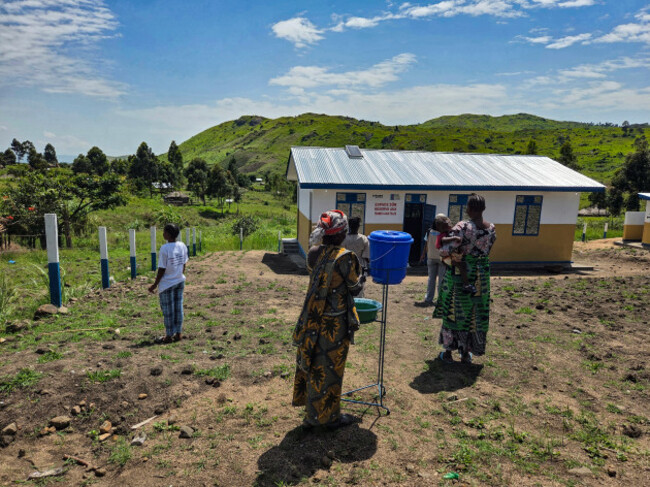
Women washing hands entering the safe space built by Trócaire. Trócaire

Ebola on the rise Why the latest outbreak should concern all of us

Twelve years after the horrors of Sierra Leone’s Ebola epidemic, humanitarian workers fear the world is once again underestimating a fast-moving and deadly virus.

WHEN EBOLA WAS at its peak in Sierra Leone in 2014, I led the Trócaire response for a number of weeks in the midst of the pandemic.

It was a scary and uncertain time, but it was also humbling to work with the amazing local team and with dedicated local organisations in responding to a virus with no cure and with such a high death rate.

Ebola was and still is a terrifying word, with the killing of entire families and devastating already fragile health systems. I still remember only too well the families I met who lost loved ones, children, parents to the disease.

Twelve years later, and post the largest global pandemic of this century so far, we know, here in Ireland and throughout the West, much more intimately what fear, uncertainty and isolation feel like when a deadly virus begins to spread.

That is why the latest Ebola outbreak in eastern Democratic Republic of Congo (DRC) should concern all of us.

Worrying rise in Ebola

On 17 May, the World Health Organization declared the outbreak a Public Health Emergency of International Concern just two days after the virus was confirmed in the DR Congo.

The speed of that declaration tells its own story. Health experts know how quickly Ebola can spread, and how dangerous delays can be.

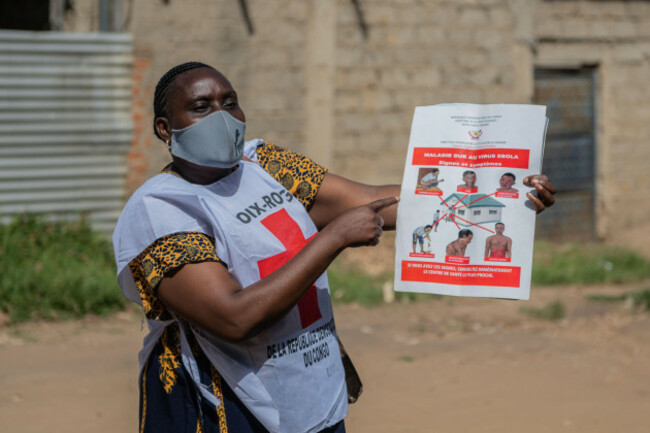
vanny-birungi-a-red-cross-volunteer-on-a-house-to-house-sensitisation-campaign-amid-the-ebola-outbreak-in-bunia-congo-monday-may-25-2026-ap-photomoses-sawasawa Vanny Birungi, a volunteer, on a house-to-house sensitisation campaign amid the Ebola outbreak in Bunia, Congo, Monday, May 25, 2026. Alamy Stock Photo Alamy Stock Photo

This latest outbreak is centred in Ituri Province. Trócaire has worked there since the early 1990s alongside local partners and communities affected by conflict and displacement. It is an area that has endured years of violence, instability and humanitarian crisis.

Last year, Trócaire’s programmes reached 66,000 people in these areas, which are now struggling with Ebola. It is a region already experiencing a deep and complex humanitarian emergency.

Clashes between rival militia groups have killed scores of civilians in recent weeks, adding to a toll of violence that has continued for many years. Speaking with our team in Bunia this week, I have seen their commitment to stop the spread and protect their communities despite the very real worries about their own families and loved ones.

The strain identified in this outbreak is the Bundibugyo strain of Ebola. There is currently no approved vaccine for this strain and no specific cure. Prevention, public health measures and community trust are the most effective tools available.

Challenging environment

For many people in Ireland, after Covid-19, public health advice like “stay home” or “wash your hands regularly” can sound straightforward. But in eastern DRC, the reality is far more complicated.

Many families have no reliable access to clean water. Health clinics are under-resourced or inaccessible because of ongoing violence. People living in displacement camps cannot safely isolate themselves. When survival depends on finding food, collecting water, or fleeing armed groups, avoiding contact with others is not always possible.

trocaire / YouTube

This is what makes outbreaks like Ebola so dangerous in fragile humanitarian settings. Disease does not emerge in isolation. It collides with poverty, displacement, hunger, and conflict.

Our office in Bunia is located at the epicentre of the outbreak. Trócaire and our local partners have activated emergency protocols. We are already responding by installing handwashing stations, distributing hygiene materials, translating health information into local languages, supporting community leaders in countering misinformation and providing food and psychosocial support to vulnerable families.

And yet this response is occurring while the global humanitarian system itself is under enormous strain.

USAID cuts

In recent years, major cuts to international aid, particularly from the US, have severely weakened health and humanitarian systems across many vulnerable countries. The slashing of USAID funding for the World Health Organization and the Centres for Disease Control (CDC) has had real consequences on the ground.

These draconian cuts have weakened the ability to identify and manage diseases such as Ebola. We are now seeing clearly that the price of aid cuts is rarely paid in wealthy countries. It is paid by the poorest communities in the world, long before the consequences reach international headlines.

We are seeing that price in eastern DRC right now. Long-term, it will likely affect all of us, as we will see delays in reporting and detection of viruses, resulting in pandemics.

1 Women washing their hands when enterring the safe space built by a major donor in Zaba Women washing their hands when entering the safe space built by a donor in Zaba. Trócaire Trócaire

At a time when so many countries are cutting vital aid programmes, Ireland continues to be an outlier. We know Ireland cannot solve global health crises alone, but our continued commitment to international aid and humanitarian action is so vital.

At a time when many countries are retreating from global solidarity, Ireland’s decision to maintain overseas aid funding across the world, especially in countries like the DR Congo through Irish Aid, remains lifesaving. When we are dealing with the outbreak of a disease so destructive, it brings that message through even more clearly.

Global outlook

An Ebola outbreak like this reminds me how interconnected our world is. I was in Uganda this week and could see how authorities were trying to prevent any more cases spreading from across the border in DR Congo.

We are all human, and when faced with a virus that can kill, we do all we can to survive. And we all know what it is like to go through a pandemic, one that, in many ways, cannot be compared with the deadly, rapid way in which Ebola takes hold.

We do know what it is like to feel the pressure and worry of a virus spreading, to isolate and keep our distance. But when basic human rights are unmet, survival becomes much harder.

Solidarity is not abstract. It is measured by whether vulnerable communities are abandoned in times of crisis or whether the world chooses to stand with them.

We have launched an urgent appeal for support in responding to this most recent outbreak of the deadly virus. 

Sean Farrell is CEO of Trócaire. Visit the Trócaire donations page to find out more and donate to the urgent Ebola appeal.

Readers like you are keeping these stories free for everyone...
A mix of advertising and supporting contributions helps keep paywalls away from valuable information like this article. Over 5,000 readers like you have already stepped up and support us with a monthly payment or a once-off donation.

Close
8 Comments
This is YOUR comments community. Stay civil, stay constructive, stay on topic. Please familiarise yourself with our comments policy here before taking part.
Leave a Comment
    Submit a report
    Please help us understand how this comment violates our community guidelines.
    Thank you for the feedback
    Your feedback has been sent to our team for review.

    Leave a commentcancel

     
    JournalTv
    News in 60 seconds