We need your help now

Support from readers like you keeps The Journal open.

You are visiting us because we have something you value. Independent, unbiased news that tells the truth. Advertising revenue goes some way to support our mission, but this year it has not been enough.

If you've seen value in our reporting, please contribute what you can, so we can continue to produce accurate and meaningful journalism. For everyone who needs it.

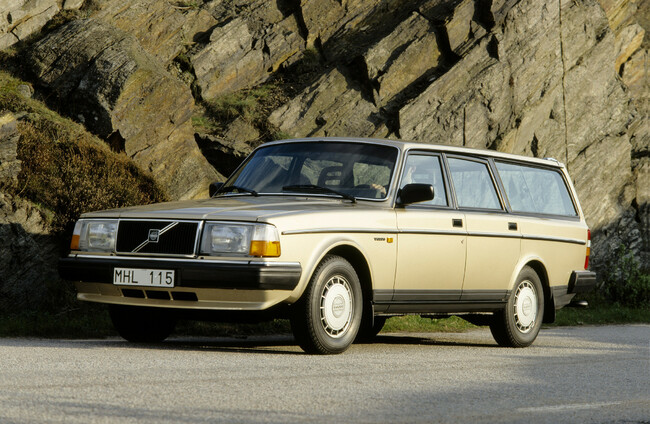
The Volvo 240 Estate.

Motoring How our lust for SUVs led to Irish drivers abandoning the humble estate car

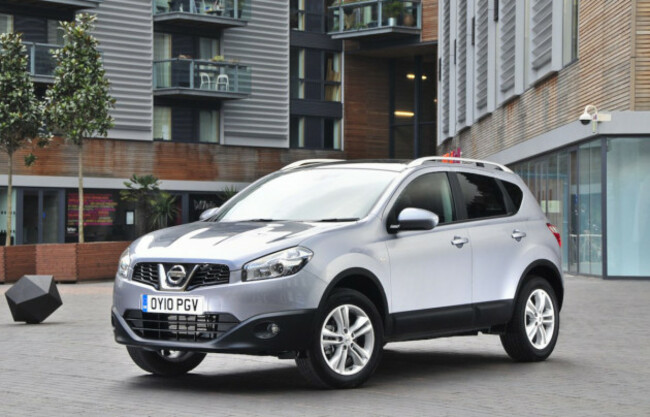
The humble estate car, offering more real-world practicality than almost anything else on four wheels, was quietly pushed aside by a revolution that began with the Nissan Qashqai.

I LOVE ESTATE cars. Always have.

Some of my earliest motoring memories are of my Uncle Leo’s Volvo 240 estate. As a child, I was fascinated by it. It felt like someone had bolted a small apartment onto the back of a normal car. You could bring everything — footballs, toys, beachballs, picnic gear — and still have room left over.

As a toddler, I had a little two-wheeled sit-on scooter that went everywhere with me. It was christened the Speedbuggy. Where I went, it went. And it always fitted neatly into the back of that Volvo.

Nearly half a century later, not much has changed. As a 49-year-old man, I still find myself browsing DoneDeal Cars looking up old Volvo estates. And Passat estates. And Mondeo estates. Any estates, really.

But if I’m looking for someone to blame — tongue firmly in cheek — for their decline in Ireland, I’m pointing the finger at Nissan.

The Qashqai didn’t begin as a plan to reshape the European car market. It began, in the early 2000s, as a quiet act of desperation. Nissan was struggling in Europe. Sales of traditional hatchbacks like the Almera were fading. The company needed something different.

Working out of its London design centre and engineered in the UK, Nissan gambled on a new kind of car: taller than a hatchback, lighter and cheaper than a full SUV, and aimed squarely at ordinary families.

When the first Qashqai arrived in 2007, built in Sunderland, it wasn’t meant to start a revolution. It was meant to save a struggling brand.

Instead, it showed buyers they could have the look and feel of an SUV without the size, cost or compromise. In doing so, it quietly changed what Europeans thought a “family car” should be.

It worked — especially in Ireland.

The Qashqai caught the imagination of buyers almost immediately. Other manufacturers were caught napping and scrambled to follow. The result was a flood of slightly taller cars that didn’t go off-road, weren’t much use in a muddy field, but gave the impression that you were driving something vaguely resembling a “Jeep” — a term we use in Ireland as shorthand for any elevated driving experience.

Nissan_Qashqai_mkI The Nissan Qashqai - the car that started the revolution.

So why do we love sitting higher up?

Research consistently shows that drivers are drawn to taller vehicles because they feel more aware, more in control and safer. A higher seating position gives a broader view of the road, makes traffic easier to read, and creates a sense of command — even if, statistically, it doesn’t always make you safer.

It also makes cars easier to get in and out of. That matters more than many motoring writers like to admit.

And perception matters. Many buyers believe they are safer simply because they can see more. That belief plays a powerful role in purchasing decisions.

The results are clear.

So far in 2026, according to the Society of the Irish Motor Industry, eight of the top ten new cars sold in Ireland are crossovers or SUVs.

The Hyundai Tucson has been Ireland’s best-selling car for around five years. The Volkswagen Golf, once a perennial chart-topper, now sits in 13th place.

Volkswagen’s current best-seller? The Volkswagen Tiguan.

You can see the pattern.

And look — I understand it. I spent part of this week in Volkswagen’s Tayron, a large, comfortable, seven-seat SUV. It’s easy to see the appeal.

But in all this enthusiasm for height, the estate has been quietly sidelined. And I’m not sure it deserves to be.

Yes, SUVs sit higher. But that comes with compromise.

They don’t handle as well as lower cars like a Golf or a Focus. They’re heavier, so they use more fuel. And while their boots are decent, they rarely match the vast, square-edged usefulness of a proper estate.

Yet perhaps this is where the out-of-touch motoring writer reveals himself.

We get pious about handling, road-holding, brake horsepower and torque. Most people simply don’t care.

Parents, wrestling a wriggling toddler into a rear seat while covered in mashed banana, want easy access. SUVs give them that.

Older buyers, with sore hips and stiff backs, don’t want to climb down into a low car. They want to slide across into a higher seat. The market decides what succeeds. And right now, the market loves SUVs.

Over in Europe, especially in countries like ever-practical Germany, estate cars will habitually outsell their saloon or hatchback equivalents. Here in Ireland, Volkswagen didn’t even offer the latest Passat for a time because it only came in estate guise — such was our apparent disdain for the body style.

That decision, notably, is now being reversed.

Still, somewhere out there, quietly loading bikes, dogs and buggies into the back of a long, low estate, a few of us are still holding the line.

I’ll be waving the estate flag to the bitter end.

Paddy Comyn is the Head of Automotive Content and Communications with DoneDeal Cars. He has been involved in the Irish motor industry for more than 25 years. Journal Media Ltd has shareholders in common with DoneDeal Ltd 

Readers like you are keeping these stories free for everyone...
A mix of advertising and supporting contributions helps keep paywalls away from valuable information like this article. Over 5,000 readers like you have already stepped up and support us with a monthly payment or a once-off donation.

Close
JournalTv
News in 60 seconds