Sign in. It’s quick, free and it’s up to you.
An account is an optional way to support the work we do. Find out more.
Sign in. It’s quick, free and it’s up to you.
An account is an optional way to support the work we do. Find out more.


THERE HAS BEEN a lot of focus on the discipline of economics recently and much debate in the media about what economists actually do.
Telling a stranger that you are an economist often leads to questions like ‘Are we going to have a recession?’, or ‘What’s happening with inflation?’ I can certainly give more informed answers than a non-economist, but these topics are not my areas of expertise.
In the first introductory lecture each year I ask students for the first word that comes to mind when they think about economics. Inevitably the most common answers are ‘growth’, ‘money’, ‘profits’ and ‘economy’.
Although these are important concepts in economics, they represent a very narrow view of the discipline. Economics as a subject is about the allocation of scarce resources, but more than that, it is about how economic agents (like governments, businesses, or consumers) make decisions. The tools of economic analysis can be applied to any aspect of life where choices need to be made, therefore there is an incredibly broad range of applications.
The stereotypical view of economists being primarily concerned with money, profits, and economic growth is common, and these misperceptions are contributory factors in the under-representation of women in the discipline.
The stereotypical economist is also male, partly because there are more of them, and also because they get more publicity.
Research analysing gender differences in Covid-19 media coverage, for example, finds that for every mention of a female economist, there are five mentions of a male economist.
The Irish Society for Women in Economics (ISWE) was founded in 2021 by Dr Orla Doyle. ISWE aims to inspire and empower women, increase the visibility of women economists, and address the under-representation of women in public discourse and the media, policy making, and economics education in Ireland.
Part of this work involves showcasing women economists and correcting the misperceptions of our discipline. Stereotypes of neoliberal economists focused on economic growth are outdated, and there is a vast literature showing the importance of role models in attracting women into male dominated fields. Academic economists in Ireland research and teach a huge range of diverse topics.
To give you a flavour of what economists actually do, here are some explanations from me and four other women economists…
I am a behavioural economist interested in health and pro-environmental behaviours, particularly in climate mitigation behaviours that bring both health and environmental benefits, such as active travel and reducing meat consumption.
Behavioural economics incorporates insights into human behaviour from psychology and other fields to better understand economic decision making.
Recently I researched how to best communicate risks and incentivise vaccine uptake in the context of Covid-19. My current project uses an experimental survey design to investigate how vegetarians and those reducing their meat consumption are perceived by others; the emotional response of meat eaters when vegetarian meals are requested; and how responses vary depending on whether health, environmental, or no motivation is stated.
I teach introductory economics and behavioural economics, and in line with the University strategy, sustainability is embedded in all my modules. I am the programme coordinator for a new postgraduate programme in partnership with the United Nations Institute for Training and Research (UNITAR) in Global Sustainability Leadership. I teach Sustainable Economic Development in this programme, applying the tools of economic analysis to key topics in sustainable development, and considering the trade-offs between economic growth, social equity, and environmental sustainability.
I am an applied microeconomist who teaches students how to run field experiments. As demonstrated by recent Nobel prize winners like Esther Duflo, using experiments to test the effectiveness of different policies and programmes has become an important part of economics.
My teaching very much aligns with my research agenda which uses field experiments to evaluate the impact of early childhood programmes. These programmes, which typically operate in disadvantaged communities, aim to reduce social inequalities in children’s health and development.
For the last 16 years, I have been conducting the longest-running early childhood trial in Europe. The programme, known as Preparing for Life, provides families with parenting support from pregnancy until their child starts school. Results of my research show that investing in early childhood leads to improved cognitive and socioemotional skills and can break the intergenerational transmission of poverty.
I’m a Labour Economist. My real interest is in anything that causes inequality in the labour market, which has led me to study topics that, at first glance, might seem quite different. I started my career working on women’s labour market participation and work incentives, and over the years, this has widened to broader gender issues in the labour market, particularly the causes of the gender wage and wealth gaps.
For example, my most recent paper focussed on the effect of childbirth on women’s earnings.
Because of the importance of education for earnings inequality, I’ve also worked on many issues in education – the impact of single-sex schools on children’s maths achievement; student loans in higher education; what makes a school good; and higher education access programmes. I’m currently working on measuring the value added by higher education institutions. I’ve also worked on wage and benefit cuts during the financial crisis, and on how to introduce a living wage in Ireland.
As well as Labour Economics, the modules I teach include Statistics/Econometrics, which is vital to evidence-based analysis of economic and social issues, and the Economics of the EU, which includes lots of material on the Financial Crisis and Brexit.
I am an energy economist and teach students right from the outset that the study of economics is about the allocation of scarce resources and maximising societal welfare, which is made up of many different components.
Economics provides a framework to examine societal issues, which is highly relevant to my research on the transition to a clean energy future.
All my research relates to energy and the environment. I use economic theory and methods to analyse energy and climate change policy. This includes research on how society might adopt clean technologies, for example, heat pumps and electric vehicles, whether economic incentives will be needed, and whether this is the most societally efficient way to reduce greenhouse gas emissions. Electricity markets are another area of research – with the switch from fossil fuel to renewable electricity generation, the electricity market needs to be redesigned, especially in light of the ongoing conflict in Ukraine and the shortage of natural gas.
I teach modules on environmental economics, natural resource economics, and climate change economics at undergraduate and postgraduate levels and believe that all students should receive some education in sustainability, regardless of their main focus of study.
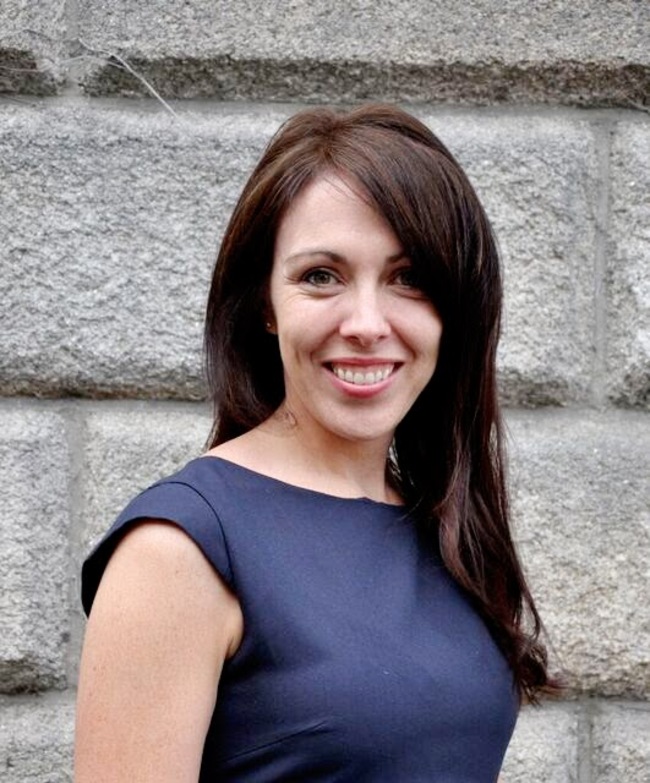
I am an applied microeconomist. My research examines household and enterprise behaviour with a particular focus on developing countries. I am interested in understanding how various constraints to economic development impact behaviour at a micro level and how this in turn affects outcomes – welfare in the case of households and individuals and performance in the case of firms and farms.
I work on topics that are policy-relevant and aim to contribute to the evidence base for policy formation, particularly in developing countries. I am a co-founder of the Trinity Impact Evaluation (TIME) Research Centre and am engaged in research projects across Africa and South-East Asia.
Given the nature of my research, I am also involved in many international organisations including in my roles as a non-resident Senior Researcher with the United Nations University, World Institute for Development Economics Research (UNU-WIDER), Chair of the Board of Policy for Economic Partnership (PEP), a ‘Resource Person’ for the African Economic Research Consortium (AERC) and a consultant to the World Bank.
At Trinity, I teach econometrics and development economics. I also supervise undergraduate students undertaking capstone projects, postgraduate students undertaking the MSc in Economics in addition to a number of PhD students. In addition, I am currently the Director of the MSc in Economic Policy, a part-time postgraduate programme focussed on evidence-based policymaking.
There are many women economists in Ireland, across different sectors, working on an incredibly broad range of topics. If you would like to learn more about their areas of expertise you can check out ISWE’s registry of female economists.
You can also keep up to date on the current research and activities of women economists by following us on Twitter @ISWEconomics, connecting with us on LinkedIn, or emailing ISWEconomics@gmail.com to join our mailing list.
Dr Emma Howard is an Economist and Lecturer at Technological University Dublin.
To embed this post, copy the code below on your site












have your say