We need your help now

Support from readers like you keeps The Journal open.

You are visiting us because we have something you value. Independent, unbiased news that tells the truth. Advertising revenue goes some way to support our mission, but this year it has not been enough.

If you've seen value in our reporting, please contribute what you can, so we can continue to produce accurate and meaningful journalism. For everyone who needs it.

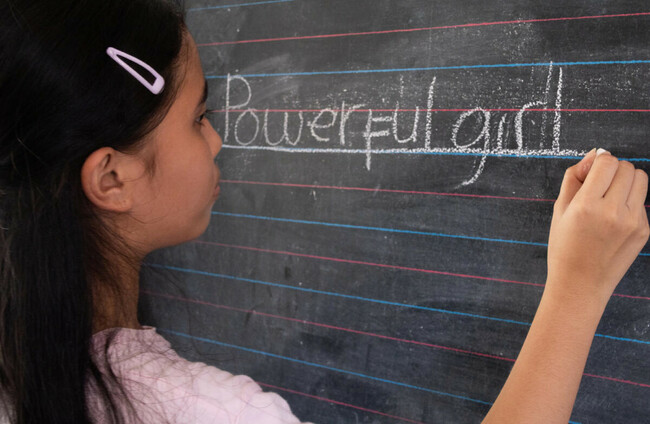
11-year-old Faith Ysabelle in the Philippines, one of the girls who contributed to World Vision's Dreaming Out Loud report. ​Katrina Hallare/World Vision

Opinion Around the world, girls still don't have equal rights - but many are fighting for change

Girls everywhere are growing up in systems that were never built for them, writes Gillian Barnett.

“THERE’S A FEAR of the power of women,” said President Catherine Connolly during the election campaign, reflecting on Ireland’s long history of silencing female voices.

That fear, rooted in centuries of control, containment, and institutional suppression, is not unique to Ireland. It echoes across borders and generations, shaping the lives of women and girls everywhere.

On World Children’s Day today, I’m reflecting on what it truly means to listen to children. Not just to hear, but to act in response, especially to the crises facing young girls around the world.

This year’s theme, “My Day, My Rights”, feels especially urgent.

World Vision Ireland’s recent Dreaming Out Loud report has stayed with me in a way few things do. The report draws on interviews with 432 adolescent girls across 51 countries: from conflict zones in the Democratic Republic of Congo, rural villages in Nepal, urban neighbourhoods in Brazil, and refugee camps in Lebanon.

Their words are honest, raw, and quietly defiant. They speak of fear and frustration, but also of hope and of a deep, unwavering belief that they deserve more.

These girls are facing challenges that would shake even the strongest among us.

But their dreams are bold: to become doctors, engineers, lawyers, and leaders. Their hope is tangible: 84% of girls expressed hope for a better future. Their voices are clear: they are ready to lead change, if only the world will listen. 

“The best part of being a girl is the strength we carry. Even when we’re underestimated, we rise,” said Anika, 16, from Albania.

Geography shaping experience

What does it mean to grow up as a girl in vastly different corners of the world?

In Europe, girls speak with bold confidence, challenging stereotypes and asserting their right to lead, while in Latin America, their voices are marked by fear of harassment, violence, and economic instability.

In the Middle East, girls navigate the tension between tradition and ambition, dreaming of education and justice while confronting forced marriage and poverty.

And in sub-Saharan Africa, girls show extraordinary entrepreneurial spirit, even as they face conflict and hunger.

The contrast in their experiences is a reminder that while girls everywhere share hope and ambition, their opportunities are often determined by the circumstances into which they’re born.

We see this dynamic reflected in Ireland’s history.

Progress on women’s rights was hard-won, forged through acts of resistance, from the contraceptive train to Belfast in 1971 to the grassroots campaign that shaped the 2018 abortion referendum. Women challenged taboos and transformed institutions, laying the groundwork for today’s progress.

Yet, the legacy of inequality remains woven into our Constitution, institutions, and everyday lives. Girls in Ireland grow up in a society where there is still an unequal burden of domestic labour, the gender pay gap persists, and domestic violence remains alarmingly prevalent.

Girls everywhere are growing up in systems that were never built for them. And they deserve better than a system that asks them to fight for what should already be theirs.

Girls on the frontlines of crises

The report paints a sobering picture of girlhood under pressure. Nearly one in five girls described violence and abuse as the worst part of being a girl. One in three feared losing their education due to poverty, child marriage, or conflict. In Niger, Hassana, 16, worried her parents would marry her off if she failed an exam. In Bolivia, Alejandra, 14, feared rising prices would keep her out of school.

These stories echo global realities: 119 million girls are still out of school, and 12 million girls every year are married as children. That’s 22 girls each minute. Yet, in the face of mounting challenges, a powerful transformation is underway.

Youth-led movements are gaining momentum, with girls at the forefront, advocating for climate justice, digital safety, education, and gender equality. From grassroots initiatives in remote communities to global campaigns powered by digital platforms, young people are organising, mobilising, and demanding change.

Girls are often leaders in waiting.

And, in many cases, leaders already. Girls like Monika in Bangladesh, who has become a force against child marriage, or Leah in Kenya, an outspoken campaigner against female genital mutilation.

These stories reveal a vital truth: with sustained investment, unwavering support, and deliberate action, girls can begin to build the better world we all imagine.

Redefining leadership and strength

“Soft and strong at the same time.” This is how girls are redefining leadership. Not by dominance, but by empathy and courage. It’s a vision of leadership rooted in solidarity, not hierarchy.

We see this shift happening in Ireland too. Girls are pushing back against outdated norms. Campaigns like Her Moves are helping teenage girls reclaim sport as a space for joy and confidence. Initiatives like the STEM Passport for Inclusion are opening doors for girls from disadvantaged backgrounds to see themselves as future engineers, scientists, and innovators.

“A girl can be an amazing president or leader. Not just because she’s strong, but because she leads with heart,” said Alesia, 14, from Albania.

This belief in their own potential isn’t just anecdotal; seventy-one percent of girls surveyed believe in their ability to lead. And crucially, they’re not modelling themselves on the traditional, often masculine, archetype of leadership.

Beyond personal success, they’re envisioning leadership that uplifts others. Perhaps one of the most inspiring findings in the report is the depth of this commitment. Their desire to help is a powerful form of leadership in itself.

“My dream is to become a doctor to cure patients,” said Lamar, 10, from Lebanon. Saeeda, 13, from Afghanistan, echoed this spirit: “I dream of becoming an engineer, and I hope to achieve my dream one day so that I can inspire others.”

Are we ready to turn words into action?

My biggest takeaway from Dreaming Out Loud was this: girls already know what they want. They’re not waiting for permission to dream big; they’re waiting for the world to catch up.

I think Alesia from Albania said it best: “The future I want for all girls is one where they are free, fearless, and fully seen. Where every girl has the right to dream big, to be educated, to lead, and to live without fear.”

And we need to ask ourselves: what are we doing to make leadership possible for them?

Gillian Barnett is the CEO of World Vision Ireland

Readers like you are keeping these stories free for everyone...
A mix of advertising and supporting contributions helps keep paywalls away from valuable information like this article. Over 5,000 readers like you have already stepped up and support us with a monthly payment or a once-off donation.

Close
55 Comments
This is YOUR comments community. Stay civil, stay constructive, stay on topic. Please familiarise yourself with our comments policy here before taking part.
Leave a Comment
    Submit a report
    Please help us understand how this comment violates our community guidelines.
    Thank you for the feedback
    Your feedback has been sent to our team for review.

    Leave a commentcancel

     
    JournalTv
    News in 60 seconds