We need your help now

Support from readers like you keeps The Journal open.

You are visiting us because we have something you value. Independent, unbiased news that tells the truth. Advertising revenue goes some way to support our mission, but this year it has not been enough.

If you've seen value in our reporting, please contribute what you can, so we can continue to produce accurate and meaningful journalism. For everyone who needs it.

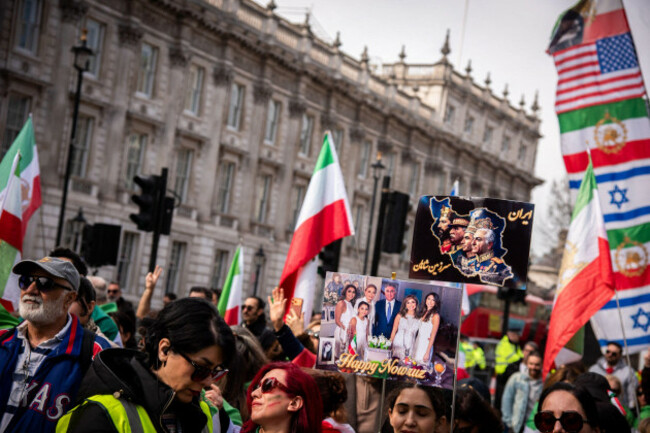
London, UK. 22nd Mar, 2026. Protestors await speeches with placards and flags during the Pro Iran Regime Change Rally at Whitehall. Alamy Stock Photo

Iranians abroad Behind the headlines, there are two Irans - one has been silenced

As Trump’s war continues and the regime fights back, the ordinary people inside Iran are cut off from the world and living in fear, writes Samieh Hezari.

THIS YEAR, MANY Iranians marked the Persian New Year, Nowruz, a tradition that has been celebrated for more than 3,000 years, with heavy hearts. Nowruz is meant to be a time of renewal, light, family and hope.

Families in normal times will gather around the Haft-Seen table, children wear new clothes, elders are visited, and people try to forgive the past and begin again.

It is a celebration that has survived empires, invasions, revolutions and centuries of change. It is older than many of the modern nations that exist today.

But this year, many Haft-Seen tables had empty chairs.

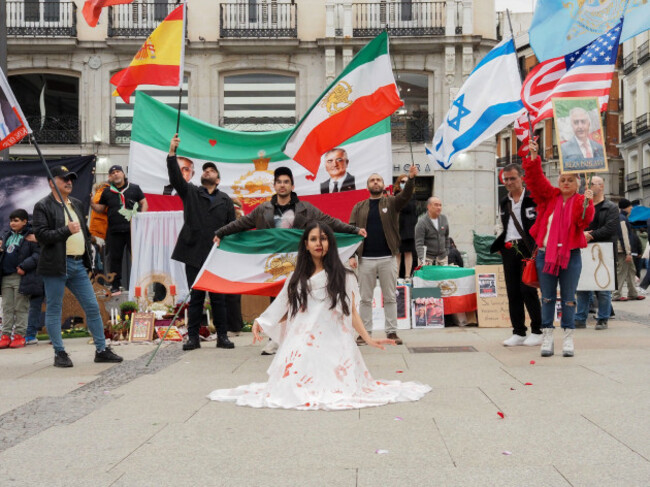
madrid-spain-march-20-members-of-the-iranian-community-in-madrid-celebrate-the-2585th-persian-new-year Madrid, 20 March. Iranians marked the Persian New Year as their loved ones endure oppression and war in Iran. Alamy Stock Photo Alamy Stock Photo

Empty chairs for sons, daughters, brothers, sisters and friends who are no longer alive. For mothers and fathers whose lives were taken, and for the innocent children who must now grow up without them.

Some were executed. Some were killed in protests. Some died in prison. Some disappeared and never came home. In the days leading up to the New Year, and even in the first days of Nowruz itself, reports emerged of the execution of three young athletes.

They were accused of being “enemies of God”, forced to confess and executed just as the new year began, at a time when families are supposed to come together and start again.

For many families, the new year did not begin with celebration, but with a visit to a grave.

Cut off from loved ones

At the same time, for the past few weeks, internet access inside Iran has been severely restricted and, in many places, completely cut off. Families outside Iran have struggled to contact their loved ones.

Phone calls, when they go through at all, last one or two minutes before the line goes dead. Messages arrive hours late, or not at all. Many people outside Iran do not know if their parents, siblings, or friends are safe.

When a country goes dark like this, two realities are created: the reality inside the country, and the one presented to the outside world.

Inside Iran, people struggle to communicate, to access information and sometimes even to leave their homes safely. Outside Iran, official channels continue to broadcast images and narratives to international media.

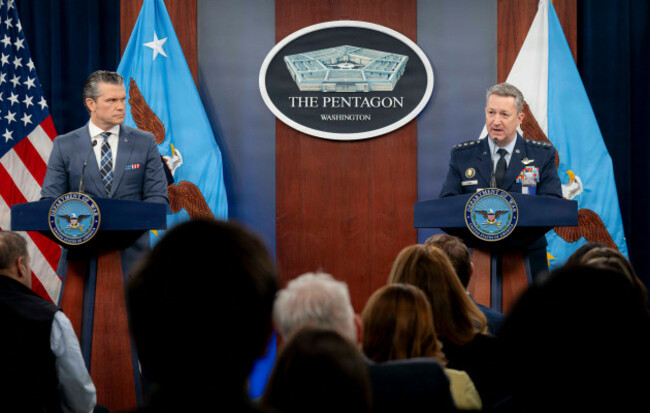
washington-united-states-of-america-19th-mar-2026-washington-united-states-of-america-19-march-2026-u-s-joint-chiefs-of-staff-chair-gen-dan-caine-right-responds-to-a-reporters-question-as Washington. 19 Mar, 2026. US Joint Chiefs of Staff Chair Gen. Dan Caine, right, responds to a reporters question as Secretary of Defense Pete Hegseth, left, looks on during a press briefing to discuss Operation Epic Fury at the Pentagon. Alamy Stock Photo Alamy Stock Photo

Many Iranians believe that the story the world sees is often shaped and controlled, while the voices of ordinary people are rarely heard directly because they simply cannot communicate freely.

This is one of the most painful parts for many Iranians, not only the suffering itself, but the feeling that the world is not hearing the story from the people who are living it.

The human toll

One example that many Iranians spoke about in recent weeks was an incident in the city of Minab, where state media reported that a school had been hit during an attack and that children had been killed. Images and reports spread quickly and created anger and sorrow internationally. International media investigations found that the children were killed by a US military strike. 

Different accounts of that incident circulated online for Iranians abroad, and many believe that civilians were knowingly left in danger that day. Whether the full truth of what happened will ever be independently investigated is unclear, but for many of us, the incident reinforced a long-held fear: that ordinary people can become the ones who pay the price in a political and military conflict they did not choose.

There are also stories of medical staff being detained for treating injured protesters, of young athletes executed after demonstrations, and of women athletes who are afraid to return to their country after competing abroad. These stories do not always make international headlines, but inside Iran, people know their names and their faces.

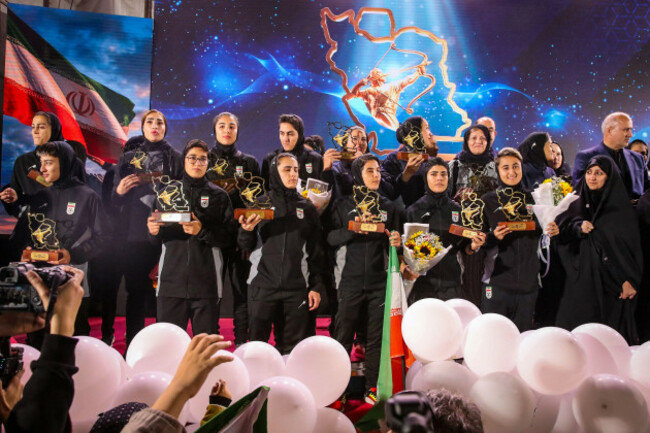
tehran-iran-19th-mar-2026-players-and-members-of-irans-womens-national-football-team-stand-on-stage-during-a-reception-ceremony-at-valiasr-square-in-tehran-following-their-participation-in-the Tehran, Iran. 19 Mar, 2026. Players and members of Iran's women's national football on return from Australia. Some had tried to claim asylum but later changed their minds. Alamy Stock Photo Alamy Stock Photo

This is why there is often a huge gap between how events are discussed in Western countries and how they are experienced by many Iranians. In Europe and in Ireland, people understandably fear war and violence and call for calm and de-escalation.

Iranians also fear war. No one understands the cost of war better than a country that lost an entire generation of young people in the Iran–Iraq war.

But many Iranians say something that is very difficult for outsiders to understand: they feel they have been living in a different kind of war for more than four decades, a war between the state and its own people.

It is difficult to explain what it means when the government is not simply a political authority, but something people fear in their daily lives. When a social media post can lead to an arrest. When a protest can lead to prison. When families speak in whispers on the phone because they believe someone might be listening.

When parents tell their children not to speak about politics, not because they do not care, but because they are afraid for their safety.

‘Rescue us’

This is why you will sometimes hear Iranians use a word that sounds shocking to Western ears: they say what they want is not war, but rescue. Not rescue in the sense of foreign occupation, Iranians are deeply proud of their country and their history, but rescue in the sense of being able to live normal lives in their own country, without fear, without censorship, and without the constant presence of danger in ordinary life.

london-uk-22nd-mar-2026-protestors-await-speeches-with-placards-and-flags-during-the-pro-iran-regime-change-rally-at-whitehall-the-majority-of-iranians-see-crown-prince-reza-pahlavi-as-a-credible London, UK. 22nd Mar, 2026. Protestors await speeches with placards and flags during the Pro Iran Regime Change Rally. Alamy Stock Photo Alamy Stock Photo

You may agree with this view or disagree with it. But it is important to understand that this is how many Iranians themselves see their situation. And too often, when Iran is discussed internationally, the discussion is about governments, military strategy and geopolitics, but not about the Iranian people.

The Iranian government and the Iranian people are not the same.

The Iranian people are the mother who sets the New Year table with an empty chair.

They are the father waiting for a phone call that may never come.

They are the student who knows one protest can end a life.

They are the doctor who must choose between helping the injured and protecting their own family.

They are the young girl who wants to study, to sing, to go to a football match, and to live like any other young person in the world.

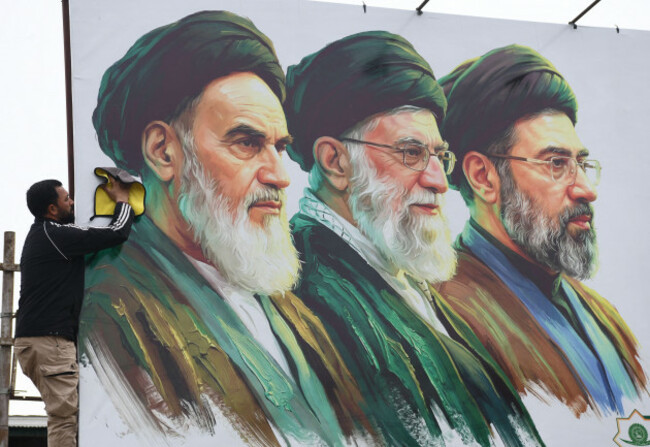
srinagar-jammu-and-kashmir-india-23rd-mar-2026-a-man-cleans-a-portrait-of-irans-late-supreme-leader-ruhollah-khomeini-l-late-supreme-leader-ayatollah-ali-khameneim-and-newly-elected-mojtaba These successive religious zealouts, the Ayatollah leaders, past and present, do not represent the real Iran. Alamy Stock Photo Alamy Stock Photo

I am one of millions of Iranians who did not leave because we wanted a different lifestyle, a different weather, or a different passport. We left because staying became too painful, too restrictive and too hopeless.

We did not leave Iran behind; we carry it with us everywhere, in our language, in our food, in our poetry, in our New Year, and in the constant worry for the people we love who are still there.

Many of us in the diaspora feel a responsibility to speak, not because we want to be political, but because we are connected every day to people who cannot speak for themselves freely.

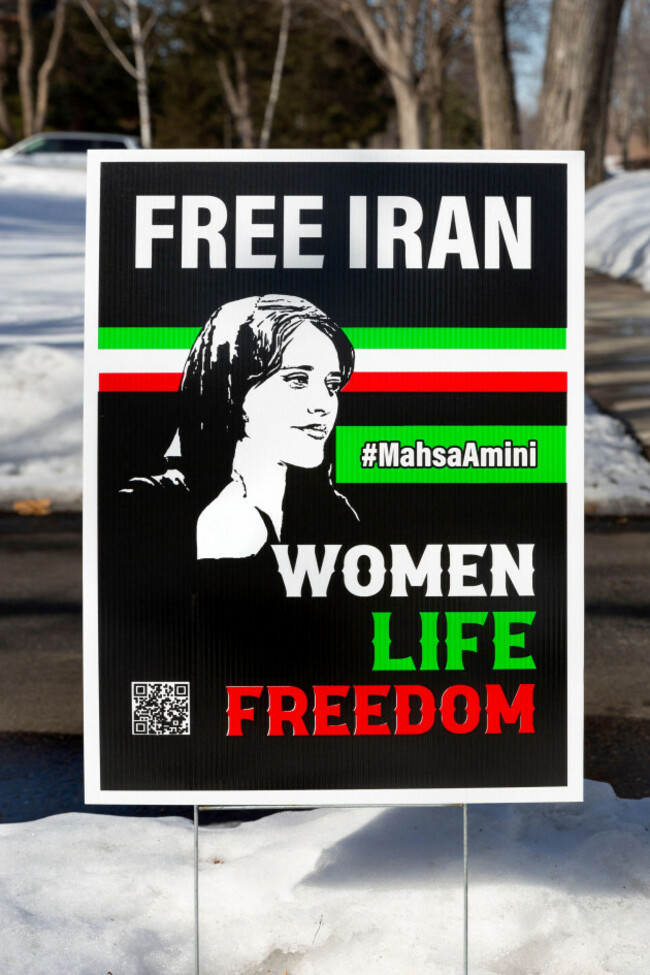
free-iran-protest-yard-sign-with-the-slogan-women-life-freedom-and-a-portrait-of-iranian-woman-mahsa-amina-from-saqqez-kurdistan-province The slogan Women Life Freedom and a portrait of Iranian woman Mahsa Amina, who was killed by the regime in 2022, leading to mass protests. Alamy Stock Photo Alamy Stock Photo

Irish people understand something about history, identity and what it means when a nation feels its story is being told by others.

That is why I am writing this here, in Ireland.

Because all I am asking is this: when you hear Iran discussed, please remember that there are two Irans: the government, and the people. They are not the same.

And behind every headline, every political argument, and every television image, there are millions of ordinary people who simply want to live normal lives, celebrate their new year with their families, and have the right to choose their own future.

That is not a political demand.

That is a human one.

Samieh Hezari is an Iranian-Irish citizen and the author of the book, Trapped in Iran. 

Readers like you are keeping these stories free for everyone...
A mix of advertising and supporting contributions helps keep paywalls away from valuable information like this article. Over 5,000 readers like you have already stepped up and support us with a monthly payment or a once-off donation.

Close
JournalTv
News in 60 seconds