We need your help now

Support from readers like you keeps The Journal open.

You are visiting us because we have something you value. Independent, unbiased news that tells the truth. Advertising revenue goes some way to support our mission, but this year it has not been enough.

If you've seen value in our reporting, please contribute what you can, so we can continue to produce accurate and meaningful journalism. For everyone who needs it.

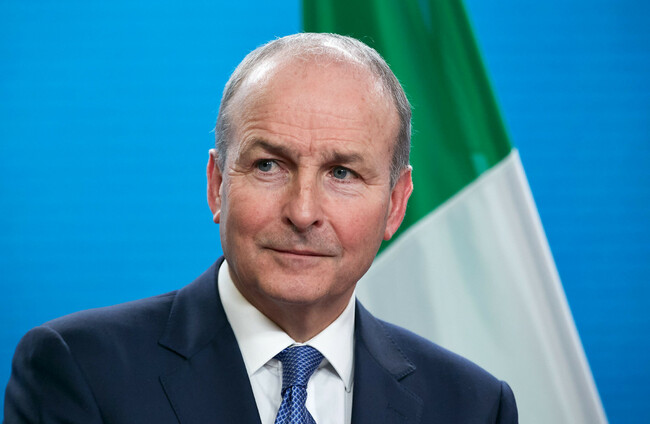
Alamy Stock Photo

Johnny Fallon Fianna Fáil has a unique relationship with the office of the president

Political commentator Johnny Fallon takes a look at Fianna Fáil’s strategies for presidential elections.

FIANNA FÁIL HAS had something of a unique relationship with the office of the president over the decades.

Up until 1990, its candidates were invariably successful and the party had a certain ownership of the office. This was hardly surprising in an era were people wanted august heroes and statesmen who have been around the leadership of the country for some time. Fianna Fáil had an abundance of them.

However, things shifted in 1990, and with this shift came a more complex problem for Fianna Fáil leaders.

Brian Lenihan was a universally popular politician, much loved and respected. He should have won easily. Without repeating history, though, he didn’t. This loss hurt Fianna Fail membership deeply. The actions of Charles Haughey during the campaign caused him to lose ground with the membership and with close colleagues and he would face the end of his leadership just over a year later.

From then on, leaders knew that the presidency presented a problem for the party. It is vital to the memberships ego and satisfaction that it is contested. Dick Spring knew in 1990 that contesting it with a candidate was vital to showing Labour as a serious party.

However, the role itself after the elections provides no benefit whatsoever to the party. It can be costly and damaging.

Only Fianna Fáil and Labour have held the role of president; both know that the officeholder is non-political and that the public don’t become any more aligned to them, no matter how good a president might be.

By 1997, Fianna Fáil were back in government after a short spell in opposition. They had a new Taoiseach in Bertie Ahern who wanted to look forward, to present a new Fianna Fáil, one that was more acceptable and less tribal.

He knew then that the membership, still hurting from 1990, needed a run at the office to reclaim it. He also new that the main candidate in the party was his predecessor Albert Reynolds.

A huge section of the party wanted Reynolds and believed he could win. For Bertie, the pragmatist, he saw things differently.

He did not want to alienate Reynolds but he saw little value in an election that would focus on past political decisions, records, and the rights and wrongs of Fianna Fáil.

He took the practical step and backed Mary McAleese, a candidate that was all about building bridges, gave off new vibes of his own part in the peace process and who had no political baggage.

McAleese was of course successful, the membership were happy and all moved on believing it was the right decision once it worked out.

Enter Micheál Martin

Fast forward to 2011 and Fianna Fáil was a different party. Suffering on life support after its worst ever general election result, Micheál Martin was trying to chart a course to survival.

There were two views in the party. The first was that they quickly needed to get back in the saddle and activate the membership before they began to drift and lose hope, that they had the perfect candidate in the immensely popular Brian Crowley and should go for it.

The other view said it was a costly vanity project and that another loss and debate about the party could destroy its meagre hopes.

Martin avoided the election. However, Sean Gallagher running as an independent suddenly began to look like he might win the contest with large sections of Fianna Fáil support around the country.

Had he done so, the membership would have been thrilled, but it would have undermined their early belief in Martin’s ability to call such decisions and could be seen as a major error not to have run a candidate.

With a bit of luck for Martin, Gallagher lost out to another controversy and Martin must have had a sigh of relief to see Higgins inaugurated and his decision to keep the party out of a battle vindicated at the last hour.

This is the problem leaders face. The presidency is like an electoral beauty contest with no real political capital to be made. The campaigns however, are ugly. Very ugly. And damage can be done that is hard to navigate.

Martin is now aware that his party’s supporters will be extremely restless and unable to sit out yet another presidential campaign. However, he does not want someone that brings back up government policies or debates about Fianna Fáil and its morals or otherwise.

So, learning from the late 1990s, he will want to do a Bertie on Bertie. He will not want any former ministers running. He has avoided leadership pretenders getting profile in the party by promoting youth that will take time, such as Jack Chambers, limiting profile of others like Jim O’Callaghan, and packing off Michael McGrath and Barry Cowen to Europe. He doesn’t tend to give a platform to someone else who could become a flag bearer for Fianna Fáil.

Billy Kelleher wants to run and has a strong base from his MEP vote. However, this again presents a problem for Martin as another Cork political voice could bring more policy questions.

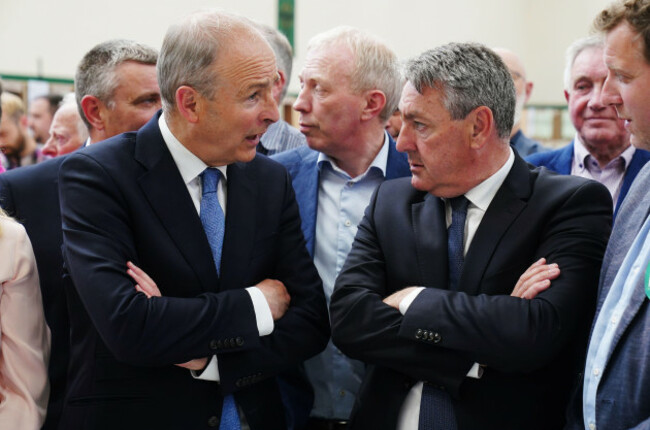
fianna-fails-billy-kelleher-right-with-tanaiste-and-party-leader-micheal-martin-left-as-they-await-the-results-of-the-18th-count-at-the-count-centre-as-counting-continues-at-nemo-rangers-gaa-club Micheál Martin and Billy Kelleher at a count centre in Cork during the European elections last year. Alamy Stock Photo Alamy Stock Photo


Then, of course, there is also the danger that Kelleher forcing himself into the running would be seen as something of a rebellion against the leader to force a candidate in. He can’t have that.

Martin could run himself. The membership would love that and a new era could begin. But most believe you will pry the Fianna Fail leadership from Micheal Martin’s cold dead fingers. He will not give up that role until he feels he has no option.

It has always been likely a new non-political Fianna Fáil candidate would arise. Enter Jim Gavin, a man known for leadership in the GAA, but what will surprise the public even more is that he is an accomplished business leader, articulate and intelligent. It would not be hard to see why Martin would be eager to have a candidate like this.

Most of all, Martin knows it would satisfy his membership, who believe left-wing candidate Catherine Connolly is too inconstant to be an inheritor of their De Valera, Hillery et al, and lacks what they see as the statesperson role.

And a candidate who is not what the membership see as yet another identikit FG candidate that is fine but lacks any of the excitement they seek. The question is though will they pull it off?

Johnny Fallon is a political commentator, director of Carr Communications and author of ‘Party Time: Growing up in Politics’.

Readers like you are keeping these stories free for everyone...
A mix of advertising and supporting contributions helps keep paywalls away from valuable information like this article. Over 5,000 readers like you have already stepped up and support us with a monthly payment or a once-off donation.

View 31 comments
Close
31 Comments
This is YOUR comments community. Stay civil, stay constructive, stay on topic. Please familiarise yourself with our comments policy here before taking part.
Leave a Comment
    Submit a report
    Please help us understand how this comment violates our community guidelines.
    Thank you for the feedback
    Your feedback has been sent to our team for review.

    Leave a commentcancel

     
    JournalTv
    News in 60 seconds