Share your views on our Irish-language content

We need your help now

Support from readers like you keeps The Journal open.

You are visiting us because we have something you value. Independent, unbiased news that tells the truth. Advertising revenue goes some way to support our mission, but this year it has not been enough.

If you've seen value in our reporting, please contribute what you can, so we can continue to produce accurate and meaningful journalism. For everyone who needs it.

Opinion Pregnant women in Ireland deserve options and respect. Too often we have neither

Lack of meaningful choice for birth care is the reality many pregnant women are facing, writes Adriana Casserly.

I AM HALFWAY through my pregnancy with my second child and I have only one viable option for my birth care: to return to an understaffed and under-resourced maternity unit, which has some of the highest intervention rates of the country, where I experienced birth trauma.

Some women in my position are choosing to give birth at home without medical assistance, also known as freebirthing. While this is not my choice, I have compassion and understanding for those who feel backed into this option.

Lack of meaningful choice is the reality many pregnant women are facing in 2025 in Ireland, one of the wealthiest countries in the world. In comparison, many other countries around the world offer birthing women four options for birth: in a hospital, at home, in a standalone birth centre or an alongside birthcentre.

Here, pregnant women are often not trusted to make decisions about their health and the health of their babies, with a culture that often views all births as a medical emergency to be managed rather than a natural event for women with uncomplicated pregnancies.

A failed national maternity strategy

​​In 2016, the HSE launched the ambitious and welcomed National Maternity Strategy (NMS), a plan to make maternity care safer, normalising childbirth with more choices for women. However, nearly a decade later, many mothers have less choice and births in Ireland are more medicalised than ever before.

Ireland has one of the highest c-section rates in Europe, increasing year on year for the past decade despite “evidence suggesting no additional benefits to mothers and babies.

A recent HSE report showed that last year, over 40% of women gave birth by c-section. The maternity safety statements for this year show the pattern is set to continue.

In a recent interview, the director of the National Women and Infants Health Program, NWIHP, touted that €28m was given for the NMS in new development funding since 2016.

This is a paltry amount for a decade of so-called improvements.

Perhaps, if Ireland valued birthing women and babies as much as horse racing (which received €79.3m this year alone, an amount set to repeat next year), our options and our maternity units’ infrastructure would be better.

Dwindling access to homebirth

One of the pillars of the NMS was expanding access to home birth. However, home births are objectively less accessible now than they were when the NMS was published. There’s an increasing amount of high-quality research that supports planned home birth as a safe option for healthy women and their babies. NICE guidelines state that for mothers who have given birth before, home birth is “associated with a lower rate of interventions and the outcome for the baby is no different” than birthing in obstetric settings.

Despite this, home birth remains elusive to the majority of women in the country.

Recently, the HSE reignited a controversial topic with its audit claiming the current home birth system creates a “risk to patient safety” because of a lack of agreed maximum safe travel time to the nearest maternity unit or self-employed community midwife (SECM).

In 2022, the national director of acute operations issued a recommendation that all women accessing home birth should reside 30 minutes or less “blue light distance” from their nearest maternity service. At the time, community midwives protested this recommendation, along with other birth advocacy groups like AIMS Ireland. There is no national or international evidence for this time limit.

Further, the HSE provided home birth service in Limerick, Clare and north Tipperary continues to be suspended three years after the death of a first time mother who gave birth at home. And while every adverse outcome must be investigated, maternal deaths due to complications in hospitals don’t have the same level of scrutiny and reduction in choice for women.

In other areas of the country, like Sligo and Donegal, there has not been a publicly supported home birth service for decades.The recent closure of Private Midwives Ireland (PMI) compounds this lack of choice for women. And PMI’s former midwives currently have no option for private insurance to keep working independently.

The NMS aimed to provide all women with uncomplicated pregnancies access to home birth, yet in reality, too few women in the supported care pathway can avail of this option.

No progress on birth centres

Similarly, the NMS outlined that women with uncomplicated pregnancies would give birth in alongside birth centres, which are units run by midwives where typically women have access to water immersion, water birth and other natural pain relief options. They tend to have lower intervention rates than hospitals, lower health costs, and higher levels of satisfaction for mothers.

Nearly ten years after the NMS was published, just two alongside birth centres are in place – the same number as before the strategy was developed. And in that time, one of them nearly closed.

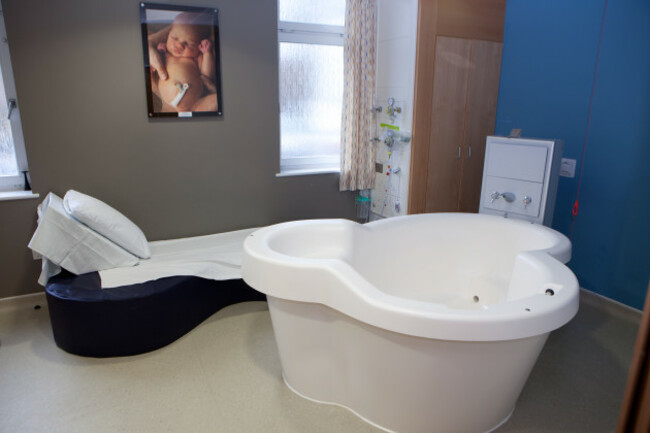
a-maternity-unit-room-with-a-birthing-pool-uk An example of a maternity room with a birthing pool in the UK. Alamy Stock Photo Alamy Stock Photo

So called ‘home-from-home rooms,’ low technology rooms with birthing pools situated in obstetric led labour wards, have been touted as a replacement for both birth centres and home birth.

More than one million euro of public money has been spent on these rooms. However my investigation earlier this year found that often these rooms are underutilised.

I’ve spoken to mothers and midwives across the country who say that these home-from-home rooms regularly lie empty and unused for their intended purposes. Often these birth rooms are the only rooms in maternity units that comply with modern infrastructure standards for maternity care, while the other birthing rooms lack ensuite toilets and showers meaning many women in labour must leave the privacy of their rooms to access shared facilities.

There is no oversight on the success of these home-from-home rooms as the National Women and Infants Health Programme (NWIHP) — whose self-defined role is to is “to lead on the management, organisation and delivery of maternity, gynaecology and neonatal services” — does not collect data on the usage and therefore success of these rooms.

Inconsistent access to water birth

Another pillar of the strategy was standardising maternity care across the country. As such, women should have equal access to care options like water birth, if their risk levels allow. However, only a couple of the 19 units offer water birth, though 15 maternity units have at least one birthing pool. (Not to mention water births were banned outright for a number of years and the suspension for home water births wasn’t lifted until 2023).

Research shows that giving birth in the water is as safe as ‘land birth’ for normal risk pregnancies, according to information provided to women by the Coombe.

Water immersion is one of the most effective natural pain relief options for birth. No one would ever suggest banning a mother’s access to the most effective pain relief in the operating theatre, so why are women who choose physiological births being discriminated against by not being supported to labour and birth in water?

Lack of informed consent, a legal obligation

A recent survey completed by more than 2,500 mothers in Ireland, found that the majority of births in Ireland are medicalised, with physiological birth being the exception. The results highlighted “significant issues within the Irish maternity system, including the routine overuse of medical interventions in births, a lack of choice and person-centred care, a lack of informed consent, and incidences of obstetric violence”.

The survey said, “while some women felt well informed by their care providers about the pros, cons and alternatives, a significant proportion — as many as 3 in 4 women
for some interventions — did not”.

A key part of informed consent, the HSE’s legal obligation to patients, is respecting a woman’s choice, even if it is different from what the care provider recommends. If we want an improved maternity service, we also need to address the culture of misogyny within it.

One woman shared with me that she was belittled for repeatedly declining membrane sweeps at the end of her pregnancy.

A membrane sweep is when a care provider sweeps their finger(s) around the neck of the cervix with the aim of separating the membranes from the cervix to help induce labour. Often, women report sweeps to be uncomfortable or painful.

Could you ever imagine a care provider performing a prostate exam on a man who did not give his consent for one? I can’t. Yet often, women experience coerced and nonconsensual membrane sweeps, and other procedures. It happened to me. It has happened to women I’ve interviewed.

The National Maternity Strategy’s goal of normalising birth and giving women more choice failed. We should acknowledge this and demand more from our government.

Adriana Casserly is a freelance journalist and writer living in the North West of Ireland. Previously, she was a staff editor at The New York Times. She is also an advocate for more choice and better evidence-based care in maternity services.

An earlier version of this article stated Donegal never had a home birth service. For a brief time, there was a publicly provided home birth service.

Readers like you are keeping these stories free for everyone...
A mix of advertising and supporting contributions helps keep paywalls away from valuable information like this article. Over 5,000 readers like you have already stepped up and support us with a monthly payment or a once-off donation.

Close
15 Comments
This is YOUR comments community. Stay civil, stay constructive, stay on topic. Please familiarise yourself with our comments policy here before taking part.
Leave a Comment
    Submit a report
    Please help us understand how this comment violates our community guidelines.
    Thank you for the feedback
    Your feedback has been sent to our team for review.

    Leave a commentcancel

     
    JournalTv
    News in 60 seconds