We need your help now

Support from readers like you keeps The Journal open.

You are visiting us because we have something you value. Independent, unbiased news that tells the truth. Advertising revenue goes some way to support our mission, but this year it has not been enough.

If you've seen value in our reporting, please contribute what you can, so we can continue to produce accurate and meaningful journalism. For everyone who needs it.

Shutterstock/Joey Laffort

The Basic Income scheme brought me success, wellbeing and family life; the Government must retain it

The pilot scheme has given artists a balance between working well and living well, writes Michael Gallen.

IN THE COMING months, the Irish government’s pioneering three-year pilot scheme of Basic Income for the Arts (BIA) will come to an end, with a decision on its future hanging in the balance ahead of the upcoming budget.

The initiative was conceived in the wake of the pandemic, when the precarious status of live events and rapid disintegration of traditional sources of artistic income led to a massive fall-off in the number of people working within the sector – even at a time when the necessity of the arts for general societal wellbeing was most palpably in focus.

Artistic practice is profoundly impacted by the unrestricted and avaricious amassing of wealth and power in the tech industry.

Streaming platforms have obliterated musicians’ income; artificial intelligence is replicating and replacing the work of filmmakers and animators; and some of the most intricate and beautiful modes of human expression are being forced into obsolescence by the demand for more immediate, platform-friendly “content”.

Arts Council funding, although a much-needed and appreciated support for the creation of arts projects, does not provide a living wage for artists.

The extensive work done in conceiving and planning a project, applying for funding and submitting financial reports post-realisation, is all unpaid.

Successful arts projects may momentarily increase the profile of a leading artist, but there is limited capacity for significant career growth; at the end of each funded project, the artist returns to step one, restarting the process with another idea that might enable them, a year down the line, to again draw from the well.

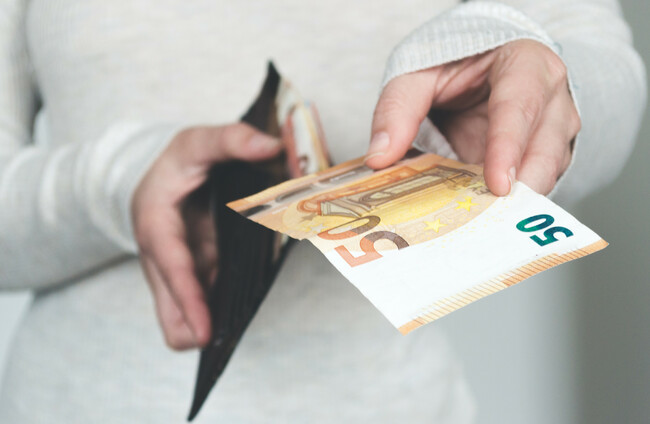
The BIA pilot scheme provided 2,000 artists with an income of €325 per week, monitoring their welfare in juxtaposition with a control group who were not in receipt of the payment.

Each of the scheme’s biannual reports, as well as a recently-published summary of its overall findings, revealed that recipients experienced a substantial improvement across all measured criteria.

They included things like material living conditions, physical and mental health, housing security, sustainability of practice, as well as significant increases in productivity and a leap in career growth.

Similar basic income schemes in other countries have repeatedly demonstrated that when people are shielded from the cliff-edge of financial deprivation over a prolonged period, they take more risks, start new ventures, participate in public life to a greater extent and spend more money, ultimately stimulating all sectors of the economy.

It can sometimes be hard to translate generic data such as this to lived experience, so as one of the 2,000 artists in receipt of the payment, I’d like to share how the scheme has impacted upon my life.

Life of vocation

I am a composer, musician, and theatre-maker, and as I write now in September 2025, I would say that I have a stable career as an artist.

Earlier this year, my opera The Curing Line was announced as the winner of the Fedora Prize, the world’s largest international award for new opera.

That show is slated to tour extensively to festivals around the world.

A new large-scale orchestral work of mine, Bád ón Alltar, premiered this week by the National Symphony Orchestra in Dublin and will be performed by the Ulster Orchestra in Belfast in October.

I’ll release a solo album called Sudden Wells early next year, and I perform regularly at festivals.

My work is beginning to reach large audiences in Ireland and further afield.

Three years ago, I would imagine that to the outside observer, my career was going similarly well – my first opera, Elsewhere, had just had a successful premiere run at the Abbey Theatre, and throughout all the media coverage and social media sharings around that time, I was projecting the image of a self-assured young artist at the outset of an exciting journey.

The truth is that I was burnt out, caught in what felt like an endless cycle of stress-related illness, and experiencing a level of uncertainty about my future that called into question whether I should, or could, continue to work as an artist.

Early in my artistic career, I learned that no such “career” awaited – everything you have, you have to invent.

In my twenties, I supplemented my income as an artist with academic stipends and part-time jobs.

I worked day and night, carving out opportunities to compose music professionally, all the time conjuring new and more demanding conceits for how to make myself more productive.

I frequently stayed in isolated country houses as winter sublets, eating little, going months without human contact, repeatedly ignoring the warning signals of isolation and depression.

I rationalised my personal struggles as an integral part of the life of an artist.

As I watched school and college friends make life choices around travel, buying houses, settling down, starting families, I repeated my mantra that my vocation kept me at a remove from those things – that I didn’t need them in the way that other people did.

To be an artist in any discipline you must become a fundraiser, an agent, an administrator, an accountant, a PR guru, a one-person HR Dept.

Between all of these roles, there isn’t much space for a home life.

The first glimmers of success that I began to experience were, I felt, as a result of a deep wilfulness and resilience, and in the throes of spiralling mental unwellness, I clung to this sense of exceptionalism.

When I met my partner, now my wife, in 2019, I was confronted head-on by all of those other, very basic human needs and desires that I had tried to repress.

We were both artists in our thirties, and as time passed we began to discuss whether it might ever be possible for us to start a family.

I was grateful to have met and fallen in love with someone with whom I felt excited to even begin these conversations, but they also brought with them an immense amount of anxiety and pressure.

After all of my years of graft, I was finally having some success, and I believed deeply that these family dreams were going to destroy all of that.

I know from candid conversations with my wife and with other female artist friends that this fear is viscerally felt when considering the prospect of motherhood.

A schism healed

My selection as a participant in the BIA pilot healed a schism between working well and living well that I had long-considered integral to the life of being an artist.

In the three years since, my partner and I have got married, we’ve had our first child and we’re considering having another.

Becoming a father has brought unimaginable joy and colour into my life, and although Ireland’s persisting crises in housing and health inhibit the feeling of true security, I now understand that it is reasonable to want and strive for it for myself and my family, as it should be for any member of society.

In tandem with seismic life changes and the challenges of co-parenting, my career as a composer has grown to levels that I could never have anticipated.

Through my own Straymaker company, my opera projects have employed more than 70 people, directly contributed somewhere in the region of €90,000 to the local economy in my hometown of Castleblayney where the shows are made.

In this, I am not an exception; it is estimated that the arts contribute €1.5 billion to the Irish economy annually.

The cost of retaining the Artists’ Basic Income Scheme and expanding it to 8,000 professional artists will cost the exchequer €130m annually – that is 0.13% of the estimated total Budget spend.

In my recent travels to international festivals, I have seen Department of Culture and representatives speak publicly about BIA and receive extended standing ovations; the scheme is widely-considered to be inspired and trailblazing.

In Ireland, we take great pride in our artistic identity, in invoking the artistic nobility of our past and in recalling the role that creative expression played in our withstanding of oppression.

With the retention and expansion of this scheme, we would become a beacon worldwide; a nation that values the role that artists play in a healthy society and that protects and sustains artistic expression.

The metrics of investment in the arts versus the return have been proven ten times over – what is harder to quantify is how it might feel for the average Irish person, any adult or child, to be in the midst of the great creative flourishing that could await us.

The past three years have planted the seeds of something genuinely revolutionary – I know this most concretely in observing how I myself have become more whole as a person, citizen and artist.

I urge the government to retain, extend and expand this scheme, and to allow both the wider arts sector and Irish society as a whole to truly experience the fruits of their investment.

Michael Gallen is an Irish composer, performer, writer and director, and is Artistic Director of music-theatre company Straymaker.

Readers like you are keeping these stories free for everyone...
A mix of advertising and supporting contributions helps keep paywalls away from valuable information like this article. Over 5,000 readers like you have already stepped up and support us with a monthly payment or a once-off donation.

Close
JournalTv
News in 60 seconds