We need your help now

Support from readers like you keeps The Journal open.

You are visiting us because we have something you value. Independent, unbiased news that tells the truth. Advertising revenue goes some way to support our mission, but this year it has not been enough.

If you've seen value in our reporting, please contribute what you can, so we can continue to produce accurate and meaningful journalism. For everyone who needs it.

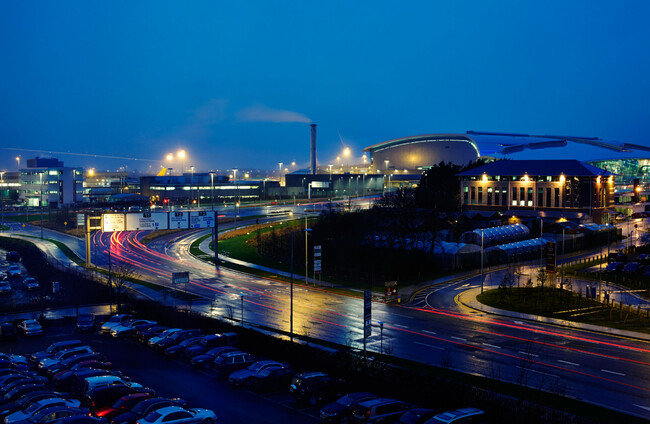
The government is planning to bring forward legislation that would allow Dublin Airport to accommodate more passengers. Alamy Stock Photo

Opinion Expanding Dublin Airport now would fly in the face of climate reality

Letting various aviation expenses to go untaxed has made air travel artificially cheap despite its massive drain on the environment, writes Aoife O’Leary.

AS THE WORLD watches the COP30 climate summit in Brazil gear up, with a focus on slowing down the runaway climate meltdown train, Ireland is actively looking at taking a deeply irresponsible step in the opposite direction by expanding one of its biggest sources of greenhouse gas emissions: aviation.

Plans by the Government to lift the passenger cap at Dublin Airport from 32 million to as high as 40 million would send aviation emissions soaring by more than 20% by 2031, a move that would make a mockery of Ireland’s climate commitments and expose a glaring contradiction at the heart of national climate policy.

For too long, aviation has been the elephant in the climate room in Ireland. While motorists, homeowners, farmers and small businesses are all shouldering the cost of cutting emissions, the aviation sector continues to enjoy special treatment.

International aviation accounts for around 10% of Ireland’s energy-related greenhouse gas emissions. Those emissions have risen 500% since 1990, while the population has grown just 44%. Yet the sector remains one of the most lightly taxed and least regulated industries in the country.

Jet fuel is completely untaxed. Airline tickets are exempt from VAT. And around 70% of aviation emissions are not priced at all under the EU’s Emissions Trading System (ETS), the mechanism that requires other industries to pay for their pollution.

At the same time, ordinary Irish households pay 23% VAT on everyday goods and on the fuel they use to drive to work.

This imbalance makes flying, one of the most carbon-intensive activities in modern life, artificially cheap.

A new Opportunity Green report titled Closing Ireland’s Aviation Climate Gap clearly lays out that Ireland’s current aviation policy gives the sector an unjustified “free pass” on pollution.

It says introducing an Irish air travel levy, similar to those already in place in the UK and France, could raise €6.3 billion over five years, and while even with such a tax, aviation emissions would still grow, they would at least grow by 1.8 million tonnes of emissions less – a reduction equivalent of the annual emissions of 230,000 Irish households.

Revenues from the first year alone of a levy could fund energy-efficient retrofits for more than 12,800 homes, saving households over €20 million a year on energy bills.
Far from being radical, such a levy would simply bring Ireland in line with half of EU countries and the UK, which already have air passenger taxes in place.

It is unthinkable that despite the urgency of the climate crisis, aviation remains a glaring gap in Ireland’s Climate Action Plan. It is excluded from the Climate Act’s carbon budgets, meaning other sectors including agriculture, transport and housing must make deeper cuts to pick up the slack.

In a nutshell the government is letting airlines off the hook, while Irish households and other industries pay their fair dues. Introducing an air travel levy isn’t extreme, it’s fair, and it’s long overdue.

The government’s willingness to expand Dublin Airport’s capacity instead of managing demand shows how politically untouchable aviation has become. Minister for Transport, Darragh O’Brien, got Cabinet approval in September to proceed with legislation to remove the airport’s passenger cap and a draft of the Bill is due in this Dail session.

In the coming months you will hear one of the main arguments against air travel taxes – that they would hurt tourism and the wider economy. But that assumption doesn’t hold up under scrutiny.

The reality is that Ireland runs a substantial travel and tourism deficit, meaning far more Irish people fly abroad and spend money overseas than visitors bring in.

In 2023, Irish tourists spent €12 billion abroad, compared with €6.9 billion spent by overseas visitors here. That €5 billion difference represents over 1% of GDP – a net outflow of spending that aviation expansion only worsens.

When viewed in this context, Ireland’s fixation on airport growth looks less like an economic necessity and more like a short-sighted subsidy for outbound tourism and one that drains both public funds and the planet’s carbon budget.

The truth is that Ireland cannot meet its climate obligations while continuing to give aviation a free ride.

Expanding capacity now would only lock in higher emissions for decades to come.

A modest, fair air travel levy would begin to correct this imbalance.

Air travel levy

Opportunity Green’s research shows that such a measure could both curb excess demand and generate significant funds to support Irish households in energy poverty, investing in clean, alternative transport systems and financing climate action in developing and climate-vulnerable countries

In 2026, Ireland will hold the Presidency of the Council of the EU, giving it a rare opportunity to show real leadership on climate policy. That period will coincide with the European Commission’s review of CORSIA, the global offsetting scheme for aviation, which has so far failed to deliver meaningful emission cuts.

Ireland should use this moment to push for stronger EU pricing on aviation emissions, including extending the Emissions Trading System (ETS) to cover flights between EU and non-EU destinations. That reform alone could raise an estimated €8 billion for climate action across Europe between 2027 and 2035.

Ireland has shown courage on global issues before – from standing up for humanitarian principles in Gaza to championing climate justice abroad. But credibility starts at home.

Expanding Dublin Airport while claiming climate leadership is a contradiction.

If the government is serious about reducing our reliance on fossil fuels, it must end aviation’s free pass and ensure the sector pays fairly for its pollution.

Otherwise, every flight that takes off from Dublin airport will be another symbol of a country still refusing to face the climate truth.

Instead of focusing on legislation that would lift the Dublin airport passenger tax, the Government should focus on developing robust regulations, including an air travel levy that would ensure aviation contributes its fair share. And that Irish aviation’s free pass. 

Aoife O’Leary is CEO of Opportunity Green, an environmental law and policy organisation focused on achieving a just and effective response to the climate crisis.

Readers like you are keeping these stories free for everyone...
A mix of advertising and supporting contributions helps keep paywalls away from valuable information like this article. Over 5,000 readers like you have already stepped up and support us with a monthly payment or a once-off donation.

View 31 comments
Close
31 Comments
This is YOUR comments community. Stay civil, stay constructive, stay on topic. Please familiarise yourself with our comments policy here before taking part.
Leave a Comment
    Submit a report
    Please help us understand how this comment violates our community guidelines.
    Thank you for the feedback
    Your feedback has been sent to our team for review.

    Leave a commentcancel

     
    JournalTv
    News in 60 seconds