We need your help now

Support from readers like you keeps The Journal open.

You are visiting us because we have something you value. Independent, unbiased news that tells the truth. Advertising revenue goes some way to support our mission, but this year it has not been enough.

If you've seen value in our reporting, please contribute what you can, so we can continue to produce accurate and meaningful journalism. For everyone who needs it.

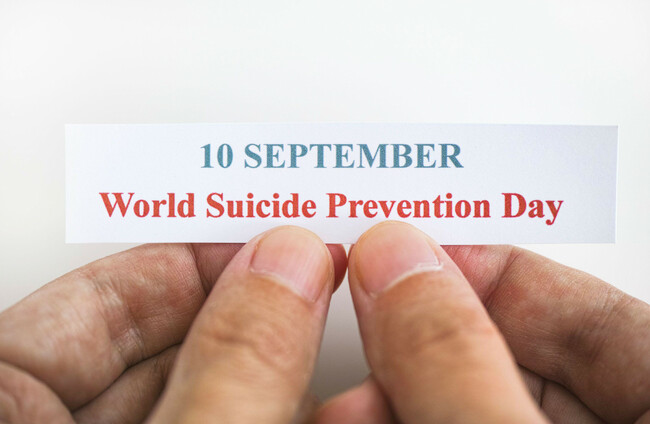
Today is World Suicide Prevention Day. Alamy Stock Photo

Opinion We need political leadership to address suicide rates among men in Ireland

Men deserve to know that it’s okay not to be ‘tough’ and that it’s normal to have support, writes TD Aidan Farrelly.

LAST UPDATE | 10 Sep 2025

JUST BEFORE THE Dáil rose for its summer recess, I took the opportunity to talk about the very important issue of suicide prevention. I raised it from a place of concern and from a place of care: care for anyone who is grieving the loss of a partner, a family member or a friend; for everyone who has dedicated their professional lives to contributing to better outcomes when it comes to suicide and mental health in Ireland; and, most of all, for those struggling each and every day to make it to the next.

The most recent confirmed and comprehensive statistics available to us are from 2021. In that year, 512 people in Ireland died by suicide. For every ten of those people, eight were men, and several studies have shown us that men are much less likely to seek out mental health supports than women, even when things have gotten dire.

Despite a general decline over the last 25 years, Ireland still has one of Europe’s highest rates for suicide in young adults, alongside Bulgaria, Malta and Romania. At home, annual deaths by suicide are three times greater than road fatalities in a country where it’s rare a week goes by without hearing about someone who has lost their life in a traffic accident.

Research by Queen’s University Belfast from last year shows that 70% of male victims of domestic violence have considered suicide. At the same time, Ireland ranks in the bottom half of 42 countries in terms of adolescent well-being, while our youth suicide rate is above the international average. A recent survey from Aware shows that one third of men reported not seeking help with their mental health

I acknowledge the wonderful work being done by the HSE and by youth workers, therapists, school communities, social workers, volunteers, communities and wider society. My considered concern, however, is for the people of Ireland who are struggling, including the men who are silently suffering, be they young, middle aged or older, who feel like they cannot say something out loud about their mental health and who feel like they cannot seek support.

Constant pressures

The world and the modern life it sustains is moving fast for our young people. The explosion of social media has given rise to gendered toxicity never seen before, leaving boys and young men exposed to a deluge of misinformation, disinformation and dangerous rhetoric surrounding what it means to be a man.

Despite what the government might say about Coimisiún na Meán, regulation has fallen far short of protecting our children and adolescents from harm. Content on X, TikTok and Instagram which present genuine threats to children’s mental health is being gift wrapped and delivered by untethered algorithms to the screens of our most impressionable, oftimes telling them it’s not ok to be who they are, to feel how they feel. It is a growing problem which must be stopped.

When this cohort reaches adulthood, the pressures do not end. The fact that owning a home in Ireland has become an unimaginable notion for the majority of our youth places a heavy burden on their hopes, dreams and mental wellbeing. For those who cannot afford to rent, or those who choose to stay at home to save for a deposit, the box room of their family home can be a restrictive place to live for an adult, to breathe, to experience all of the wonders of life which you’re meant to at that age.

Shouldering all of that mental weight while considering one’s future is a dangerous thing to do without an openness to asking for help, yet we know that our men are less likely to do so.

It’s too easy to get swept away by daunting salaries needed to afford a home, the remaining income to make sure there’s food on the table each week, and enough left after all of that to keep the lights on. While mental health regulation needs to be strengthened, it’s modern Ireland that really needs to change.

It’s no secret that Ireland’s elderly are experiencing a pervading loneliness. This is not a gendered phenomena – communities and local organisations are not well resourced enough to provide for our older men and women, as is comprehensively documented – but men have been shown to further isolate themselves when in this position, increasing the risk of serious harm. We cannot abandon those who have lost themselves in the confines of their own home.

Public reform

In the year 2000, Ireland had Europe’s highest suicide rate for men aged 18-30, and subsequent years showed that suicide rates increased during times of economic disaster. The housing crisis, looming tariffs and a barrage of headlines referencing recession fears show we must bolster our mental health supports. I want this government to be concerned with men’s lives alongside their livelihoods.

It is the responsibility of government to not only tackle stigma around mental health, but to provide adequate mental health services for those who need it – investment in psychology, psychiatry and care services must be prioritised.

There are already flaws in our Child and Adolescent Mental Health Services (CAMHS) allowing children to slip through the cracks. The government must be proactive in its provision of these essential services.

I have countless constituents who are sitting on waiting lists while experiencing trauma and pain as a result of staff and setting shortages – this can’t go on any longer.

In an academic study, research authors Shane O’Donnell, Noel Richardson and Aisling McGrath contend that conformity to masculine norms has been attributed to men’s reluctance to seek help for mental health problems.

These norms could be described as toughness, emotional control, and self-reliance, so I wrote this piece to encourage anyone who might stumble across it, be they young or old, to remember how normal it is to be the opposite of tough, how normal it is to be reliant on others and how normal it is to be supported.

On World Suicide Prevention Day, and as we approach the convention of the Dáil for another term, I reflect on the words of Professor Brendan O’Kelly from 2024, who said: “It is necessary to address the root causes of much (but not all) psychological distress, mental illness, deliberate self-harm and suicide. These root causes include poverty, inequality, injustice, prejudice and all forms of social exclusion. These problems must be addressed at the political level.”

If you have been affected by any of the issues mentioned in this article, you can reach out for support through the following helplines:

  • Samaritans: Call 116 123 or email jo@samaritans.org
  • Pieta: Call 1800 247 247 or text HELP to 51444
  • Teenline: Call 1800 833 634 (for ages 13 to 19)
  • Childline: Call 1800 66 66 66 (for all under 18s)

Aidan Farrelly is a Social Democrats TD for Kildare North and is the party’s spokesperson on children and youth.

Readers like you are keeping these stories free for everyone...
A mix of advertising and supporting contributions helps keep paywalls away from valuable information like this article. Over 5,000 readers like you have already stepped up and support us with a monthly payment or a once-off donation.

Close
JournalTv
News in 60 seconds