We need your help now

Support from readers like you keeps The Journal open.

You are visiting us because we have something you value. Independent, unbiased news that tells the truth. Advertising revenue goes some way to support our mission, but this year it has not been enough.

If you've seen value in our reporting, please contribute what you can, so we can continue to produce accurate and meaningful journalism. For everyone who needs it.

Peter Flanagan My girlfriend suspects I’m neurodivergent, but I’m not so sure

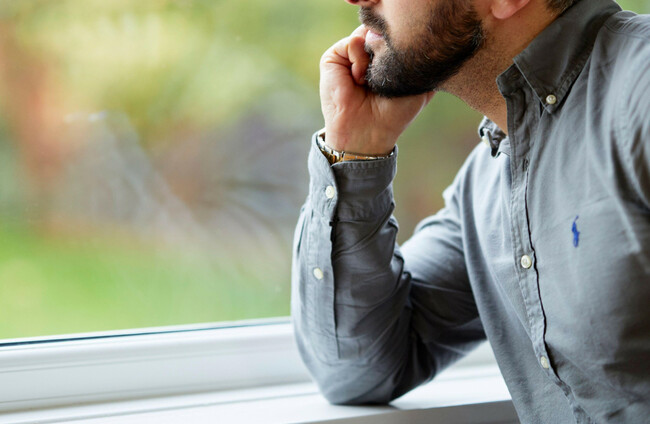
Peter Flanagan shares his personal story of wondering whether he may be neurodivergent.

MY GIRLFRIEND SUSPECTS I’m neurodivergent, but I’m not so sure. We didn’t have the vocabulary for this stuff when I was growing up. I knew I was a little peculiar, but then so were most of the people I admired; The Undertaker, the Teenage Mutant Hero Turtles, my Dad. I liked being a bit different.

I can’t deny that the case she’s been building is increasingly compelling. There are my compulsive behaviours, for starters. I can’t leave the house without triple or quadruple checking that I’ve locked the door, knocked off every switch, and shut the windows. Sometimes I take videos of myself locking the door in case I want to check again later, like the saddest Tik Tok you’ve ever seen.

Then I have my fixation on niche interests. Not trains or women’s feet, thank God. For me it’s always been professional wrestling. When my father told me that it was fake as a child, this only made me more interested. The lowest of all the performance arts, wrestling is the intersection between circus, combat and soap opera. I remained dutifully fascinated long after the age where it was still socially acceptable for boys to watch oiled bodybuilders roll around in their pants.

To be clear, liking wrestling doesn’t necessarily mean that you’re on the spectrum. But being interested in it to the exclusion of almost anything else probably means you’re at least somewhat, let’s say, cognitively distinct.

I’m late for everything. I think of it like colour-blindness for time. What feels like a minute for you feels like ten minutes for me. When my girlfriend says that we’re running late, I see only an infinity of moments pooled at my feet in which I should luxuriate.

Every time I miss a train, I’m incredulous. I really thought I had loads of time.

Paying attention is a problem for me, too. In school we’d sit in damp rooms with pictures of agonised holy men pinned to the flaking walls. The teachers would try to tell me about long division, German grammar, or tectonic plates. But I wasn’t really there. I’d drifted to the realm of my imagination, where I directed action blockbusters, fantasy adventures and pro wrestling supershows. Adults told me that I was intelligent, but truthfully, I wasn’t listening to a word they were saying.

At any moment my focus is pulled in multiple directions, with ideas grappling for supremacy on the canvas of my mind. Whatever I’m thinking about that second seems impossibly urgent until it is suddenly abandoned, replaced by the next all-consuming preoccupation. Tasks are left unfinished, ambitions are neglected.

Stress gives way to anxiety, which then spills over into depression.

I had my first meltdown was I was about 13. We were on holidays in France and I had a strong sense that I was not experiencing the world the same way as the other kids around me. One night the assembled parents drank red wine from a cardboard box. My aunt told a story about a woman she knew who, she said, had gone mad. Without any insight into my own condition, I just presumed that whatever was wrong with that woman was probably wrong with me too.

I didn’t like the sound of that at all. Like a Victorian lady whose husband had been killed in the Crimean War, I took to my bed. If only I’d had some heavy velvet curtains and a black nightcap to really heighten the melodrama. I was probably only in there for a few hours but it was long enough for my parents to twig that there was something up.

‘You’re just a deep thinker’ is what my Dad told me. When we got back to Ireland, my Mum bought me a philosophy book for kids. I don’t remember the name, but let’s pretend it was called ‘Why is Wally?’. It was actually pretty good. I stopped worrying so much that I was insane and embraced my new identity as Kildare’s answer to Plato.

If I’d been a child in today’s world, I’d almost certainly have been diagnosed with something. Perhaps a schema with which to navigate my life would have been useful. Or maybe it would just have been a label, a barcode emblazoned on the back of my neck, my destiny decided by a hack with a clipboard. I’m really not sure.

ADHD and autism diagnoses are big business here in the UK and at home in Ireland. A growing number of my comedy colleagues have been assessed, and I won’t deny that I’m curious. I suppose it would be interesting to know, one way or another.

There is a chance, of course, that the test would find that I’m entirely neurotypical. That would be mortifying, but sharing the news with my partner might be vaguely satisfying. “Sorry, darling. The doctor says I’m not neurodivergent; I’m just a bit of a character.”

Peter Flanagan is an Irish comedian and writer.

Readers like you are keeping these stories free for everyone...
A mix of advertising and supporting contributions helps keep paywalls away from valuable information like this article. Over 5,000 readers like you have already stepped up and support us with a monthly payment or a once-off donation.

Close
JournalTv
News in 60 seconds